0,00 €
inkl. MwSt.
Sofort per Download lieferbar
0 °P sammeln

Andere Kunden interessierten sich auch für
") Electric-Shock Weapons, Tasers and Policing (eBook, ePUB)0,00 €
Electric-Shock Weapons, Tasers and Policing (eBook, ePUB)0,00 €") Street Cop (eBook, PDF)39,95 €
Street Cop (eBook, PDF)39,95 €") Human Rights Policing (eBook, PDF)34,95 €
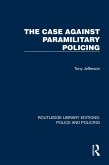
Human Rights Policing (eBook, PDF)34,95 €") The Case Against Paramilitary Policing (eBook, PDF)30,95 €
The Case Against Paramilitary Policing (eBook, PDF)30,95 €") Women in Policing around the World (eBook, PDF)61,95 €
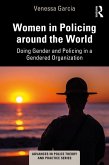
Women in Policing around the World (eBook, PDF)61,95 €") Reframing Police Education and Freedom in America (eBook, PDF)41,95 €
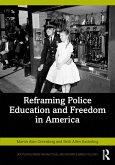
Reframing Police Education and Freedom in America (eBook, PDF)41,95 €") Cross-Border Police Collaboration (eBook, PDF)44,95 €
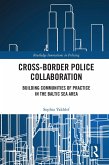
Cross-Border Police Collaboration (eBook, PDF)44,95 €
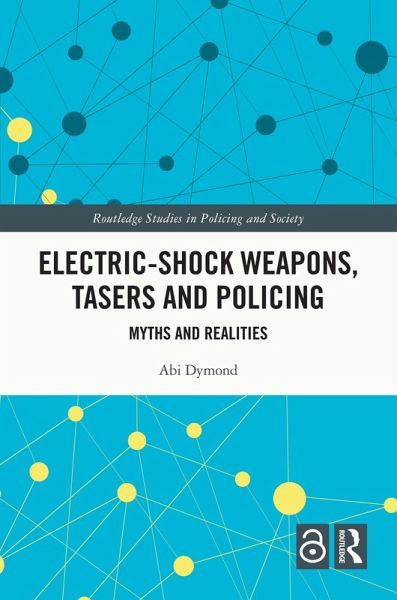
Building on five years of research, and drawing on criminology, science and technology studies (STS), socio-legal studies and social psychology, this book is the first non-medical book written on electric-shock weapons, of which the best well known is the TASER brand.
The police's ability to use force is one of their most crucial powers, yet one that has been relatively neglected by criminology. This book challenges some of the myths surrounding the use of these weapons and considers their human rights implications and impact on members of the public and officers alike. Drawing on STS, it also considers the role and impact of electric-shock technologies, examines the extent to which technologies and non-human agency may also play a role in shaping officer decision making and discretion, and contributes to long standing debates about police accountability.
This is essential reading for policing scholars around the world, particularly those engaged with use of force, culture and accountability, as well as those engaged with Science and Technology studies.
The police's ability to use force is one of their most crucial powers, yet one that has been relatively neglected by criminology. This book challenges some of the myths surrounding the use of these weapons and considers their human rights implications and impact on members of the public and officers alike. Drawing on STS, it also considers the role and impact of electric-shock technologies, examines the extent to which technologies and non-human agency may also play a role in shaping officer decision making and discretion, and contributes to long standing debates about police accountability.
This is essential reading for policing scholars around the world, particularly those engaged with use of force, culture and accountability, as well as those engaged with Science and Technology studies.
Dieser Download kann aus rechtlichen Gründen nur mit Rechnungsadresse in A, B, BG, CY, CZ, D, DK, EW, E, FIN, F, GR, HR, H, IRL, I, LT, L, LR, M, NL, PL, P, R, S, SLO, SK ausgeliefert werden.
"The care with which police approach the use of force - whether lethal or less than lethal - is one of the most important measures of the quality of policing. Dr Dymond has produced the first significant analysis of the adoption and development of the use of the TASER. Her careful blending of the policy, theory and her own primary research provides a seminal study that deserved to be read by practitioners, policy makers and students of policing. A recommended read for 2021"
Peter Neyroud, Associate Professor in the Jerry Lee Centre for Experimental Criminology, Institute of Criminology, University of Cambridge.
"This thought provoking book provides a much-needed critical look at the use of electric-shock weapons and police use of force, as well as careful, well-considered policy recommendations and constructive challenge to all of us working in this area. Eschewing simplistic answers, and delving into the complexity of such topics, it makes a significant contribution to our understanding of the risks evident in poorly developed systems and how these can be mitigated against through robust policing professional standards. As a human rights practitioner, this book could not come at a more critical moment".
Oliver Feeley-Sprague, Amnesty International UK's Military, Security and Police Programme Director.
'Abi Dymond's long-standing and deep interest and experience in the use of conducted energy weapons is reflected in this book which encompasses her personal view of Taser, its use and implications. It is very widely referenced, and uses an extensive and enlightening range of information sources. As such it should be read by all those with an interest in this increasingly challenging field, whether from a law-enforcement, legal, medical, scientific or human rights background'.
Jason Payne-James, Specialist in Forensic & Legal Medicine, Consultant Forensic Physician
Peter Neyroud, Associate Professor in the Jerry Lee Centre for Experimental Criminology, Institute of Criminology, University of Cambridge.
"This thought provoking book provides a much-needed critical look at the use of electric-shock weapons and police use of force, as well as careful, well-considered policy recommendations and constructive challenge to all of us working in this area. Eschewing simplistic answers, and delving into the complexity of such topics, it makes a significant contribution to our understanding of the risks evident in poorly developed systems and how these can be mitigated against through robust policing professional standards. As a human rights practitioner, this book could not come at a more critical moment".
Oliver Feeley-Sprague, Amnesty International UK's Military, Security and Police Programme Director.
'Abi Dymond's long-standing and deep interest and experience in the use of conducted energy weapons is reflected in this book which encompasses her personal view of Taser, its use and implications. It is very widely referenced, and uses an extensive and enlightening range of information sources. As such it should be read by all those with an interest in this increasingly challenging field, whether from a law-enforcement, legal, medical, scientific or human rights background'.
Jason Payne-James, Specialist in Forensic & Legal Medicine, Consultant Forensic Physician