72,95 €
72,95 €
inkl. MwSt.
Sofort per Download lieferbar

36 °P sammeln
72,95 €
Als Download kaufen
72,95 €
inkl. MwSt.
Sofort per Download lieferbar
36 °P sammeln
Jetzt verschenken
Alle Infos zum eBook verschenken
72,95 €
inkl. MwSt.
Sofort per Download lieferbar
Alle Infos zum eBook verschenken
36 °P sammeln

Andere Kunden interessierten sich auch für
") Smart Innovation in Green and Sustainable Energy (eBook, PDF)191,95 €
Smart Innovation in Green and Sustainable Energy (eBook, PDF)191,95 €") Sustainable Utilization of Natural Gas for Low-Carbon Energy Production (eBook, PDF)160,95 €
Sustainable Utilization of Natural Gas for Low-Carbon Energy Production (eBook, PDF)160,95 €") Proceedings of the International Conference on Sustainable Energy Technologies (eBook, PDF)224,95 €
Proceedings of the International Conference on Sustainable Energy Technologies (eBook, PDF)224,95 €") Innovations in Sustainable Energy and Cleaner Environment (eBook, PDF)112,95 €
Innovations in Sustainable Energy and Cleaner Environment (eBook, PDF)112,95 €") The Role of Exergy in Energy and the Environment (eBook, PDF)160,95 €
The Role of Exergy in Energy and the Environment (eBook, PDF)160,95 €") Sustainable Energy Technology and Policies (eBook, PDF)160,95 €
Sustainable Energy Technology and Policies (eBook, PDF)160,95 €") Property and Energy Conversion Technology of Solid Composite Sorbents (eBook, PDF)72,95 €
Property and Energy Conversion Technology of Solid Composite Sorbents (eBook, PDF)72,95 €


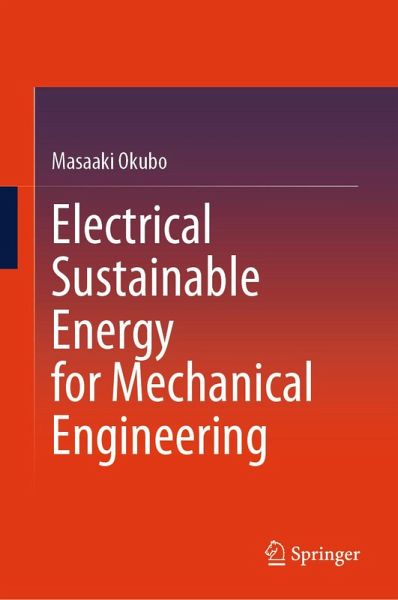
This book describes fundamentals and applications on electrical sustainable energy for Mechanical Engineering. The main objective of this book is to provide readers with an easy-to-understand resource on the foundations and application of electrical sustainable energy. This book was specifically crafted with the intention to serve as a resource for students in the third year through graduate school, particularly in departments other than electrical engineering such as mechanical engineering departments at universities. The aim is to provide foundational knowledge on sustainable electrical energy and energy conversion principles. The topics addressed are those which the author found beneficial in the pursuit of mechanical engineering research and are related to sustainable electrical engineering. It is designed to be covered within a semester of 15 weeks (90 minutes per week), structured into nine chapters. Specifically, it is suggested that chapters 1 and 2 be taught over 4 weeks, chapters 4 to 7 over 6 weeks, and chapters 8 and 9 across 5 weeks. Furthermore, each chapter has comprehensive exercise problems and is projected to cover approximately eight problems in two weeks. These exercises can either be conducted as in-class integrative practice or assigned as weekly homework tasks, with the intention of nurturing problem-solving capabilities in students.
Dieser Download kann aus rechtlichen Gründen nur mit Rechnungsadresse in A, B, BG, CY, CZ, D, DK, EW, E, FIN, F, GR, HR, H, IRL, I, LT, L, LR, M, NL, PL, P, R, S, SLO, SK ausgeliefert werden.