160,95 €
inkl. MwSt.
Sofort per Download lieferbar
80 °P sammeln

Andere Kunden interessierten sich auch für
") Waste-to-Energy (eBook, ePUB)127,95 €
Waste-to-Energy (eBook, ePUB)127,95 €") Source Reduction and Waste Minimization (eBook, ePUB)95,95 €
Source Reduction and Waste Minimization (eBook, ePUB)95,95 €") Waste (eBook, ePUB)82,95 €
Waste (eBook, ePUB)82,95 €") Waste Electrical and Electronic Equipment Recycling (eBook, ePUB)138,95 €
Waste Electrical and Electronic Equipment Recycling (eBook, ePUB)138,95 €") Microbial Electrochemical and Fuel Cells (eBook, ePUB)138,95 €
Microbial Electrochemical and Fuel Cells (eBook, ePUB)138,95 €") Reprocessing and Recycling of Spent Nuclear Fuel (eBook, ePUB)175,95 €
Reprocessing and Recycling of Spent Nuclear Fuel (eBook, ePUB)175,95 €") High Temperature Gas-cooled Reactors (eBook, ePUB)127,95 €
High Temperature Gas-cooled Reactors (eBook, ePUB)127,95 €


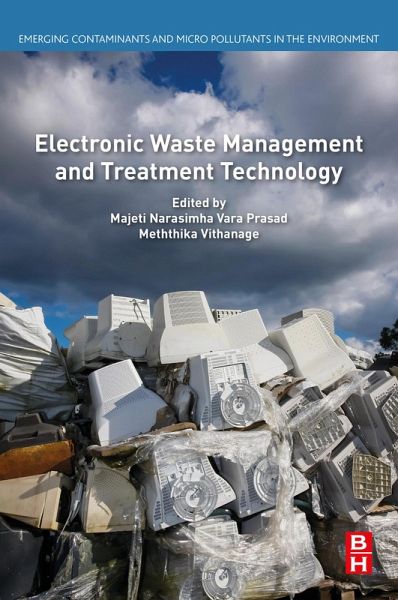
Electronic Waste Management and Treatment Technology applies the latest research for designing waste treatment and disposal strategies. Written for researchers who are exploring this emerging topic, the book begins with a short, but rigorous, discussion of electric waste management that outlines common hazardous materials. such as mercury, lead, silver and flame-retardants. The book also discusses the fate of metals contained in waste electrical and electronic equipment in municipal waste treatment. Materials and methods for the remediation, recycling and treatment of plastic waste collected from waste electrical and electronic equipment (WEEE) are also covered. Finally, the book covers the depollution benchmarks for capacitors, batteries and printed circuit boards from waste electrical and electronic equipment (WEEE) and the recovery of waste printed circuit boards through pyrometallurgy. - Describes depollution benchmarks for capacitors, batteries and printed wiring boards from waste electronics - Covers metals contained in waste electrical and electronic equipment in municipal waste - Provides tactics for the recycling of mixed plastic waste from electrical and electronic equipment
Dieser Download kann aus rechtlichen Gründen nur mit Rechnungsadresse in A, B, BG, CY, CZ, D, DK, EW, E, FIN, F, GR, HR, H, IRL, I, LT, L, LR, M, NL, PL, P, R, S, SLO, SK ausgeliefert werden.