29,95 €
29,95 €
inkl. MwSt.
Sofort per Download lieferbar

15 °P sammeln
29,95 €
Als Download kaufen
29,95 €
inkl. MwSt.
Sofort per Download lieferbar
15 °P sammeln
Jetzt verschenken
Alle Infos zum eBook verschenken
29,95 €
inkl. MwSt.
Sofort per Download lieferbar
Alle Infos zum eBook verschenken
15 °P sammeln

Andere Kunden interessierten sich auch für
") The Crises of Microcredit (eBook, ePUB)70,95 €
The Crises of Microcredit (eBook, ePUB)70,95 €") Understanding Global Crises (eBook, ePUB)37,95 €
Understanding Global Crises (eBook, ePUB)37,95 €") Employment, Inequality and Globalization (eBook, ePUB)45,95 €
Employment, Inequality and Globalization (eBook, ePUB)45,95 €") The Economics of Poverty (eBook, ePUB)44,95 €
The Economics of Poverty (eBook, ePUB)44,95 €") The Political Economy of Africa (eBook, ePUB)63,95 €
The Political Economy of Africa (eBook, ePUB)63,95 €") AIDS and the Ecology of Poverty (eBook, ePUB)30,95 €
AIDS and the Ecology of Poverty (eBook, ePUB)30,95 €") Changing Trends in China's Inequality (eBook, ePUB)64,95 €
Changing Trends in China's Inequality (eBook, ePUB)64,95 €





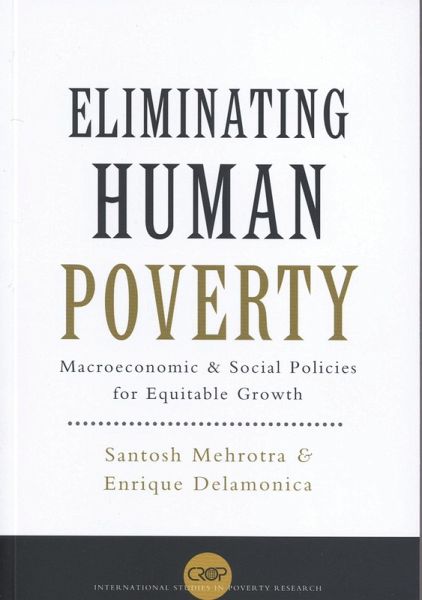
This book focuses on the provision of basic social services - in particular, access to education, health and water supplies - as the central building blocks of any human development strategy. The authors concentrate on how these basic social services can be financed and delivered more effectively to achieve the internationally agreed Millennium Development Goals.
Their analysis, which departs from the dominant macro-economic paradigm, deploys the results of broad-ranging research they led at UNICEF and UNDP, investigating the record on basic social services of some 30 developing countries. In seeking to learn from these new data, they develop an analytical argument around two potential synergies: at the macro level, between poverty reduction, human development and economic growth, and at the micro level, between interventions to provide basic social services. Policymakers, they argue, can integrate macro-economic and social policy. Fiscal, monetary, and other macro-economic policies can be compatible with social sector requirements. They make the case that policymakers have more flexibility than is usually presented by orthodox writers and international financial institutions, and that if policymakers engaged in alternative macro-economic and growth-oriented policies, this could lead to the expansion of human capabilities and the fulfillment of human rights. This book explores some of these policy options.
The book also argues that more than just additional aid is needed. Specific strategic shifts in the areas of aid policy, decentralized governance, health and education policy and the private-public mix in service provision are a prerequisite to achieve the goals of human development. The combination of governance reforms and fiscal and macro-economic policies outlined in this book can eliminate human poverty in the span of a generation.
Their analysis, which departs from the dominant macro-economic paradigm, deploys the results of broad-ranging research they led at UNICEF and UNDP, investigating the record on basic social services of some 30 developing countries. In seeking to learn from these new data, they develop an analytical argument around two potential synergies: at the macro level, between poverty reduction, human development and economic growth, and at the micro level, between interventions to provide basic social services. Policymakers, they argue, can integrate macro-economic and social policy. Fiscal, monetary, and other macro-economic policies can be compatible with social sector requirements. They make the case that policymakers have more flexibility than is usually presented by orthodox writers and international financial institutions, and that if policymakers engaged in alternative macro-economic and growth-oriented policies, this could lead to the expansion of human capabilities and the fulfillment of human rights. This book explores some of these policy options.
The book also argues that more than just additional aid is needed. Specific strategic shifts in the areas of aid policy, decentralized governance, health and education policy and the private-public mix in service provision are a prerequisite to achieve the goals of human development. The combination of governance reforms and fiscal and macro-economic policies outlined in this book can eliminate human poverty in the span of a generation.