2,99 €
2,99 €
inkl. MwSt.
Sofort per Download lieferbar

0 °P sammeln
2,99 €
Als Download kaufen
2,99 €
inkl. MwSt.
Sofort per Download lieferbar
0 °P sammeln
Jetzt verschenken
Alle Infos zum eBook verschenken
2,99 €
inkl. MwSt.
Sofort per Download lieferbar
Alle Infos zum eBook verschenken
0 °P sammeln

Andere Kunden interessierten sich auch für
") Abdominal Bloating, A Simple Guide To The Condition, Diagnosis, Treatment And Related Conditions (eBook, ePUB)2,99 €
Abdominal Bloating, A Simple Guide To The Condition, Diagnosis, Treatment And Related Conditions (eBook, ePUB)2,99 €") Rumination Syndrome, A Simple Guide To The Condition, Diagnosis, Treatment And Related Conditions (eBook, ePUB)2,99 €
Rumination Syndrome, A Simple Guide To The Condition, Diagnosis, Treatment And Related Conditions (eBook, ePUB)2,99 €") Abdominal Pain, A Simple Guide To The Condition, Diagnosis, Treatment And Related Conditions (eBook, ePUB)2,99 €
Abdominal Pain, A Simple Guide To The Condition, Diagnosis, Treatment And Related Conditions (eBook, ePUB)2,99 € A Simple Guide To The Condition, Diagnosis, Treatment And Related Conditions (eBook, ePUB)") Encopresis, (Fecal Incontinence) A Simple Guide To The Condition, Diagnosis, Treatment And Related Conditions (eBook, ePUB)2,99 €
Encopresis, (Fecal Incontinence) A Simple Guide To The Condition, Diagnosis, Treatment And Related Conditions (eBook, ePUB)2,99 € A Simple Guide To The Condition, Diagnosis, Treatment And Related Conditions (eBook, ePUB)") Food Poisoning, (Gastroenteritis) A Simple Guide To The Condition, Diagnosis, Treatment And Related Conditions (eBook, ePUB)2,99 €
Food Poisoning, (Gastroenteritis) A Simple Guide To The Condition, Diagnosis, Treatment And Related Conditions (eBook, ePUB)2,99 €") Intestinal Diseases, A Simple Guide To The Condition, Diagnosis, Treatment And Related Conditions (eBook, ePUB)2,99 €
Intestinal Diseases, A Simple Guide To The Condition, Diagnosis, Treatment And Related Conditions (eBook, ePUB)2,99 €") Dermatomyositis, A Simple Guide To The Condition, Diagnosis, Treatment And Related Conditions (eBook, ePUB)2,99 €
Dermatomyositis, A Simple Guide To The Condition, Diagnosis, Treatment And Related Conditions (eBook, ePUB)2,99 €

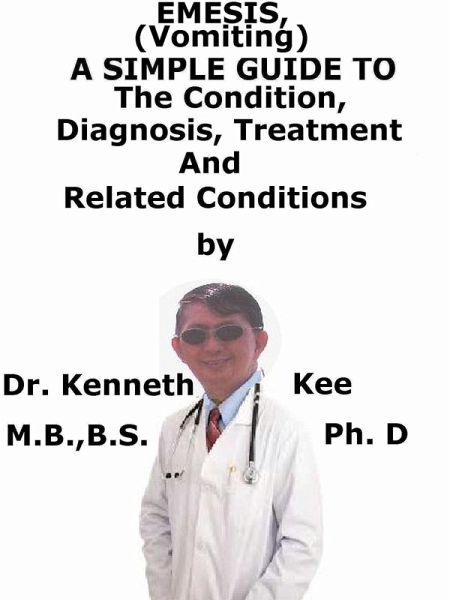
This book describes Emesis (Vomiting), Diagnosis and Treatment and Related Diseases
The brain, not the stomach, informs the body when to vomit.
Vomiting is often the body's way of getting rid of a contaminated substance.
It is also possible to feel queasy and not vomit.
In some cases, nausea goes away after vomiting.
When pathogens attack the human body, the body's mechanism of ridding itself of the pathogen is either by vomiting it out or passing it out from the intestines through loose stools (diarrhea)
Recently I have a patient who came to my clinic with a history of vomiting and diarrhea.
She was very pale and was brought to my clinic by her sister because of her general weakness.
While at the clinic she could not control herself and rushed to the restroom to vomit.
Luckily she had the assistance of her sister to clean her up and help her into the consultation room.
I quickly administered an anti-emetic injection and anti spasmodic to relieve her abdominal discomfort.
Then after 15 minutes I gave her an anti-emetic pill (stemetil) and lomotil for her abdominal discomfort and diarrhea.
As she was able to swallow the pills with a small amount of water, she gradually becomes better with the face being less pale and tired.
After another 15 minutes she was well enough to return home.
In any treatment of vomiting the main purpose is try to avoid any too much food, drink or medicine.
If the patient can keep the medicine down for some time, he or she should be able to keep small amount of drink or food down after the medicines.
The patient should close the eyes and watch out for motion sickness when traveling back in a car to home.
Nausea is an discomfort of the stomach that often appears before vomiting.
Nausea is used when the patient feels sick to the stomach, as if the patient is going to throw up.
Emesis (Vomiting) is the forcible voluntary or involuntary expulsion ("throwing up") of stomach contents through the mouth.
Emesis (Vomiting or puking) is when the patient actually throws up.
Causes
Nausea and Emesis (vomiting) can be symptoms of many different disorders, such as
1. Morning sickness during pregnancy
(Nausea happens in about 50%-90% of all pregnancies; vomiting in 25%-55%)
2. Gastroenteritis (infection of the intestines) and other infections
3. Migraines
4. Motion sickness or seasickness
5. Food poisoning
6. Medicine-induced vomiting, including those for cancer chemotherapy
7. GERD (acid reflux) and ulcers
8. Intestinal obstruction
9. Emotional stress (such as fear)
10. Gallbladder disease
11. Appendicitis
12. Overeating
13. A reaction to certain smells or odors
14. Heart attack
15. Concussion or brain injury
16. Brain tumor
17. Some forms of cancer
18. Bulimia or other psychological illnesses
19. Gastroparesis or slow stomach emptying (a disorder that can be seen in people with diabetes)
20. Ingestion of toxins or excessive amounts of alcohol
The causes of vomiting differ according to age.
The timing of the nausea or vomiting may determine the cause.
When occurring shortly after a meal, nausea or vomiting may be produced by food poisoning, gastritis (inflammation of the stomach lining), an ulcer, or bulimia.
Nausea or vomiting 1 to 8 hours after a meal may also suggest food poisoning.
Some food- borne bacteria, such as salmonella, may take a longer time to produce symptoms.
Nausea and Emesis (vomiting) are frequent.
They are normally not serious.
Some serious disorders that may cause nausea or vomiting are:
1. Concussions,
2. Meningitis (infection of the membrane linings of the brain),
3. Intestinal blockage,
4. Appendicitis, and
5. Brain tumors.
The main complication of vomiting is dehydration which is an emergency.
TABLE OF CONTENT
Introductio...
The brain, not the stomach, informs the body when to vomit.
Vomiting is often the body's way of getting rid of a contaminated substance.
It is also possible to feel queasy and not vomit.
In some cases, nausea goes away after vomiting.
When pathogens attack the human body, the body's mechanism of ridding itself of the pathogen is either by vomiting it out or passing it out from the intestines through loose stools (diarrhea)
Recently I have a patient who came to my clinic with a history of vomiting and diarrhea.
She was very pale and was brought to my clinic by her sister because of her general weakness.
While at the clinic she could not control herself and rushed to the restroom to vomit.
Luckily she had the assistance of her sister to clean her up and help her into the consultation room.
I quickly administered an anti-emetic injection and anti spasmodic to relieve her abdominal discomfort.
Then after 15 minutes I gave her an anti-emetic pill (stemetil) and lomotil for her abdominal discomfort and diarrhea.
As she was able to swallow the pills with a small amount of water, she gradually becomes better with the face being less pale and tired.
After another 15 minutes she was well enough to return home.
In any treatment of vomiting the main purpose is try to avoid any too much food, drink or medicine.
If the patient can keep the medicine down for some time, he or she should be able to keep small amount of drink or food down after the medicines.
The patient should close the eyes and watch out for motion sickness when traveling back in a car to home.
Nausea is an discomfort of the stomach that often appears before vomiting.
Nausea is used when the patient feels sick to the stomach, as if the patient is going to throw up.
Emesis (Vomiting) is the forcible voluntary or involuntary expulsion ("throwing up") of stomach contents through the mouth.
Emesis (Vomiting or puking) is when the patient actually throws up.
Causes
Nausea and Emesis (vomiting) can be symptoms of many different disorders, such as
1. Morning sickness during pregnancy
(Nausea happens in about 50%-90% of all pregnancies; vomiting in 25%-55%)
2. Gastroenteritis (infection of the intestines) and other infections
3. Migraines
4. Motion sickness or seasickness
5. Food poisoning
6. Medicine-induced vomiting, including those for cancer chemotherapy
7. GERD (acid reflux) and ulcers
8. Intestinal obstruction
9. Emotional stress (such as fear)
10. Gallbladder disease
11. Appendicitis
12. Overeating
13. A reaction to certain smells or odors
14. Heart attack
15. Concussion or brain injury
16. Brain tumor
17. Some forms of cancer
18. Bulimia or other psychological illnesses
19. Gastroparesis or slow stomach emptying (a disorder that can be seen in people with diabetes)
20. Ingestion of toxins or excessive amounts of alcohol
The causes of vomiting differ according to age.
The timing of the nausea or vomiting may determine the cause.
When occurring shortly after a meal, nausea or vomiting may be produced by food poisoning, gastritis (inflammation of the stomach lining), an ulcer, or bulimia.
Nausea or vomiting 1 to 8 hours after a meal may also suggest food poisoning.
Some food- borne bacteria, such as salmonella, may take a longer time to produce symptoms.
Nausea and Emesis (vomiting) are frequent.
They are normally not serious.
Some serious disorders that may cause nausea or vomiting are:
1. Concussions,
2. Meningitis (infection of the membrane linings of the brain),
3. Intestinal blockage,
4. Appendicitis, and
5. Brain tumors.
The main complication of vomiting is dehydration which is an emergency.
TABLE OF CONTENT
Introductio...
Dieser Download kann aus rechtlichen Gründen nur mit Rechnungsadresse in A, B, CY, CZ, D, DK, EW, E, FIN, F, GR, H, IRL, I, LT, L, LR, M, NL, PL, P, R, S, SLO, SK ausgeliefert werden.