8,99 €
8,99 €
inkl. MwSt.
Sofort per Download lieferbar

0 °P sammeln
8,99 €
Als Download kaufen
8,99 €
inkl. MwSt.
Sofort per Download lieferbar
0 °P sammeln
Jetzt verschenken
Alle Infos zum eBook verschenken
8,99 €
inkl. MwSt.
Sofort per Download lieferbar
Alle Infos zum eBook verschenken
0 °P sammeln

Andere Kunden interessierten sich auch für
") Operant Conditioning (eBook, ePUB)7,99 €
Operant Conditioning (eBook, ePUB)7,99 €") Classical Conditioning (eBook, ePUB)7,99 €
Classical Conditioning (eBook, ePUB)7,99 €") Decline and Fall of the Freudian Empire (eBook, ePUB)47,95 €
Decline and Fall of the Freudian Empire (eBook, ePUB)47,95 €") Conditioning (eBook, ePUB)29,95 €
Conditioning (eBook, ePUB)29,95 €") what will people think? (eBook, ePUB)7,99 €
what will people think? (eBook, ePUB)7,99 €") The Age of Insight (eBook, ePUB)11,95 €
The Age of Insight (eBook, ePUB)11,95 €") The Wiley Blackwell Handbook of Operant and Classical Conditioning (eBook, ePUB)142,99 €
The Wiley Blackwell Handbook of Operant and Classical Conditioning (eBook, ePUB)142,99 €


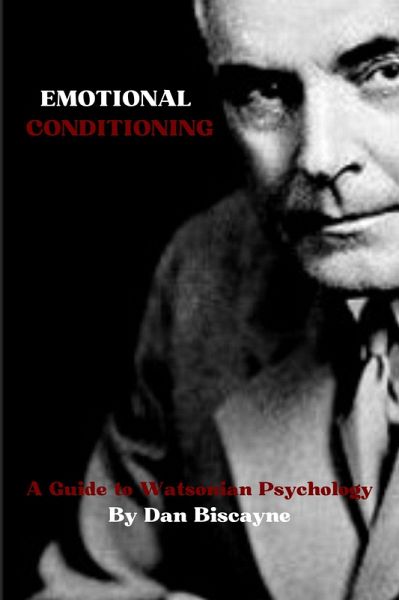
At the dawn of the twentieth century, psychology stood at a crossroads between introspective philosophy and emerging experimental science. Into this landscape stepped John B. Watson, a bold thinker who challenged the notion that the mind could only be studied through subjective reflection. He proposed instead that behavior-and the emotions that underlie it-could be observed, measured, and shaped through the principles of learning. From this conviction arose the theory of Emotional Conditioning, a framework that would redefine how psychologists understood emotion, personality, and the formation of human experience.
Watson's idea was deceptively simple yet revolutionary: emotions are not innate mysteries beyond comprehension, but conditioned responses-learned through association and experience. Just as Pavlov's dogs learned to salivate at the sound of a bell, humans could learn to fear, love, or feel joy in response to once-neutral stimuli. His now-famous "Little Albert" experiment illustrated this principle vividly, showing how a previously indifferent object could come to elicit fear through pairing with an aversive event. Though ethically troubling by modern standards, this study marked a turning point in psychology, shifting the focus from inner speculation to observable emotional behavior.
This book revisits Watson's theory in its historical, scientific, and philosophical context. It traces how his ideas challenged the dominance of introspection, inspired generations of behaviorists, and laid the groundwork for later fields such as cognitive-behavioral therapy, exposure treatment, and affective neuroscience. More than a relic of early psychology, emotional conditioning remains a living concept-one that continues to shape how we understand emotional development, trauma, attachment, and change.
By exploring Watson's legacy, this work seeks not only to honor his contribution but also to examine its enduring relevance and limitations. To understand emotional conditioning is to glimpse the powerful processes through which human feeling is learned, shaped, and, ultimately, transformed.
Watson's idea was deceptively simple yet revolutionary: emotions are not innate mysteries beyond comprehension, but conditioned responses-learned through association and experience. Just as Pavlov's dogs learned to salivate at the sound of a bell, humans could learn to fear, love, or feel joy in response to once-neutral stimuli. His now-famous "Little Albert" experiment illustrated this principle vividly, showing how a previously indifferent object could come to elicit fear through pairing with an aversive event. Though ethically troubling by modern standards, this study marked a turning point in psychology, shifting the focus from inner speculation to observable emotional behavior.
This book revisits Watson's theory in its historical, scientific, and philosophical context. It traces how his ideas challenged the dominance of introspection, inspired generations of behaviorists, and laid the groundwork for later fields such as cognitive-behavioral therapy, exposure treatment, and affective neuroscience. More than a relic of early psychology, emotional conditioning remains a living concept-one that continues to shape how we understand emotional development, trauma, attachment, and change.
By exploring Watson's legacy, this work seeks not only to honor his contribution but also to examine its enduring relevance and limitations. To understand emotional conditioning is to glimpse the powerful processes through which human feeling is learned, shaped, and, ultimately, transformed.
Dieser Download kann aus rechtlichen Gründen nur mit Rechnungsadresse in A, B, BG, CY, CZ, D, DK, EW, E, FIN, F, GR, H, IRL, I, LT, L, LR, M, NL, PL, P, R, S, SLO, SK ausgeliefert werden.