Sie sind bereits eingeloggt. Klicken Sie auf 2. tolino select Abo, um fortzufahren.
Bitte loggen Sie sich zunächst in Ihr Kundenkonto ein oder registrieren Sie sich bei bücher.de, um das eBook-Abo tolino select nutzen zu können.
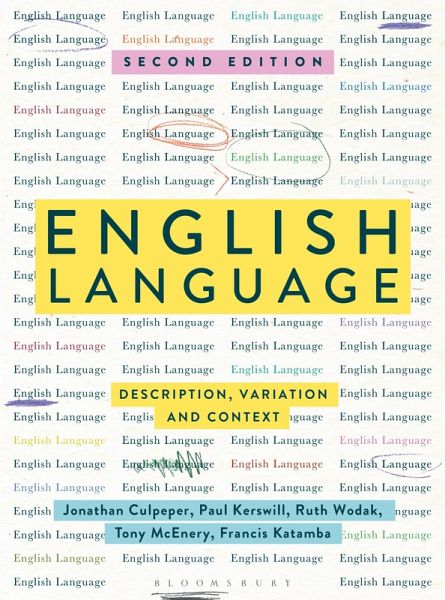
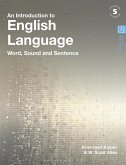
The second edition of a hugely successful introductory textbook that covers the full range of topics in English language and linguistics Written by Lancaster University's Department of Linguistics and English Language, a prestigious and research-intensive school that consistently ranks as one of the world's centres of excellence for the subject This edition has been fully revised and updated to take account of the latest advances in the field, and includes brand new chapters on corpus linguistics, second language acquisition and research methods
The second edition of a hugely successful introductory textbook that covers the full range of topics in English language and linguistics Written by Lancaster University's Department of Linguistics and English Language, a prestigious and research-intensive school that consistently ranks as one of the world's centres of excellence for the subject This edition has been fully revised and updated to take account of the latest advances in the field, and includes brand new chapters on corpus linguistics, second language acquisition and research methods
Die Herstellerinformationen sind derzeit nicht verfügbar.
Autorenporträt
Jonathan Culpeper is Professor of English Language and Linguistics in the Department of Linguistics and English Language at Lancaster University, UK. Spanning pragmatics, stylistics and the history of English, his major publications include Early Modern English Dialogues: Spoken Interaction as Writing (2010, CUP; co-authored with Merja Kytö), Impoliteness: Using Language to Cause Offence (2011, CUP), and most recently Pragmatics and the English Language (2014, Palgrave; with Michael Haugh). He is currently leading the AHRC-funded Encyclopaedia of Shakespeare's Language project, which will provide evidence-based and contextualised accounts of Shakespeare's language. Paul Kerswill is Professor of Sociolinguistics at the University of York. His research has focused on migration and dialect contact in both Norway and Britain, including Bergen and the New Town of Milton Keynes. He has worked on projects on the emergence of Multicultural London English. His publications include work on the role of children in language change, the phonology of new dialects and the representation of youth language in the media. He has co-edited Dialect Change: Convergence and Divergence in European Languages (with Frans Hinskens and Peter Auer, 2005) and The Sage Handbook of Sociolinguistics (with Ruth Wodak and Barbara Johnstone, 2010). Ruth Wodak is Emeritus Distinguished Professor of Discourse Studies at Lancaster University, UK, and affiliated to the University of Vienna. Besides various other prizes, she was awarded the Wittgenstein Prize for Elite Researchers in 1996 and an Honorary Doctorate from University of Örebro in Sweden in 2010. She is member of the British Academy of Social Sciences and of the Academia Europaea. Currently, she is PI of a three-year research project on 'The Discursive Construction of Austrian identity - 2015.' (http://nationale-identitaet-2015.univie.ac.at/) Recent book publications include The Politics of Fear. What Right-wing Populist Discourses Mean (Sage, 2015; translation into the German 2016); The Discourse of Politics in Action: 'Politics as Usual' (Palgrave), revised edition (2011); Migration, Identity and Belonging (with G. Delanty, P. Jones, 2011); The Discursive Construction of History. Remembering the German Wehrmacht's War of Annihilation (with H. Heer, W. Manoschek, A. Pollak, 2008); and The SAGE Handbook of Sociolinguistics (with Barbara Johnstone and Paul Kerswill, 2010). Tony McEnery is Distinguished Professor of English Language and Linguistics at Lancaster University. His research interests include English corpus linguistics as well as corpus linguistics applied to languages other than English. He has wide experience of editing and authoring, and is currently editor of the book series Advances in Corpus Linguistics (Routledge). His books include Corpus Linguistics: Method, Theory and Practice (with Andrew Hardie, CUP, 2011) and Discourse Analysis and Media Attitudes (With Paul Baker and Costas Gabrielatos, CUP, 2013). Francis Katamba is Emeritus Professor of Linguistics in the Department of Linguistics and English Language at the University of Lancaster, UK. His research interests are in the areas of phonology and morphology. His publications include An Introduction to Phonology (1989), Morphology: Critical Concepts in Linguistics (2004), English Words (2nd edition, 2005), Morphology (2nd edition with John Stonham, 2006) and Contemporary Linguistics: An Introduction (2nd edition, with William O'Grady and John Archibald, 2011).
Inhaltsangabe
INTRODUCTION.- 1. Studying the English language.- ENGLISH: STRUCTURE.- 2. Phonetics.- 3. Phonology.- 4. Morphology: word structure.- 5. Grammar: words (and phrases).- 6. Grammar: phrases (and clauses).- 7. Grammar: clauses (and sentences).- 8. Text linguistics.- 9. Semantics.- 10. Pragmatics.- ENGLISH: HISTORY.- 11. Standard English and standardization.- 12. Spelling.- 13. Phonological change.- 14. Lexical change.- 15. Semantic change.- 16. Grammatical change.- ENGLISH SPEECH: REGIONAL AND SOCIAL VARIATION.- 17. Regional variation in English accents and dialects.- 18. Language and social class.- 19. Language and ethnicity.- 20. Pidgins and creole Englishes.- 21. American English.- 22. World Englishes and English as a lingua franca.- 23. Language discourses: attitudes to diversity.- ENGLISH WRITING: STYLE, GENRE AND PRACTICE.- 24. Speech, writing and discourse type.- 25. Language in newspapers.- 26. Language in advertisements.- 27. Language in literature: stylistics.- 28. Literary
INTRODUCTION.- 1. Studying the English language.- ENGLISH: STRUCTURE.- 2. Phonetics.- 3. Phonology.- 4. Morphology: word structure.- 5. Grammar: words (and phrases).- 6. Grammar: phrases (and clauses).- 7. Grammar: clauses (and sentences).- 8. Text linguistics.- 9. Semantics.- 10. Pragmatics.- ENGLISH: HISTORY.- 11. Standard English and standardization.- 12. Spelling.- 13. Phonological change.- 14. Lexical change.- 15. Semantic change.- 16. Grammatical change.- ENGLISH SPEECH: REGIONAL AND SOCIAL VARIATION.- 17. Regional variation in English accents and dialects.- 18. Language and social class.- 19. Language and ethnicity.- 20. Pidgins and creole Englishes.- 21. American English.- 22. World Englishes and English as a lingua franca.- 23. Language discourses: attitudes to diversity.- ENGLISH WRITING: STYLE, GENRE AND PRACTICE.- 24. Speech, writing and discourse type.- 25. Language in newspapers.- 26. Language in advertisements.- 27. Language in literature: stylistics.- 28. Literary practices.- 29. New technologies: literacies in cyberspace.- ENGLISH: COMMUNICATION AND INTERACTION.- 30. Structures of conversation.- 31. Language, reality and power.- 32. Politeness in interaction.- 33. Gender and language.- 34. Language and sexuality.- 35. Bad language.- 36. Language and politics.- 37. Business communication.- ENGLISH: LEARNING AND TEACHING.- 38. First language acquisition.- 39. Second language acquisition.- 40. Languages and literacies in education.- 41. TEFL, TESOL and linguistics.- ENGLISH INVESTIGATING.- 42. Methods for researching English.- 43. The corpus method and English.- CONCLUSION.- 44. The English language: reflections.
INTRODUCTION.- 1. Studying the English language.- ENGLISH: STRUCTURE.- 2. Phonetics.- 3. Phonology.- 4. Morphology: word structure.- 5. Grammar: words (and phrases).- 6. Grammar: phrases (and clauses).- 7. Grammar: clauses (and sentences).- 8. Text linguistics.- 9. Semantics.- 10. Pragmatics.- ENGLISH: HISTORY.- 11. Standard English and standardization.- 12. Spelling.- 13. Phonological change.- 14. Lexical change.- 15. Semantic change.- 16. Grammatical change.- ENGLISH SPEECH: REGIONAL AND SOCIAL VARIATION.- 17. Regional variation in English accents and dialects.- 18. Language and social class.- 19. Language and ethnicity.- 20. Pidgins and creole Englishes.- 21. American English.- 22. World Englishes and English as a lingua franca.- 23. Language discourses: attitudes to diversity.- ENGLISH WRITING: STYLE, GENRE AND PRACTICE.- 24. Speech, writing and discourse type.- 25. Language in newspapers.- 26. Language in advertisements.- 27. Language in literature: stylistics.- 28. Literary
INTRODUCTION.- 1. Studying the English language.- ENGLISH: STRUCTURE.- 2. Phonetics.- 3. Phonology.- 4. Morphology: word structure.- 5. Grammar: words (and phrases).- 6. Grammar: phrases (and clauses).- 7. Grammar: clauses (and sentences).- 8. Text linguistics.- 9. Semantics.- 10. Pragmatics.- ENGLISH: HISTORY.- 11. Standard English and standardization.- 12. Spelling.- 13. Phonological change.- 14. Lexical change.- 15. Semantic change.- 16. Grammatical change.- ENGLISH SPEECH: REGIONAL AND SOCIAL VARIATION.- 17. Regional variation in English accents and dialects.- 18. Language and social class.- 19. Language and ethnicity.- 20. Pidgins and creole Englishes.- 21. American English.- 22. World Englishes and English as a lingua franca.- 23. Language discourses: attitudes to diversity.- ENGLISH WRITING: STYLE, GENRE AND PRACTICE.- 24. Speech, writing and discourse type.- 25. Language in newspapers.- 26. Language in advertisements.- 27. Language in literature: stylistics.- 28. Literary practices.- 29. New technologies: literacies in cyberspace.- ENGLISH: COMMUNICATION AND INTERACTION.- 30. Structures of conversation.- 31. Language, reality and power.- 32. Politeness in interaction.- 33. Gender and language.- 34. Language and sexuality.- 35. Bad language.- 36. Language and politics.- 37. Business communication.- ENGLISH: LEARNING AND TEACHING.- 38. First language acquisition.- 39. Second language acquisition.- 40. Languages and literacies in education.- 41. TEFL, TESOL and linguistics.- ENGLISH INVESTIGATING.- 42. Methods for researching English.- 43. The corpus method and English.- CONCLUSION.- 44. The English language: reflections.
Es gelten unsere Allgemeinen Geschäftsbedingungen: www.buecher.de/agb
Impressum
www.buecher.de ist ein Internetauftritt der buecher.de internetstores GmbH
Geschäftsführung: Monica Sawhney | Roland Kölbl | Günter Hilger
Sitz der Gesellschaft: Batheyer Straße 115 - 117, 58099 Hagen
Postanschrift: Bürgermeister-Wegele-Str. 12, 86167 Augsburg
Amtsgericht Hagen HRB 13257
Steuernummer: 321/5800/1497
USt-IdNr: DE450055826