49,95 €
inkl. MwSt.
Sofort per Download lieferbar
25 °P sammeln

Andere Kunden interessierten sich auch für
") Environmental Commodities Markets and Emissions Trading (eBook, ePUB)49,95 €
Environmental Commodities Markets and Emissions Trading (eBook, ePUB)49,95 €") Community Forest Monitoring for the Carbon Market (eBook, PDF)45,95 €
Community Forest Monitoring for the Carbon Market (eBook, PDF)45,95 €") Climate Change Economics and Policy (eBook, PDF)44,95 €
Climate Change Economics and Policy (eBook, PDF)44,95 €") The Routledge Handbook of Waste, Resources and the Circular Economy (eBook, PDF)44,95 €
The Routledge Handbook of Waste, Resources and the Circular Economy (eBook, PDF)44,95 €") Ecological Living (eBook, PDF)45,95 €
Ecological Living (eBook, PDF)45,95 €") Biological Economies (eBook, PDF)45,95 €
Biological Economies (eBook, PDF)45,95 €") Water Policy in Texas (eBook, PDF)32,95 €
Water Policy in Texas (eBook, PDF)32,95 €






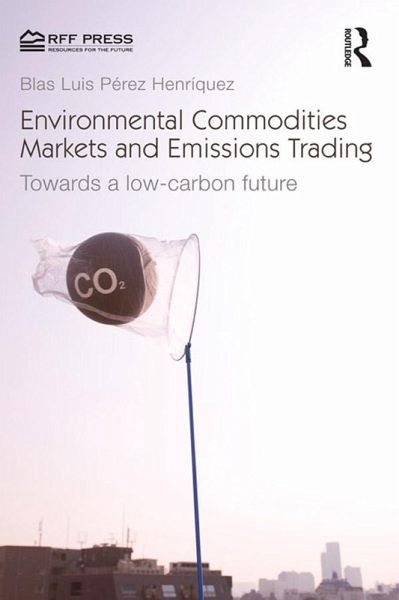
Market-based solutions to environmental problems offer great promise, but require complex public policies that take into account the many institutional factors necessary for the market to work and that guard against the social forces that can derail good public policies. Using insights about markets from the new institutional economics, this book sheds light on the institutional history of the emissions trading concept as it has evolved across different contexts. It makes accessible the policy design and practical implementation aspects of a key tool for fighting climate change: emissions trading systems (ETS) for environmental control.
Blas Luis Pérez Henríquez analyzes past market-based environmental programs to extract lessons for the future of ETS. He follows the development of the emissions trading concept as it evolved in the United States and was later applied in the multinational European Emissions Trading System and in sub-national programs in the United States such as the Regional Greenhouse Gas Initiative (RGGI) and California's ETS. This ex-post evaluation of an ETS as it evolves in real time in the real world provides a valuable supplement to what is already known from theoretical arguments and simulation studies about the advantages and disadvantages of the market strategy.
Political cycles and political debate over the use of markets for environmental control make any form of climate policy extremely contentious. Pérez Henríquez argues that, despite ideological disagreements, the ETS approach, or, more popularly, 'cap-and-trade' policy design, remains the best hope for a cost-effective policy to reduce GHG emissions around the world.
Blas Luis Pérez Henríquez analyzes past market-based environmental programs to extract lessons for the future of ETS. He follows the development of the emissions trading concept as it evolved in the United States and was later applied in the multinational European Emissions Trading System and in sub-national programs in the United States such as the Regional Greenhouse Gas Initiative (RGGI) and California's ETS. This ex-post evaluation of an ETS as it evolves in real time in the real world provides a valuable supplement to what is already known from theoretical arguments and simulation studies about the advantages and disadvantages of the market strategy.
Political cycles and political debate over the use of markets for environmental control make any form of climate policy extremely contentious. Pérez Henríquez argues that, despite ideological disagreements, the ETS approach, or, more popularly, 'cap-and-trade' policy design, remains the best hope for a cost-effective policy to reduce GHG emissions around the world.
Dieser Download kann aus rechtlichen Gründen nur mit Rechnungsadresse in A, B, BG, CY, CZ, D, DK, EW, E, FIN, F, GR, HR, H, IRL, I, LT, L, LR, M, NL, PL, P, R, S, SLO, SK ausgeliefert werden.