Dieser Download kann aus rechtlichen Gründen nur mit Rechnungsadresse in A, B, BG, CY, CZ, D, DK, EW, E, FIN, F, GR, HR, H, IRL, I, LT, L, LR, M, NL, PL, P, R, S, SLO, SK ausgeliefert werden.
Herstellerkennzeichnung
Die Herstellerinformationen sind derzeit nicht verfügbar.
Autorenporträt
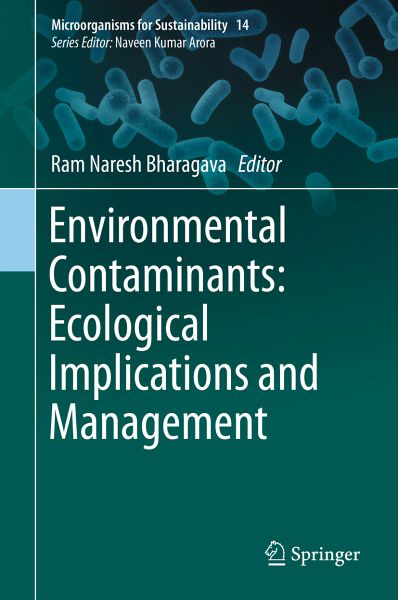
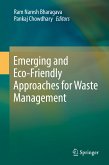
Dr. Ram Naresh Bharagava was born in 1977. He received his B.Sc. degree (1998) in Zoology, Botany and Chemistry from the University of Lucknow, India, and M.Sc. degree (2004) in Molecular Biology and Biotechnology from Govind Ballabh Pant University of Agriculture & Technology (GBPUAT), India. He received his Ph.D. degree (2010) in the area of Microbiology jointly from Environmental Microbiology Division, Council of Scientific and Industrial Research (CSIR)-Indian Institute of Toxicology Research (IITR), Lucknow and Pt. Ravishankar Shukla University, Raipur, Chhattisgarh, India. He was a Junior Research Fellow (JRF) during his Ph.D., and passed the CSIR-National Eligibility Test (NET) twice and the Graduate Aptitude Test in Engineering (GATE) once. He has written one book entitled "Bacterial Metabolism of Melanoidins from distillery Effluent" and edited six books entitled "Bioremediation of Industrial Pollutants", "Environmental Pollutants and their Bioremediation Approaches", Ecofriendly and Emerging Approaches for Waste Minimization", "Recent Trends in Environmental Management and Bioremediation of Industrial Waste for Environmental Safety: Industrial Waste and Its Management (Volume I & II). He has also authored and coauthored numerous research/review papers and two book reviews in respected national and international journals. He has also written several chapters for national and international edited books as well as a number of scientific articles, and has presented papers at national and international conferences. Further, he is a reviewer for various national and international journals. After a postdoctoral appointment at CSIR-IITR, Lucknow, he joined Babasaheb Bhimrao Ambedkar (Central) University, where he is currently an Assistant Professor of Microbiology and actively engaged in teaching at postgraduate and doctoral level as well as research on various Government of India (GOI) sponsored research projects in the field of Environmental Toxicology and Bioremediation. His major areas of research are the biodegradation and bioremediation of environmental pollutants in industrial wastewaters, metagenomics and wastewater microbiology. He is a member of the Academy of Environmental Biology (AEB), Association of Microbiologists of India (AMI), and Biotech Research Society (BRSI), Indian Science Congress Association (ISCA), India.
Inhaltsangabe
1. Agroindustrial wastes: Environmental toxicology, risks and biological treatment approaches.- 2. Remediation and management of petrochemical polluted sites under climate change conditions.- 3. Phycoremediation: Role of algae in waste management.- 4. Aspects of CO2 injection in geological formations and its risk assessment.- 5. Microbial degradation of polyaromatic hydrocarbons (PAHs).- 6. Splendid role of nanoparticles as antimicrobial agents in wastewater treatment.- 7. Metagenomics for novel enzymes: A Current Perspective.- 8. Cyanobacteria: The ecofriendly tools for the treatment of industrial wastewaters.- 9. Constructed wetlands: a green technology for industrial wastewaters treatment.- 10. Microplastics: A Snapshot on Emerging Environmental Pollutant and their Environmental Impact.- 11. Biosorption of heavy metals: potential and applications of yeast cells for cadmium removal.- 12. Toxic elements in Bangladesh's drinking water.- 13. Bacterial conversion of waste products into degradable plastics: An inexpensive yet eco-friendly approach.- 14. Treatment of leather industry wastewater and recovery of valuable substances to solve waste management problem in Environment.
1. Agroindustrial wastes: Environmental toxicology, risks and biological treatment approaches.- 2. Remediation and management of petrochemical polluted sites under climate change conditions.- 3. Phycoremediation: Role of algae in waste management.- 4. Aspects of CO2 injection in geological formations and its risk assessment.- 5. Microbial degradation of polyaromatic hydrocarbons (PAHs).- 6. Splendid role of nanoparticles as antimicrobial agents in wastewater treatment.- 7. Metagenomics for novel enzymes: A Current Perspective.- 8. Cyanobacteria: The ecofriendly tools for the treatment of industrial wastewaters.- 9. Constructed wetlands: a green technology for industrial wastewaters treatment.- 10. Microplastics: A Snapshot on Emerging Environmental Pollutant and their Environmental Impact.- 11. Biosorption of heavy metals: potential and applications of yeast cells for cadmium removal.- 12. Toxic elements in Bangladesh's drinking water.- 13. Bacterial conversion of waste products into degradable plastics: An inexpensive yet eco-friendly approach.- 14. Treatment of leather industry wastewater and recovery of valuable substances to solve waste management problem in Environment.
Es gelten unsere Allgemeinen Geschäftsbedingungen: www.buecher.de/agb
Impressum
www.buecher.de ist ein Internetauftritt der buecher.de internetstores GmbH
Geschäftsführung: Monica Sawhney | Roland Kölbl | Günter Hilger
Sitz der Gesellschaft: Batheyer Straße 115 - 117, 58099 Hagen
Postanschrift: Bürgermeister-Wegele-Str. 12, 86167 Augsburg
Amtsgericht Hagen HRB 13257
Steuernummer: 321/5800/1497
USt-IdNr: DE450055826