49,95 €
inkl. MwSt.
Sofort per Download lieferbar
25 °P sammeln

Andere Kunden interessierten sich auch für
") Critical Thinking and Epistemic Injustice (eBook, PDF)96,95 €
Critical Thinking and Epistemic Injustice (eBook, PDF)96,95 €") Everyday White People Confront Racial and Social Injustice (eBook, PDF)24,95 €
Everyday White People Confront Racial and Social Injustice (eBook, PDF)24,95 €") Feminism, Adult Education and Creative Possibility (eBook, PDF)24,95 €
Feminism, Adult Education and Creative Possibility (eBook, PDF)24,95 €") Thinking Ecologically in Educational Policy and Research (eBook, PDF)41,95 €
Thinking Ecologically in Educational Policy and Research (eBook, PDF)41,95 €") Language in Epistemic Access (eBook, PDF)37,95 €
Language in Epistemic Access (eBook, PDF)37,95 €") Student Engagement, Higher Education, and Social Justice (eBook, PDF)35,95 €
Student Engagement, Higher Education, and Social Justice (eBook, PDF)35,95 €") State Schooling and the Reproduction of Social Inequalities (eBook, PDF)39,95 €
State Schooling and the Reproduction of Social Inequalities (eBook, PDF)39,95 €

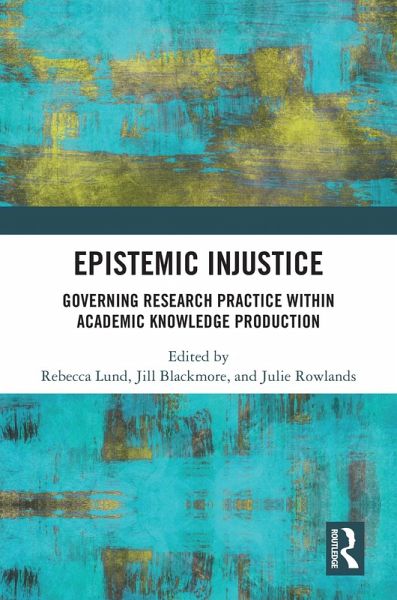
This book illustrates how feminist knowledge and postcolonial knowledge are marginalized in universities due to policies, organizational structures, and knowledge hierarchies that privilege metrics as measures of success and narrow views of science and research.
The changing relationship between the state and knowledge production is a critical issue for universities and governments when disinformation is creating a crisis in expertise and trust in democratic institutions. Yet academic autonomy is being undermined by processes of corporatization of the university: managerialism, marketisation, technologization and privatization. Epistemic injustice occurs when particular knowledges are privileged due to policy priorities, metrics and organizational practices as these are underpinned by unequal power relations that inform who does what research and with whom. In turn, injustice occurs when knowledge is evaluated primarily on the basis of its usefulness. The chapters in this book illustrate the epistemic implications of changing institutional and organizational conditions produced by narrow conceptions of 'knowledge' and 'good science' and relations between them. It explores these arrangements at the level of colonial and geopolitical relations, and their effects in terms of institutional processes, practices, and agency. The text shows how a lack of epistemic diversity reinforces structural and cultural racial and gender injustices arising from colonialism, patriarchy, and dominant views of science.
This volume will appeal to policy makers and researchers in higher education reform and scholars interested in changing academic practices from feminist and postcolonial perspectives. It was originally published as a special issue of Critical Studies in Education.
The changing relationship between the state and knowledge production is a critical issue for universities and governments when disinformation is creating a crisis in expertise and trust in democratic institutions. Yet academic autonomy is being undermined by processes of corporatization of the university: managerialism, marketisation, technologization and privatization. Epistemic injustice occurs when particular knowledges are privileged due to policy priorities, metrics and organizational practices as these are underpinned by unequal power relations that inform who does what research and with whom. In turn, injustice occurs when knowledge is evaluated primarily on the basis of its usefulness. The chapters in this book illustrate the epistemic implications of changing institutional and organizational conditions produced by narrow conceptions of 'knowledge' and 'good science' and relations between them. It explores these arrangements at the level of colonial and geopolitical relations, and their effects in terms of institutional processes, practices, and agency. The text shows how a lack of epistemic diversity reinforces structural and cultural racial and gender injustices arising from colonialism, patriarchy, and dominant views of science.
This volume will appeal to policy makers and researchers in higher education reform and scholars interested in changing academic practices from feminist and postcolonial perspectives. It was originally published as a special issue of Critical Studies in Education.
Dieser Download kann aus rechtlichen Gründen nur mit Rechnungsadresse in A, B, BG, CY, CZ, D, DK, EW, E, FIN, F, GR, HR, H, IRL, I, LT, L, LR, M, NL, PL, P, R, S, SLO, SK ausgeliefert werden.