Sie sind bereits eingeloggt. Klicken Sie auf 2. tolino select Abo, um fortzufahren.
Bitte loggen Sie sich zunächst in Ihr Kundenkonto ein oder registrieren Sie sich bei bücher.de, um das eBook-Abo tolino select nutzen zu können.
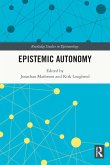
This volume considers forms of information manipulation and restriction in contemporary society. It explores whether and when manipulation of the conditions of inquiry without the consent of those manipulated is morally or epistemically justified. The contributors provide a wealth of examples of manipulation, and debate whether epistemic paternalism is distinct from other forms of paternalism debated in political theory. Special attention is given to medical practice, for science communication, and for research in science, technology, and society. Some of the contributors argue that…mehr
This volume considers forms of information manipulation and restriction in contemporary society. It explores whether and when manipulation of the conditions of inquiry without the consent of those manipulated is morally or epistemically justified. The contributors provide a wealth of examples of manipulation, and debate whether epistemic paternalism is distinct from other forms of paternalism debated in political theory. Special attention is given to medical practice, for science communication, and for research in science, technology, and society. Some of the contributors argue that unconsenting interference with people's ability of inquire is consistent with, and others that it is inconsistent with, efforts to democratize knowledge and decision-making. These differences invite theoretical reflection regarding which goods are fundamental, whether there is a clear or only a moving boundary between informing and instructing, and whether manipulation of people's epistemic conditions amounts to a type of intellectual injustice. The collection pays special attention to contemporary paternalistic practices in big data and scientific research, as the way in which the flow of information or knowledge might be curtailed by the manipulations of a small body of experts or algorithms.
Die Herstellerinformationen sind derzeit nicht verfügbar.
Autorenporträt
Guy Axtell is Professor of Philosophy at Radford University, working primarily in social epistemology, and philosophy of the sciences. His volume Knowledge, Belief, and Character (Rowman & Littlefield 2000) was the first edited collection in the area of virtue/vice epistemology; he has since published two monographs along with numerous articles. Amiel Bernal received his Ph.D. from Virginia Tech's ASPECT Program (The Alliance for Social, Political, and Economic Thought). Currently he teaches at Virginia Military Institute and Radford University. His research focus is in social epistemology, epistemic injustice, and ethics.
Inhaltsangabe
Introduction Guy Axtell and Amiel Bernal Part I: Digital Paternalism and Open Societies 1. Artificial Ignorance Epistemic Paternalism and Epistemic Obligations Stephen John 2. Epistemic Paternalism Online Clinton Castro Adam Pham and Alan Rubel 3. Expert Advice for Decision Making: The Subtle Boundary Between Informing and Prescribing Marion Vorms 4. Political Epistemic Paternalism Democracy and Rule by Crisis Lee Basham Part II: Scientific and Medical Communication 5. Epistemic Paternalism Science and Communication Fabien Medvecky 6. Persuasion and Paternalism Robin McKenna 7. Expert Care in Mental Health Paternalism Shaun Respess 8. Epistemic Paternalism in Doctor-Patient Relationships Aude Bandini Part III: Epistemic Normativity 9. Epistemic Paternalism and Epistemic Normativity Pat Bondy 10. Epistemic Paternalism Personal Sovereignty and One's Own Good Michel Croce 11. Epistemic Care and Epistemic Paternalism Fernando Broncano-Berrocal
Introduction Guy Axtell and Amiel Bernal Part I: Digital Paternalism and Open Societies 1. Artificial Ignorance Epistemic Paternalism and Epistemic Obligations Stephen John 2. Epistemic Paternalism Online Clinton Castro Adam Pham and Alan Rubel 3. Expert Advice for Decision Making: The Subtle Boundary Between Informing and Prescribing Marion Vorms 4. Political Epistemic Paternalism Democracy and Rule by Crisis Lee Basham Part II: Scientific and Medical Communication 5. Epistemic Paternalism Science and Communication Fabien Medvecky 6. Persuasion and Paternalism Robin McKenna 7. Expert Care in Mental Health Paternalism Shaun Respess 8. Epistemic Paternalism in Doctor-Patient Relationships Aude Bandini Part III: Epistemic Normativity 9. Epistemic Paternalism and Epistemic Normativity Pat Bondy 10. Epistemic Paternalism Personal Sovereignty and One's Own Good Michel Croce 11. Epistemic Care and Epistemic Paternalism Fernando Broncano-Berrocal
Es gelten unsere Allgemeinen Geschäftsbedingungen: www.buecher.de/agb
Impressum
www.buecher.de ist ein Internetauftritt der buecher.de internetstores GmbH
Geschäftsführung: Monica Sawhney | Roland Kölbl | Günter Hilger
Sitz der Gesellschaft: Batheyer Straße 115 - 117, 58099 Hagen
Postanschrift: Bürgermeister-Wegele-Str. 12, 86167 Augsburg
Amtsgericht Hagen HRB 13257
Steuernummer: 321/5800/1497
USt-IdNr: DE450055826