Sie sind bereits eingeloggt. Klicken Sie auf 2. tolino select Abo, um fortzufahren.
Bitte loggen Sie sich zunächst in Ihr Kundenkonto ein oder registrieren Sie sich bei bücher.de, um das eBook-Abo tolino select nutzen zu können.
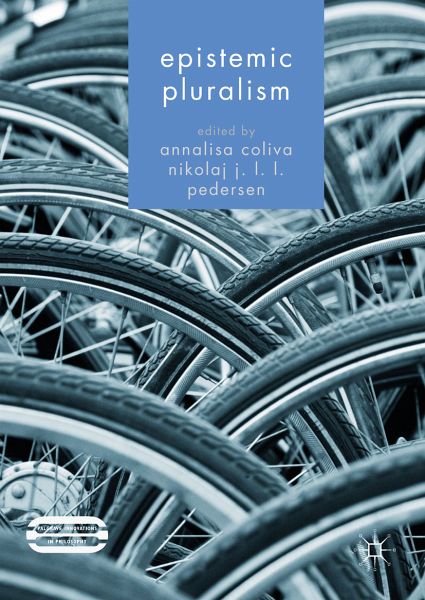
Is the first edited collection solely focussed on epistemic pluralism Investigates connections between epistemic pluralism and other epistemological paradigms Shows how epistemic pluralism will serve to reconfigure many debates in epistemology
Is the first edited collection solely focussed on epistemic pluralism Investigates connections between epistemic pluralism and other epistemological paradigms
Shows how epistemic pluralism will serve to reconfigure many debates in epistemology
Dieser Download kann aus rechtlichen Gründen nur mit Rechnungsadresse in A, B, BG, CY, CZ, D, DK, EW, E, FIN, F, GR, HR, H, IRL, I, LT, L, LR, M, NL, PL, P, R, S, SLO, SK ausgeliefert werden.
Die Herstellerinformationen sind derzeit nicht verfügbar.
Autorenporträt
Annalisa Coliva is Professor in the Department of Philosophy, University of California, Irvine, US. She has published widely on the subjects of epistemology, philosophy of mind and languages and the history of analytic philosophy and is the originator of the concept of 'hinge epistemology'. Her most recent books include The Varieties of Self-Knowledge (2016) and Extended Rationality: A Hinge Epistemology (2015). Nikolaj J. L. L. Pedersen is Associate Professor at the Underwood International College, South Korea. The founding Director of the Veritas Research Center and the UIC Research Institute, his research interests include epistemology, truth, metaphysics, and philosophy of logic. His work is due to appear in the upcoming Routledge Handbook of Social Epistemology and he is currently co-editing a book entitled Epistemic Entitlement with Peter Graham.
Inhaltsangabe
Introduction.- SECTION I: Epistemic Pluralism: Methdological Issues.- Chapter 1: Epistemic pluralism(s), Annalisa Coliva & Nikolaj Pedersen.- Chapter 2: Epistemic pluralism from the point of view of Carnap's method of explication, Erik Olsson.- SECTION II: Epistemic Pluralism: Justification, Knowledge, and Epistemic Values.- Chapter 3: Pluralism about epistemic justification, Michael Blome-Tillmann.- Chapter 4: The plurality of justification and the solution of misunderstanding, Anne Meylan.- Chapter 5: Who wants to know?, Jennifer Nado.- Chapter 6: Epistemic goods and epistemic standings: A pluralist account, Nikolaj Pedersen.- Chapter 7: Can there be a dual aspect epistemology?, Pascal Engel.- SECTION III: Epistemic Pluralism and Epistemic Relativism.- Chapter 8: A defense of epistemic pluralism, Martin Kusch.- Chapter 9: Epistemic relativism, epistemic pluralism and hinge epistemology, J. Adam Carter.- SECTION IV: Epistemic Pluralism: Some Applications.- Chapter 10: Unity and plurality in the epistemic norms of action and assertion, Mikkel Gerken.- Chapter 11: How to be a pluralist about disagreement, Michele Palmira.- Chapter 12: A pluralistic way out of epistemic deflationism about ontological disputes, Delia Belleri.- Chapter 13: Pluralism about self-knowledge, Annalisa Coliva.
Introduction.- SECTION I: Epistemic Pluralism: Methdological Issues.- Chapter 1: Epistemic pluralism(s), Annalisa Coliva & Nikolaj Pedersen.- Chapter 2: Epistemic pluralism from the point of view of Carnap's method of explication, Erik Olsson.- SECTION II: Epistemic Pluralism: Justification, Knowledge, and Epistemic Values.- Chapter 3: Pluralism about epistemic justification, Michael Blome-Tillmann.- Chapter 4: The plurality of justification and the solution of misunderstanding, Anne Meylan.- Chapter 5: Who wants to know?, Jennifer Nado.- Chapter 6: Epistemic goods and epistemic standings: A pluralist account, Nikolaj Pedersen.- Chapter 7: Can there be a dual aspect epistemology?, Pascal Engel.- SECTION III: Epistemic Pluralism and Epistemic Relativism.- Chapter 8: A defense of epistemic pluralism, Martin Kusch.- Chapter 9: Epistemic relativism, epistemic pluralism and hinge epistemology, J. Adam Carter.- SECTION IV: Epistemic Pluralism: Some Applications.- Chapter 10: Unity and plurality in the epistemic norms of action and assertion, Mikkel Gerken.- Chapter 11: How to be a pluralist about disagreement, Michele Palmira.- Chapter 12: A pluralistic way out of epistemic deflationism about ontological disputes, Delia Belleri.- Chapter 13: Pluralism about self-knowledge, Annalisa Coliva.
Es gelten unsere Allgemeinen Geschäftsbedingungen: www.buecher.de/agb
Impressum
www.buecher.de ist ein Internetauftritt der buecher.de internetstores GmbH
Geschäftsführung: Monica Sawhney | Roland Kölbl | Günter Hilger
Sitz der Gesellschaft: Batheyer Straße 115 - 117, 58099 Hagen
Postanschrift: Bürgermeister-Wegele-Str. 12, 86167 Augsburg
Amtsgericht Hagen HRB 13257
Steuernummer: 321/5800/1497
USt-IdNr: DE450055826