25,95 €
inkl. MwSt.
Sofort per Download lieferbar
13 °P sammeln

Andere Kunden interessierten sich auch für
") Sounding Bodies (eBook, ePUB)25,95 €
Sounding Bodies (eBook, ePUB)25,95 €") Victorian Negatives (eBook, ePUB)25,95 €
Victorian Negatives (eBook, ePUB)25,95 €") Medicine Is War (eBook, ePUB)27,95 €
Medicine Is War (eBook, ePUB)27,95 €") Empire of Culture (eBook, ePUB)25,95 €
Empire of Culture (eBook, ePUB)25,95 €") Novel Pedagogy (eBook, ePUB)25,95 €
Novel Pedagogy (eBook, ePUB)25,95 €") Dressing for England (eBook, ePUB)25,95 €
Dressing for England (eBook, ePUB)25,95 €") Personation Plots (eBook, ePUB)25,95 €
Personation Plots (eBook, ePUB)25,95 €


Explores how Victorian women writers used the popular science of phrenology to challenge socially constructed forms of power.
Winner of the 2024 Best Book Award presented by the South Atlantic Modern Language Association
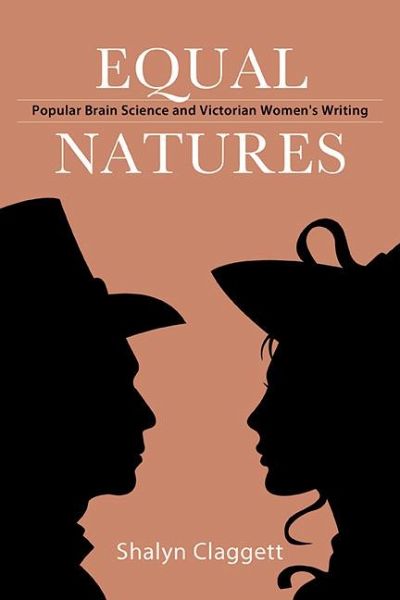
In Equal Natures, Shalyn Claggett argues that Victorian women writers used scientific understandings of the brain to challenge socially constructed forms of power and gender inequality. Focusing on phrenology-the first science of brain localization and the most popular science in nineteenth-century Britain-Claggett shows how these writers leveraged phrenology's premise that the seat of identity is innate rather than acquired to make new claims about women's intellectual abilities and psychological complexity. Whereas male scientists often used phrenology to support racist and colonialist agendas, in the hands of women, an appeal to biology became a tool of subversion. Through historically contextualized analyses of works by Charlotte and Anne Brontë, Harriet Martineau, Mary Elizabeth Braddon, and George Eliot, Equal Natures demonstrates how biology was used to contest conventional understandings of individual identity and interpersonal relations. In doing so, it counters a dominant assumption in feminist theory that essentialism has been the exclusive province of patriarchal values and reactionary political aims.
Winner of the 2024 Best Book Award presented by the South Atlantic Modern Language Association
In Equal Natures, Shalyn Claggett argues that Victorian women writers used scientific understandings of the brain to challenge socially constructed forms of power and gender inequality. Focusing on phrenology-the first science of brain localization and the most popular science in nineteenth-century Britain-Claggett shows how these writers leveraged phrenology's premise that the seat of identity is innate rather than acquired to make new claims about women's intellectual abilities and psychological complexity. Whereas male scientists often used phrenology to support racist and colonialist agendas, in the hands of women, an appeal to biology became a tool of subversion. Through historically contextualized analyses of works by Charlotte and Anne Brontë, Harriet Martineau, Mary Elizabeth Braddon, and George Eliot, Equal Natures demonstrates how biology was used to contest conventional understandings of individual identity and interpersonal relations. In doing so, it counters a dominant assumption in feminist theory that essentialism has been the exclusive province of patriarchal values and reactionary political aims.
Dieser Download kann aus rechtlichen Gründen nur mit Rechnungsadresse in A, D ausgeliefert werden.