Alle Infos zum eBook verschenken
- Format: PDF
- Merkliste
- Auf die Merkliste
- Bewerten Bewerten
- Teilen
- Produkt teilen
- Produkterinnerung
- Produkterinnerung

Hier können Sie sich einloggen

Bitte loggen Sie sich zunächst in Ihr Kundenkonto ein oder registrieren Sie sich bei bücher.de, um das eBook-Abo tolino select nutzen zu können.
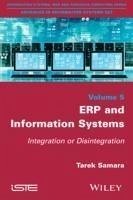
This research attempts to explore and identify eventual relationships between the evolution of ERP systems and information systems integration or disintegration. The aim of this research is to know if the relationships between the ERP systems and the information systems are guided by certain factors and, as a result, to understand, more in-depth, the factors affecting these relationships. More precisely, this analysis aims to study whether assigned values given to these factors could guide the evolution of ERP systems in a manner that promotes IS integration; and if the opposite assigned…mehr
- Geräte: PC
- mit Kopierschutz
- eBook Hilfe
- Größe: 3.2MB
Gerald KembellecRecommender Systems (eBook, PDF)139,99 €
Information Systems for Knowledge Management (eBook, PDF)139,99 €
Daniel AlbanInformation Systems Management (eBook, PDF)142,99 €
Saoussen KrichenGraph-related Optimization and Decision Support Systems (eBook, PDF)139,99 €
Daniel AlbanInformation Systems Management (eBook, PDF)139,99 €
Elsa NegreInformation and Recommender Systems (eBook, PDF)139,99 €
Pirmin P. LembergerManaging Complexity of Information Systems (eBook, PDF)139,99 €-
-
-
Dieser Download kann aus rechtlichen Gründen nur mit Rechnungsadresse in A, B, BG, CY, CZ, D, DK, EW, E, FIN, F, GR, HR, H, IRL, I, LT, L, LR, M, NL, PL, P, R, S, SLO, SK ausgeliefert werden.
- Produktdetails
- Verlag: John Wiley & Sons
- Seitenzahl: 142
- Erscheinungstermin: 2. Oktober 2015
- Englisch
- ISBN-13: 9781119232728
- Artikelnr.: 43975680
- Verlag: John Wiley & Sons
- Seitenzahl: 142
- Erscheinungstermin: 2. Oktober 2015
- Englisch
- ISBN-13: 9781119232728
- Artikelnr.: 43975680
- Herstellerkennzeichnung Die Herstellerinformationen sind derzeit nicht verfügbar.
Introduction xi
Chapter 1. Definition of Research Terms 1
Chapter 2. ERP: Contribution and Trends 9
2.1. ERP as an indicator of integration for information systems 9
2.2. Trends for ERP implementation within the framework of the information
system 10
2.3. Trends for ERP evolution toward a new generation (2nd G) 13
Chapter 3. The Research Question and Methodology 15
Chapter 4. Literature Review: Factors Affecting the Relationships between
the ERP System's Evolution and IS Integration or Disintegration 21
4.1. Economic crisis and COmpetitiveness (ECCO) 29
4.2. Total dependency on the ERP vendor (TDEV) 32
4.3. Project management ERP (PMER) 34
4.4. INTEroperability of the ERP (INTE) 36
4.5. Evolution strategy of existing systems (ESES) 38
4.5.1. Urbanization 38
4.5.2. Total overhaul 39
4.6. Complexity of ERP (COER) 41
4.7. Evolution strategy of ERP vendors (ESEV) 43
Chapter 5. Correlation Between Research Factors 49
5.1. Correlations between economic crisis and competitiveness (ECCO) and
PMER and INTE and COER 50
5.2. Correlations between ECCO and PMER and INTE and ESEV 51
5.3. Correlations between ECCO and PMER and COER and ESEV 51
5.4. Correlations between ECCO and TDEV and PMER 52
5.5. Correlations between ECCO and ESES and COER 52
5.6. Correlations between ECCO and ESES and ESEV 52
5.7. Correlations between PMER and ESES and ESEV 53
5.8. Correlations between INTE and ESES and COER 53
5.9. Correlation between ECCO and TDEV 53
5.10. Correlation between ECCO and PMER 54
5.11. Correlation between ECCO and INTE 56
5.12. Correlation between ECCO and ESES 56
5.13. Correlation between ECCO and COER 58
5.14. Correlation between ECCO and ESEV 59
5.15. Correlation between TDEV and INTE 60
5.16. Correlation between TDEV and ESES 61
5.17. Correlation between PMER and INTE 62
5.18. Correlation between PMER and ESES 62
5.19. Correlation between PMER and COER 63
5.20. Correlation between PMER and ESEV 64
5.21. Correlation between INTE and ESES 64
5.22. Correlation between INTE and COER 66
5.23. Correlation between INTE and ESEV 66
5.24. Correlation between COER and ESEV 67
Chapter 6. Case Studies 71
6.1. Hershey 71
6.1.1. Case outcome and evaluation 74
6.2. FoxMeyer Drugs 75
6.2.1. Case outcome and evaluation 76
6.3. Oracle Corporation's E-Business Suite 76
6.3.1. Case outcome and evaluation 78
6.4. Summary of case studies 78
Chapter 7. Discussion: Relationships between Evolution of ERP Systems and
IS Integration or Disintegration 81
7.1. TDEV and ECCO 81
7.2. TDEV and INTE 82
7.3. PMER and ESES 83
7.4. COER and PMER 83
7.5. INTE and ESES 84
7.6. COER and INTE 84
7.7. ESEV and INTE 85
7.8. COER and ESEV 86
Chapter 8. Interests and Limitations of the Research 91
Conclusion 93
Bibliography 99
Index 119
Introduction xi
Chapter 1. Definition of Research Terms 1
Chapter 2. ERP: Contribution and Trends 9
2.1. ERP as an indicator of integration for information systems 9
2.2. Trends for ERP implementation within the framework of the information
system 10
2.3. Trends for ERP evolution toward a new generation (2nd G) 13
Chapter 3. The Research Question and Methodology 15
Chapter 4. Literature Review: Factors Affecting the Relationships between
the ERP System's Evolution and IS Integration or Disintegration 21
4.1. Economic crisis and COmpetitiveness (ECCO) 29
4.2. Total dependency on the ERP vendor (TDEV) 32
4.3. Project management ERP (PMER) 34
4.4. INTEroperability of the ERP (INTE) 36
4.5. Evolution strategy of existing systems (ESES) 38
4.5.1. Urbanization 38
4.5.2. Total overhaul 39
4.6. Complexity of ERP (COER) 41
4.7. Evolution strategy of ERP vendors (ESEV) 43
Chapter 5. Correlation Between Research Factors 49
5.1. Correlations between economic crisis and competitiveness (ECCO) and
PMER and INTE and COER 50
5.2. Correlations between ECCO and PMER and INTE and ESEV 51
5.3. Correlations between ECCO and PMER and COER and ESEV 51
5.4. Correlations between ECCO and TDEV and PMER 52
5.5. Correlations between ECCO and ESES and COER 52
5.6. Correlations between ECCO and ESES and ESEV 52
5.7. Correlations between PMER and ESES and ESEV 53
5.8. Correlations between INTE and ESES and COER 53
5.9. Correlation between ECCO and TDEV 53
5.10. Correlation between ECCO and PMER 54
5.11. Correlation between ECCO and INTE 56
5.12. Correlation between ECCO and ESES 56
5.13. Correlation between ECCO and COER 58
5.14. Correlation between ECCO and ESEV 59
5.15. Correlation between TDEV and INTE 60
5.16. Correlation between TDEV and ESES 61
5.17. Correlation between PMER and INTE 62
5.18. Correlation between PMER and ESES 62
5.19. Correlation between PMER and COER 63
5.20. Correlation between PMER and ESEV 64
5.21. Correlation between INTE and ESES 64
5.22. Correlation between INTE and COER 66
5.23. Correlation between INTE and ESEV 66
5.24. Correlation between COER and ESEV 67
Chapter 6. Case Studies 71
6.1. Hershey 71
6.1.1. Case outcome and evaluation 74
6.2. FoxMeyer Drugs 75
6.2.1. Case outcome and evaluation 76
6.3. Oracle Corporation's E-Business Suite 76
6.3.1. Case outcome and evaluation 78
6.4. Summary of case studies 78
Chapter 7. Discussion: Relationships between Evolution of ERP Systems and
IS Integration or Disintegration 81
7.1. TDEV and ECCO 81
7.2. TDEV and INTE 82
7.3. PMER and ESES 83
7.4. COER and PMER 83
7.5. INTE and ESES 84
7.6. COER and INTE 84
7.7. ESEV and INTE 85
7.8. COER and ESEV 86
Chapter 8. Interests and Limitations of the Research 91
Conclusion 93
Bibliography 99
Index 119