Sie sind bereits eingeloggt. Klicken Sie auf 2. tolino select Abo, um fortzufahren.
Bitte loggen Sie sich zunächst in Ihr Kundenkonto ein oder registrieren Sie sich bei bücher.de, um das eBook-Abo tolino select nutzen zu können.
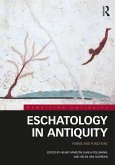
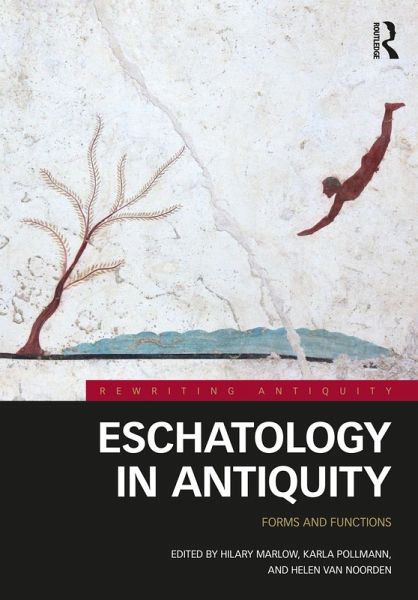
This collection of essays explores the rhetoric and practices surrounding views on life after death and the end of the world, including the fate of the individual, apocalyptic speculation and hope for cosmological renewal, in a wide range of societies from Ancient Mesopotamia to the Byzantine era. The 42 essays by leading scholars in each field explore the rich spectrum of ways in which eschatological understanding can be expressed, and for which purposes it can be used. Readers will gain new insight into the historical contexts, details, functions and impact of eschatological ideas and…mehr
This collection of essays explores the rhetoric and practices surrounding views on life after death and the end of the world, including the fate of the individual, apocalyptic speculation and hope for cosmological renewal, in a wide range of societies from Ancient Mesopotamia to the Byzantine era.
The 42 essays by leading scholars in each field explore the rich spectrum of ways in which eschatological understanding can be expressed, and for which purposes it can be used. Readers will gain new insight into the historical contexts, details, functions and impact of eschatological ideas and imagery in ancient texts and material culture from the twenty-fifth century BCE to the ninth century CE. Traditionally, the study of "eschatology" (and related concepts) has been pursued mainly by scholars of Jewish and Christian scripture. By broadening the disciplinary scope but remaining within the clearly defined geographical milieu of the Mediterranean, this volume enables its readers to note comparisons and contrasts, as well as exchanges of thought and transmission of eschatological ideas across Antiquity. Cross-referencing, high quality illustrations and extensive indexing contribute to a rich resource on a topic of contemporary interest and relevance.
Eschatology in Antiquity is aimed at readers from a wide range of academic disciplines, as well as non-specialists including seminary students and religious leaders. The primary audience will comprise researchers in relevant fields including Biblical Studies, Classics and Ancient History, Ancient Philosophy, Ancient Near Eastern Studies, Art History, Late Antiquity, Byzantine Studies and Cultural Studies. Care has been taken to ensure that the essays are accessible to undergraduates and those without specialist knowledge of particular subject areas.
Dieser Download kann aus rechtlichen Gründen nur mit Rechnungsadresse in A, B, BG, CY, CZ, D, DK, EW, E, FIN, F, GR, HR, H, IRL, I, LT, L, LR, M, NL, PL, P, R, S, SLO, SK ausgeliefert werden.
Die Herstellerinformationen sind derzeit nicht verfügbar.
Autorenporträt
Hilary Marlow is Fellow, Director of Studies and Tutor at Girton College, Cambridge, UK, and teaches Hebrew Bible in the Faculty of Divinity, University of Cambridge, UK. Her research interests include nature in the Hebrew Bible, ecology and the Bible and prophetic texts of the Hebrew Bible. She is author of Biblical Prophets and Contemporary Environmental Ethics (2009) and numerous articles and essays. Karla Pollmann is Dean of the Faculty of Arts at the University of Bristol, UK, and Professor of Classics and Theology. She is also an honorary member of the University of Aarhus, Denmark, and the University of Stellenbosch, South Africa, and a Distinguished Visiting Fellow at Green College, UBC, Vancouver, Canada. Her research interests span Classical and Late Antique literature and culture, and their reception. In 2020, she was awarded a Humboldt Research Prize in recognition of her internationally leading work. Major publications include The Oxford Guide to the Historical Reception of Augustine, 3 vols (2013) as Editor-in-Chief, and The Baptized Muse (2017). Helen Van Noorden is Senior Lecturer in Classics and Wrigley Fellow at Girton College, Cambridge, UK, and in 2020-2022 is Associate Professor and AIAS-COFUND Fellow at the Aarhus Institute of Advanced Studies, Denmark. She is the author of Playing Hesiod: the 'Myth of the Races' in Classical Antiquity (2015). Her current focus is a monograph study and translation of Books 3-5 of the Sibylline Oracles.
Inhaltsangabe
List of figures List of tables List of contributors Acknowledgements List of abbreviations Introduction, Helen Van Noorden, Hilary Marlow and Karla Pollmann Section 1: Ancient Near East and Hebrew Bible 1 Beyond the Future: Mesopotamian Perceptions of the Very End, Dina Katz 2 Individual and Universal Eschatology in Zoroastrianism, Leon Goldman 3 Egyptian Oracles and the Afterlife, Alexandre Loktionov 4 Eschatology in the Book of Isaiah: Multiple Perspectives on the Promised Times, Uta Schmidt 5 "As I Looked": Visionary Experiences and Conceptions of Place in the Book of Ezekiel, Hilary Marlow 6 Daniel and Daniel Apocalyptica, Lester L. Grabbe Section 2: Greek World 7 Beyond the Stream of the Ocean: Hades, the Aethiopians and the Homeric eschata, George A. Gazis 8 'Orphic' Eschatologies? Varying Visions of the Afterlife in Greek Thought, Radcliffe Edmonds 9 Eschatological Visions in Pindar and Empedocles, Chiara R. Ciampa 10 Plato's Myths, the Soul and its Intra-cosmic Future, Alex Long 11 Contemplating the End of Roman Power: Polybius' Histories in Context, Nicolas Wiater Section 3: Jewish Texts of the Hellenistic and Roman Periods 12 Protology and Eschatology in the Enochic Traditions, Gabriele Boccaccini 13 Dreams and Visions of Eschatological Trees in The Book of the Watchers (1 Enoch 1-36), Frances Flannery 14 Apocalyptic Eschatology in the Dead Sea Scrolls: The End as Counter-Cultural Discourse on Society and Creation, Albert Hogeterp 15 Returning from the Diaspora of the Soul: Eschatology in Philo of Alexandria, Sami Yli-Karjanmaa 16 End Times and Ending Times in 4 Ezra, Carla Sulzbach 17 Eschatology in the Early Jewish Pseudepigrapha and the Early Christian Apocrypha, Lorenzo DiTommaso Section 4: Etruscan and Roman Worlds 18 Etruscan eschata, L. Bouke van der Meer 19 Hope and Empire in Ciceronian Eschatology, Jed W. Atkins 20 Lucretius 'On the Nature of Things': Eschatology in an Age of Anxiety, Alessandro Schiesaro 21 Eschatological Temporalities in Vergil's Elysium, Giovanna Laterza 22 The End is the Beginning is the End: Apocalyptic Beginnings in Augustan Poetry, Elena Giusti 23 Eschatology in Seneca: The Senses of an Ending, Gareth Williams 24 Enduring Death and Remembering the Apocalypse: Identity, Timespace, and Lucanian Paradoxes, Katharine M. Earnshaw 25 Popular Eschatological Visions in the Roman Empire, Jerry Toner 26 Four Eschatological Emperors: Augustus, Nero, Vespasian and Hadrian, Christopher Star Section 5: New Testament texts 27 The End of the Temple or the End of the World? 1st Century Eschatology in the Gospels of Mark and Matthew, Sarah Underwood Dixon 28 The End-What and When? Eschatology in Luke-Acts, Steve Walton 29 Eschatology in the Gospel of John and the Johannine Epistles, Jörg Frey 30 Eschatology-Pauline and Catholic Epistles, Eve-Marie Becker 31 The Book of Revelation: The Apocalypse of Jesus Christ, Christopher Rowland Section 6: Late Antiquity and Byzantine World 32 Eschatology in Origen from Alexandria, Anders-Christian Jacobsen 33 Eschatology in Early Christian Poetry, Nikolaus Klassen 34 The Eschatological Thought of Basil the Great and Gregory of Nyssa, Sergey Trostyanskiy 35 Knowing One's Place: Eschatological Thought in Augustine, Karla Pollmann 36 Eschatological Motifs and Patterns of Thought in Christian Hagiography, Peter Gemeinhardt 37 Syriac Eschatology in Antiquity, Witold Witakowski 38 Eschatology and Anti-Jewish Polemic: Examples from the Armenian Tradition, Zaroui Pogossian 39 Early Muslim Apocalypses and their Origins, David Cook 40 Christian Eschatology in Late Antique/Byzantine Egypt, David Frankfurter 41 Symbols, Icons, Liturgy: Eschatology in Early Christian Art, Vladimir Cvetkovic 42 Eschatology in the Apocalyptic Revival in Judaism (6th-9th centuries CE) in its Historical Context, Philip Alexander Index of names and subjects
Es gelten unsere Allgemeinen Geschäftsbedingungen: www.buecher.de/agb
Impressum
www.buecher.de ist ein Internetauftritt der buecher.de internetstores GmbH
Geschäftsführung: Monica Sawhney | Roland Kölbl | Günter Hilger
Sitz der Gesellschaft: Batheyer Straße 115 - 117, 58099 Hagen
Postanschrift: Bürgermeister-Wegele-Str. 12, 86167 Augsburg
Amtsgericht Hagen HRB 13257
Steuernummer: 321/5800/1497
USt-IdNr: DE450055826