72,95 €
inkl. MwSt.
Sofort per Download lieferbar
36 °P sammeln

Andere Kunden interessierten sich auch für
") Intramedullary Limb Lengthening (eBook, PDF)72,95 €
Intramedullary Limb Lengthening (eBook, PDF)72,95 €") Operative Techniques in Orthopedic Trauma (eBook, PDF)152,95 €
Operative Techniques in Orthopedic Trauma (eBook, PDF)152,95 €") Basic Techniques for Extremity Reconstruction (eBook, PDF)136,95 €
Basic Techniques for Extremity Reconstruction (eBook, PDF)136,95 €") Essentials of Orthopedic Surgery (eBook, PDF)112,95 €
Essentials of Orthopedic Surgery (eBook, PDF)112,95 €") Orthopedics for Physician Assistant and Nurse Practitioner Students (eBook, PDF)40,95 €
Orthopedics for Physician Assistant and Nurse Practitioner Students (eBook, PDF)40,95 €") Principles of Deformity Correction (eBook, PDF)167,95 €
Principles of Deformity Correction (eBook, PDF)167,95 €") Advanced Techniques in Limb Reconstruction Surgery (eBook, PDF)72,95 €
Advanced Techniques in Limb Reconstruction Surgery (eBook, PDF)72,95 €



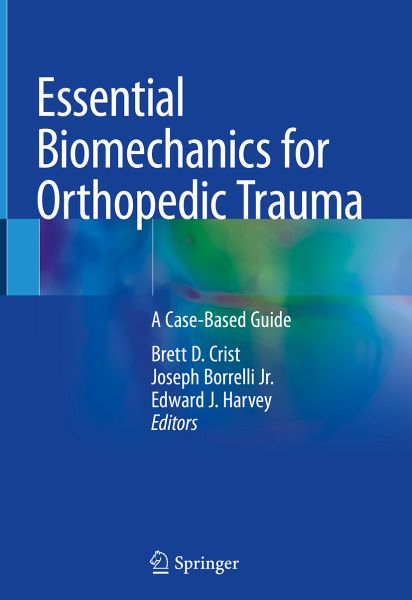
Biomechanics is often overlooked when dealing with orthopedic injuries, whether regarding prevention or treatment, and practicing surgeons and surgeons-in-training may feel overwhelmed when referring to a book with a more complicated basic science approach. In order to make the subject clinically relevant to orthopedic trauma surgery, this unique text presents numerous clinical case examples to demonstrate clearly and effectively the principles biomechanics of injury, fixation and fracture healing.
Divided into five sections, the opening chapters cover the essentials of stress and strain relevant to bone and joints and how this relates to fractures and their healing, complete with illustrative case material. This case-based approach is carried throughout the book, with part two discussing biomechanical principles of external fixation for diaphyseal and periarticular fractures, limb lengthening and deformity correction. Tension band wiring for both olecranon and patella fractures are covered in part three, and both locking and nonlocking plates are illustrated in part four. The final section describes biomechanical principles of intramedullary nails for a variety of fractures and nonunions, as well as arthrodesis and lengthening. Generous radiological images and intraoperative photos provide a helpful visual enhancement for the clinical material.
Making the sometimes esoteric topic of biomechanics more clinically relevant to the practicing clinician, Essential Biomechanics for Orthopedic Trauma will be an excellent resource not only for orthopedic surgeons, sports medicine specialists and trauma surgeons, but also medical and biomedical engineering students and residents.
Divided into five sections, the opening chapters cover the essentials of stress and strain relevant to bone and joints and how this relates to fractures and their healing, complete with illustrative case material. This case-based approach is carried throughout the book, with part two discussing biomechanical principles of external fixation for diaphyseal and periarticular fractures, limb lengthening and deformity correction. Tension band wiring for both olecranon and patella fractures are covered in part three, and both locking and nonlocking plates are illustrated in part four. The final section describes biomechanical principles of intramedullary nails for a variety of fractures and nonunions, as well as arthrodesis and lengthening. Generous radiological images and intraoperative photos provide a helpful visual enhancement for the clinical material.
Making the sometimes esoteric topic of biomechanics more clinically relevant to the practicing clinician, Essential Biomechanics for Orthopedic Trauma will be an excellent resource not only for orthopedic surgeons, sports medicine specialists and trauma surgeons, but also medical and biomedical engineering students and residents.
Dieser Download kann aus rechtlichen Gründen nur mit Rechnungsadresse in A, B, BG, CY, CZ, D, DK, EW, E, FIN, F, GR, HR, H, IRL, I, LT, L, LR, M, NL, PL, P, R, S, SLO, SK ausgeliefert werden.