2,13 €
inkl. MwSt.
Sofort per Download lieferbar
0 °P sammeln

Andere Kunden interessierten sich auch für
") History of the Rise and Influence of the Spirit of Rationalism in Europe (eBook, ePUB)2,13 €
History of the Rise and Influence of the Spirit of Rationalism in Europe (eBook, ePUB)2,13 €") Philosophie des Unbewußten (eBook, ePUB)2,13 €
Philosophie des Unbewußten (eBook, ePUB)2,13 €") Diderot and the Encyclopaedists (eBook, ePUB)2,13 €
Diderot and the Encyclopaedists (eBook, ePUB)2,13 €") Dialectic vs. Technocracy (eBook, ePUB)15,95 €
Dialectic vs. Technocracy (eBook, ePUB)15,95 €") René Descartes: Meditationen über die Erste Philosophie (eBook, ePUB)24,95 €
René Descartes: Meditationen über die Erste Philosophie (eBook, ePUB)24,95 €") A Companion to Spinoza (eBook, ePUB)151,99 €
A Companion to Spinoza (eBook, ePUB)151,99 €") Descartes (eBook, ePUB)5,92 €
Descartes (eBook, ePUB)5,92 €







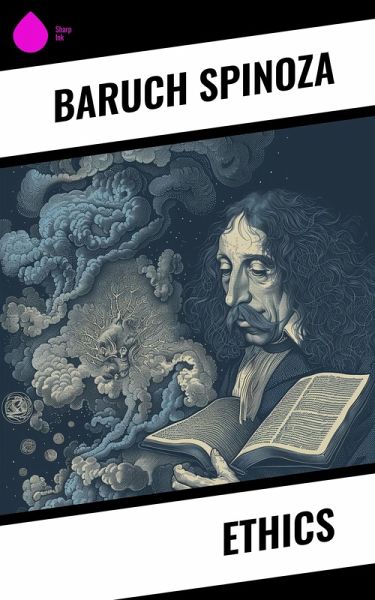
Baruch Spinoza's 'Ethics' is a seminal work that intertwines philosophy, ethics, and metaphysics through a rigorous and systematic discourse. Written in a geometric style reminiscent of Euclidean geometry, Spinoza meticulously constructs his arguments in propositions and axioms, allowing for a clear progression of thought that leads the reader through the intricacies of human existence and the nature of God. The work challenges traditional notions of divine providence and seeks to establish a rational basis for ethics, asserting that understanding the universe and our place within it leads to true happiness and freedom. The text draws from a rich intellectual milieu, including Cartesian philosophy and ancient Stoicism, and is noted for its radical ideas on determinism and the mind-body relationship. Baruch Spinoza (1632-1677), a Dutch philosopher of Portuguese-Jewish origin, was influenced by the religious and cultural upheavals of his time. His exile from the Jewish community in Amsterdam and his dedication to rational inquiry galvanized his critique of religious dogmas and normative morality. Through 'Ethics', Spinoza seeks to reconcile the conflict between faith and reason, embodying the spirit of Enlightenment thought that would influence generations of philosophers following him. For readers seeking a profound exploration of ethical principles and the nature of existence, 'Ethics' offers a transformative approach that challenges preconceived notions of morality. Spinoza's work remains relevant today, providing insights into contemporary debates on ethics and the nature of the self. Engaging with 'Ethics' equips the reader with a philosophical framework that encourages rational thought and a deeper understanding of the interconnectedness of all things.
Dieser Download kann aus rechtlichen Gründen nur mit Rechnungsadresse in A, B, BG, CY, CZ, D, DK, EW, E, FIN, F, GR, HR, H, IRL, I, LT, L, LR, M, NL, PL, P, R, S, SLO, SK ausgeliefert werden.