8,95 €
8,95 €
inkl. MwSt.
Sofort per Download lieferbar

4 °P sammeln
8,95 €
Als Download kaufen
8,95 €
inkl. MwSt.
Sofort per Download lieferbar
4 °P sammeln
Jetzt verschenken
Alle Infos zum eBook verschenken
8,95 €
inkl. MwSt.
Sofort per Download lieferbar
Alle Infos zum eBook verschenken
4 °P sammeln

Andere Kunden interessierten sich auch für
") Civil Society and Political Reform in Lebanon and Libya (eBook, ePUB)41,95 €
Civil Society and Political Reform in Lebanon and Libya (eBook, ePUB)41,95 €") Ethiopia and the Red Sea (eBook, ePUB)48,95 €
Ethiopia and the Red Sea (eBook, ePUB)48,95 €") The Grand Ethiopian Renaissance Dam and the Nile Basin (eBook, ePUB)45,95 €
The Grand Ethiopian Renaissance Dam and the Nile Basin (eBook, ePUB)45,95 €") America's Political Dysfunction: a Few Thoughts (eBook, ePUB)2,99 €
America's Political Dysfunction: a Few Thoughts (eBook, ePUB)2,99 €") The Politics of Governance (eBook, ePUB)37,95 €
The Politics of Governance (eBook, ePUB)37,95 €") TRUMP (eBook, ePUB)3,99 €
TRUMP (eBook, ePUB)3,99 €") The British political elite and Europe, 1959-1984 (eBook, ePUB)21,95 €
The British political elite and Europe, 1959-1984 (eBook, ePUB)21,95 €






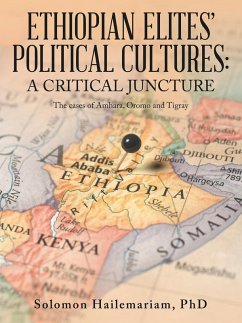
Recurrent ethnic conflicts have been seen in Ethiopia, especially during the last three decades, since the introduction of a governance structure of ethnic federalism in 1991. Attempts to bring political stability to the country have not been successful, as competing political cultures constantly struggle for hegemony. Political constituencies have fragmented, based on sub-national political cultures. This book shows the influence of Amhara, Oromo, and Tigrayan political cultures in Ethiopia and their contribution to the recurrent ethnic conflict in the country. The book used the concepts of political culture and neo-patrimonialism as analytical tools to understand the differences among and between the educated people from these ethnic groups. The findings show that members of each ethnic group are deeply entrenched in their own culture, with clear distrust of the political motives of other ethnicities. Beyond the disagreements on political history, the educated elites accuse each other when it comes to the many challenges faced by the country. They accuse each other of state capture, corruption, inciting ethnic conflicts, malpractice, poor governance, misguided policies, divide-and-rule practices, and misappropriation of the nation's economic wealth. The elites themselves do not shoulder responsibility for any failure in the country and do not show any interest in understanding other points of view, do not show sincere respect for the other's value but claim privileged political positions in present-day Ethiopia for past accomplishments.
Dieser Download kann aus rechtlichen Gründen nur mit Rechnungsadresse in A, D ausgeliefert werden.