153,95 €
inkl. MwSt.
Sofort per Download lieferbar
77 °P sammeln

Andere Kunden interessierten sich auch für
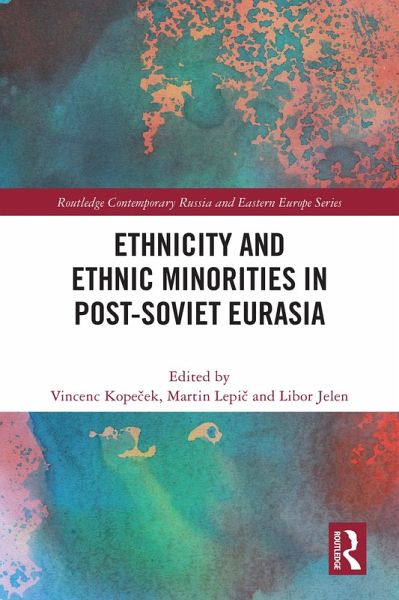
") Ethnicity and Ethnic Minorities in Post-Soviet Eurasia (eBook, ePUB)153,95 €
Ethnicity and Ethnic Minorities in Post-Soviet Eurasia (eBook, ePUB)153,95 €") The Germans of the Soviet Union (eBook, PDF)55,95 €
The Germans of the Soviet Union (eBook, PDF)55,95 €") Nation Building And Ethnic Integration In Post-soviet Societies (eBook, PDF)41,95 €
Nation Building And Ethnic Integration In Post-soviet Societies (eBook, PDF)41,95 €") Ethnic Minorities in Israel and Turkey (eBook, PDF)42,95 €
Ethnic Minorities in Israel and Turkey (eBook, PDF)42,95 €") Democratization and Ethnic Minorities (eBook, PDF)35,95 €
Democratization and Ethnic Minorities (eBook, PDF)35,95 €") Legislative Networks and Reforms in Post-Soviet States (eBook, PDF)35,95 €
Legislative Networks and Reforms in Post-Soviet States (eBook, PDF)35,95 €") Crises in the Post-Soviet Space (eBook, PDF)41,95 €
Crises in the Post-Soviet Space (eBook, PDF)41,95 €


This book focuses on the study of ethnic minorities in post- Soviet Eurasia, their self-perceptions, and their relations with ethnic majorities and dominant state- and nation-building. Contributors to the book examine strategies and networks which minorities create for preserving a group's distinctiveness while at the same time maintaining coexistence with the majority. The chapters also study the effects of different contextual settings of these strategies and networks. Offering a unique systematic comparison of selected cases using ethnicity as the main concept, the book argues it was the Soviet notion of ethnicity which stood in the centre of the administrative structure of the Soviet Union and that it consequently had a profound impact on how individual ethnic majority and minority groups in the former USSR understood themselves and imagined each other, how political institutions in individual Soviet republics and ethnic autonomies were formed, and how this institutional setting defined the distribution of political power between ethnic majorities and minorities. It also argues that this complex system of relations between ethnic minorities and majorities has significantly changed during the past 30 years and resulted in the formation of a post-Soviet notion of ethnicity. This book will be of interest to researchers studying Post- Soviet Politics, Political Geography, International Relations, Political Science, History, and Area studies.
Dieser Download kann aus rechtlichen Gründen nur mit Rechnungsadresse in A, B, BG, CY, CZ, D, DK, EW, E, FIN, F, GR, HR, H, IRL, I, LT, L, LR, M, NL, PL, P, R, S, SLO, SK ausgeliefert werden.