109,95 €
inkl. MwSt.
Sofort per Download lieferbar
55 °P sammeln

Andere Kunden interessierten sich auch für
") Enforcing European Competition Law through Leniency Programmes in the Light of Fundamental Rights (eBook, PDF)127,00 €
Enforcing European Competition Law through Leniency Programmes in the Light of Fundamental Rights (eBook, PDF)127,00 €") Kronzeugen im Europäischen Wettbewerbsnetz (eBook, PDF)159,00 €
Kronzeugen im Europäischen Wettbewerbsnetz (eBook, PDF)159,00 €") EU Tax Law and Policy in the 21st Century (eBook, PDF)116,95 €
EU Tax Law and Policy in the 21st Century (eBook, PDF)116,95 €") New EU Judiciary (eBook, PDF)128,95 €
New EU Judiciary (eBook, PDF)128,95 €") International Law and Policy of Human Welfare (eBook, PDF)371,95 €
International Law and Policy of Human Welfare (eBook, PDF)371,95 €") State Aid, Subsidy and Tax Incentives under EU and WTO Law (eBook, PDF)165,95 €
State Aid, Subsidy and Tax Incentives under EU and WTO Law (eBook, PDF)165,95 €") Regulating Hedge Funds in the EU (eBook, PDF)85,95 €
Regulating Hedge Funds in the EU (eBook, PDF)85,95 €



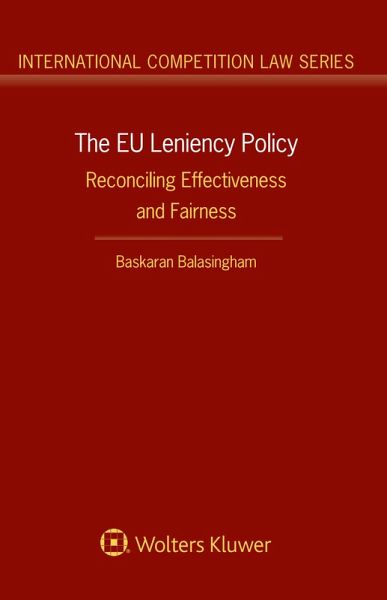
The European Union (EU) leniency programme is a key weapon in the Commission's fight against hard-core cartels. Much of the success of EU cartel enforcement depends on the continued effectiveness of the leniency policy and is especially critical in response to the growth of private enforcement. This book offers a comprehensive description of the development of the policy, along with a normative framework that promises to ensure the full legitimacy of the leniency programme: the Commission's policy should pursue not only effectiveness but also fairness. It is the first work to extensively analyse the effectiveness and fairness in the EU leniency policy.
Proceeding systematically from clarifying the concepts of 'effectiveness' and 'fairness' to addressing the tension between leniency and private actions for damages, the author discusses the nature of, and interrelations among, such aspects as the following:
Proceeding systematically from clarifying the concepts of 'effectiveness' and 'fairness' to addressing the tension between leniency and private actions for damages, the author discusses the nature of, and interrelations among, such aspects as the following:
- - the theoretical model of the EU fining policy;
- - the compatibility of the EU enforcement system with fundamental rights protection;
- - the gathering and evaluation of evidence at the preliminary investigation stage;
- - the severity and foreseeability of the EU cartel fines;
- - judicial review by the EU Courts in competition matters;
- - to what extent the current policy is effective and fair; and
- - reforms brought about by the 2002 and 2006 Leniency Notices and the leniency-related amendments by the 2014 Antitrust Damages Directive.
A key feature is the author's presentation of a normative framework to test the effectiveness (deterrence) and substantive fairness (retribution) of the EU leniency policy.
As a clear demonstration of how to forestall the danger of focusing on effectiveness of leniency at the expense of fairness, both in a substantive and in a procedural sense, this book is a major contribution to the literature of competition law. It will prove to be of great value to competition authorities, antitrust practitioners and interested academics not only in Europe but also throughout the world.
Dieser Download kann aus rechtlichen Gründen nur mit Rechnungsadresse in A, B, BG, CY, CZ, D, DK, EW, E, FIN, F, GR, HR, H, IRL, I, LT, L, LR, M, NL, PL, P, R, S, SLO, SK ausgeliefert werden.