41,95 €
41,95 €
inkl. MwSt.
Sofort per Download lieferbar

21 °P sammeln
41,95 €
Als Download kaufen
41,95 €
inkl. MwSt.
Sofort per Download lieferbar
21 °P sammeln
Jetzt verschenken
Alle Infos zum eBook verschenken
41,95 €
inkl. MwSt.
Sofort per Download lieferbar
Alle Infos zum eBook verschenken
21 °P sammeln

Andere Kunden interessierten sich auch für
") The Politics of the European Neighbourhood Policy (eBook, ePUB)38,95 €
The Politics of the European Neighbourhood Policy (eBook, ePUB)38,95 €") Theorizing the European Neighbourhood Policy (eBook, ePUB)45,95 €
Theorizing the European Neighbourhood Policy (eBook, ePUB)45,95 €") The New Silk Road Grand Strategy and the Maghreb (eBook, ePUB)39,95 €
The New Silk Road Grand Strategy and the Maghreb (eBook, ePUB)39,95 €") The Routledge Handbook on the European Neighbourhood Policy (eBook, ePUB)45,95 €
The Routledge Handbook on the European Neighbourhood Policy (eBook, ePUB)45,95 €") EU Policies in the Eastern Neighbourhood (eBook, ePUB)39,95 €
EU Policies in the Eastern Neighbourhood (eBook, ePUB)39,95 €") The European Union, Russia and the Shared Neighbourhood (eBook, ePUB)45,95 €
The European Union, Russia and the Shared Neighbourhood (eBook, ePUB)45,95 €") European Neighbourhood through Civil Society Networks? (eBook, ePUB)39,95 €
European Neighbourhood through Civil Society Networks? (eBook, ePUB)39,95 €







In light of their geographical proximity and crucial strategic importance, the European Union (EU) has long identified cooperation with the countries of the Mediterranean region a central priority of its external relations and has developed a complex set of policies and instruments. Yet, there is a certain academic consensus that EU external policies in the area did not live up to their original expectations, insofar as little progress was made to accomplish the proclaimed goals while the implementation of structural reforms proved to be extremely problematic. These deficiencies in EU Mediterranean policies are symptomatic of what is a greater challenge in EU external policy-making: the struggle for implementation.
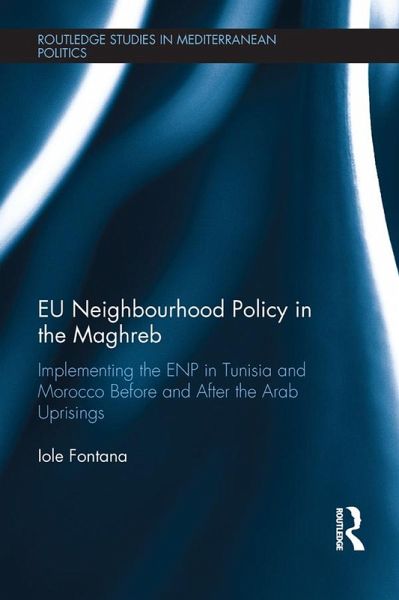
This book analyses the implementation of the European Neighbourhood Policy in the Mediterranean, focusing on specific programs financed under the European Neighbourhood Policy Instrument in the years before and after the Arab uprisings. Building on a comparative analysis of two Maghreb countries, Tunisia and Morocco, it provides an in-depth investigation on the role of domestic actors in constraining or providing points of opportunity for the implementation of the ENP. The book presents new empirical data and, by focusing on the role of local actors in the neighbouring countries, it offers interesting insights not only into the ENPI complex processes of implementation, but also on the challenges of the E U in the region and the state of relations with the Southern neighbourhood.
Through the prism of the European Neighbourhood Policy, the book provides a window into the internal politics and relevant issues of Maghreb countries. It will therefore be a valuable resource for students and scholars of European and Mediterranean Studies, as well as those interested in EU international relations.
This book analyses the implementation of the European Neighbourhood Policy in the Mediterranean, focusing on specific programs financed under the European Neighbourhood Policy Instrument in the years before and after the Arab uprisings. Building on a comparative analysis of two Maghreb countries, Tunisia and Morocco, it provides an in-depth investigation on the role of domestic actors in constraining or providing points of opportunity for the implementation of the ENP. The book presents new empirical data and, by focusing on the role of local actors in the neighbouring countries, it offers interesting insights not only into the ENPI complex processes of implementation, but also on the challenges of the E U in the region and the state of relations with the Southern neighbourhood.
Through the prism of the European Neighbourhood Policy, the book provides a window into the internal politics and relevant issues of Maghreb countries. It will therefore be a valuable resource for students and scholars of European and Mediterranean Studies, as well as those interested in EU international relations.
Dieser Download kann aus rechtlichen Gründen nur mit Rechnungsadresse in A, B, BG, CY, CZ, D, DK, EW, E, FIN, F, GR, HR, H, IRL, I, LT, L, LR, M, NL, PL, P, R, S, SLO, SK ausgeliefert werden.