Sie sind bereits eingeloggt. Klicken Sie auf 2. tolino select Abo, um fortzufahren.
Bitte loggen Sie sich zunächst in Ihr Kundenkonto ein oder registrieren Sie sich bei bücher.de, um das eBook-Abo tolino select nutzen zu können.
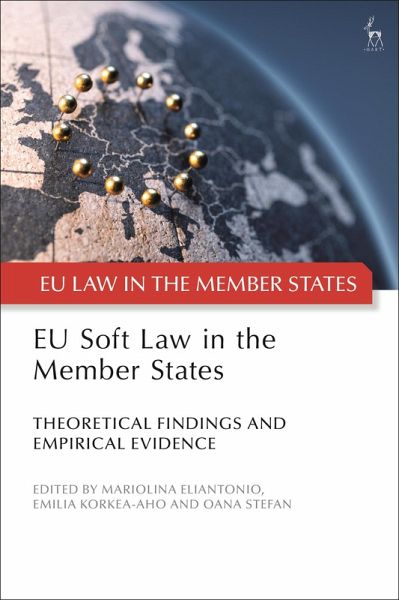
This volume analyses, for the first time in European studies, the impact that non-legally binding material (otherwise known as soft law) has on national courts and administration. The study is founded on empirical work undertaken by the European Network of Soft Law Research (SoLaR), across ten EU Member States, in competition policy, financial regulation, environmental protection and social policy. The book demonstrates that soft law is taken into consideration at the national level and it clarifies the extent to which soft law can have legal and practical effects for individuals and national…mehr
This volume analyses, for the first time in European studies, the impact that non-legally binding material (otherwise known as soft law) has on national courts and administration. The study is founded on empirical work undertaken by the European Network of Soft Law Research (SoLaR), across ten EU Member States, in competition policy, financial regulation, environmental protection and social policy. The book demonstrates that soft law is taken into consideration at the national level and it clarifies the extent to which soft law can have legal and practical effects for individuals and national authorities. The national case studies highlight the points of convergence or divergence in the way in which judges and administrators approach soft law, while reflecting on the reasons for and consequences of various national practices. A series of horizontal studies connect this research to the rich literature on new modes of governance, by revisiting traditional theories on soft law, and by reflecting on the potential of such instruments to undermine or to foster rule of law values.
Die Herstellerinformationen sind derzeit nicht verfügbar.
Autorenporträt
Mariolina Eliantonio is Professor at the University of Maastricht. Emilia Korkea-aho is Associate Professor at the University of Eastern Finland Law School. Oana Stefan is Senior Lecturer in Law at King's College, London.
Inhaltsangabe
PART I NORMATIVE ASSUMPTIONS 2. Revisiting Soft Law: Governance, Regulation and Networks Imelda Maher, University College Dublin, Ireland 3. Types of EU Soft Law and Their National Impact Andreas Hofmann, Freie Universitat Berlin, Germany 4. 'Whatever-Law ' and Teenage Member States ? : The National Reception of EU Soft Law and How to Study It Miriam Hartlapp, Freie Universitat Berlin, Germany and Emilia Korkea-aho, University of Eastern Finland 5. 'Verba Volant, Quoque (Soft Law) Scripta?': An Analysis of the Legal Effects of National Soft Law Implementing EU Soft Law in France and the UK Giulia Gentile, Maastricht University, Netherlands PART II COUNTRY ANALYSES 6. EU Soft Law in Cyprus: In Search of Role and Value Napoleon Xanthoulis, the University of Portsmouth, UK and Anastasia Karatzia, University of Essex, UK 7. The Finnish Soft Law Puzzle: How Can a Rule-Bound Parliamentary Democracy Be Reconciled with EU Soft Law? Emilia Korkea-aho, University of Eastern Finland, Katri Havu, University of Helsinki, Finland, Päivi Leino-Sandberg, University of Helsinki, Finland and Liisa Tarkkila, University of Helsinki, Finland 8. No Longer Small Enough to Fall through the Cracks: A French Story of Adaptation to the Petites Sources of EU Law Nathalie Rubio, Aix-Marseille University, France and Oana Stefan, King's College London, UK 9. Soft Law in Germany: Still Opposing Dynamics in Status and Effect Miriam Hartlapp, Freie Universitat Berlin, Germany, Andreas Hofmann, Freie Universitat Berlin, Germany and Matthias Knauff, University of Jena, Germany 10. The Approach of Hungarian Authorities to Soft Law: On the Road to Where? Petra Lea Láncos, Pazmany Peter Catholic University, Hungary 11. Judges, Public Authorities and EU Soft Law in Italy: How You Cannot Tell a Book by its Cover Jacopo Alberti, University of Ferrara, Italy and Mariolina Eliantonio, Maastricht University, Netherlands 12. Soft Law and Guidance in the Netherlands: At Odds with Legal Principles? Barbara Beijen, Radboud University, Netherlands 13. The Uneasy Reception of EU Soft Law in the Slovenian Legal Order Matej Avbelj, New University in Ljubljana, Slovenia and Katarina Vatovec, New University in Ljubljana, Slovenia 14. In Search of Symmetry Lost: European and Spanish Soft Law before the Spanish Authorities Luis Arroyo Jiménez, University of Castilla-La Mancha, Spain and José María Rodríguez de Santiago, Universidad Autonoma de Madrid, Spain 15. EU Soft Law in the UK on the Eve of Brexit: (Not) Much Ado about Nothing? Mary Dobbs, Maynooth University, Ireland and Oana Stefan, King's College London, UK 16. Three Worlds of Chinese Soft Law Francis Snyder, Peking University, China PART III EVALUATION 17. Judicial Review of Soft Law before the European and the National Courts: A Wind of Change Blowing from the Member States? Mariolina Eliantonio, Maastricht University, Netherlands 18. Legal Effects and Reviewability of EU Acts: Between Institutional Intentions and Perceptions of Concerned Parties Napoleon Xanthoulis, University of Portsmouth, UK 19. Soft Law and the Promise of Transparency in the Member States Oana Stefan, King's College London, UK 20. The National Politics of EU Soft Law: Sweden and the Balancing Act between Output and Input Legitimacy Ulrika Mörth, Stockholm University, Sweden 21. Final Thoughts Niilo Jääskinen, Court of Justice of the European Union
PART I NORMATIVE ASSUMPTIONS 2. Revisiting Soft Law: Governance, Regulation and Networks Imelda Maher, University College Dublin, Ireland 3. Types of EU Soft Law and Their National Impact Andreas Hofmann, Freie Universitat Berlin, Germany 4. 'Whatever-Law ' and Teenage Member States ? : The National Reception of EU Soft Law and How to Study It Miriam Hartlapp, Freie Universitat Berlin, Germany and Emilia Korkea-aho, University of Eastern Finland 5. 'Verba Volant, Quoque (Soft Law) Scripta?': An Analysis of the Legal Effects of National Soft Law Implementing EU Soft Law in France and the UK Giulia Gentile, Maastricht University, Netherlands PART II COUNTRY ANALYSES 6. EU Soft Law in Cyprus: In Search of Role and Value Napoleon Xanthoulis, the University of Portsmouth, UK and Anastasia Karatzia, University of Essex, UK 7. The Finnish Soft Law Puzzle: How Can a Rule-Bound Parliamentary Democracy Be Reconciled with EU Soft Law? Emilia Korkea-aho, University of Eastern Finland, Katri Havu, University of Helsinki, Finland, Päivi Leino-Sandberg, University of Helsinki, Finland and Liisa Tarkkila, University of Helsinki, Finland 8. No Longer Small Enough to Fall through the Cracks: A French Story of Adaptation to the Petites Sources of EU Law Nathalie Rubio, Aix-Marseille University, France and Oana Stefan, King's College London, UK 9. Soft Law in Germany: Still Opposing Dynamics in Status and Effect Miriam Hartlapp, Freie Universitat Berlin, Germany, Andreas Hofmann, Freie Universitat Berlin, Germany and Matthias Knauff, University of Jena, Germany 10. The Approach of Hungarian Authorities to Soft Law: On the Road to Where? Petra Lea Láncos, Pazmany Peter Catholic University, Hungary 11. Judges, Public Authorities and EU Soft Law in Italy: How You Cannot Tell a Book by its Cover Jacopo Alberti, University of Ferrara, Italy and Mariolina Eliantonio, Maastricht University, Netherlands 12. Soft Law and Guidance in the Netherlands: At Odds with Legal Principles? Barbara Beijen, Radboud University, Netherlands 13. The Uneasy Reception of EU Soft Law in the Slovenian Legal Order Matej Avbelj, New University in Ljubljana, Slovenia and Katarina Vatovec, New University in Ljubljana, Slovenia 14. In Search of Symmetry Lost: European and Spanish Soft Law before the Spanish Authorities Luis Arroyo Jiménez, University of Castilla-La Mancha, Spain and José María Rodríguez de Santiago, Universidad Autonoma de Madrid, Spain 15. EU Soft Law in the UK on the Eve of Brexit: (Not) Much Ado about Nothing? Mary Dobbs, Maynooth University, Ireland and Oana Stefan, King's College London, UK 16. Three Worlds of Chinese Soft Law Francis Snyder, Peking University, China PART III EVALUATION 17. Judicial Review of Soft Law before the European and the National Courts: A Wind of Change Blowing from the Member States? Mariolina Eliantonio, Maastricht University, Netherlands 18. Legal Effects and Reviewability of EU Acts: Between Institutional Intentions and Perceptions of Concerned Parties Napoleon Xanthoulis, University of Portsmouth, UK 19. Soft Law and the Promise of Transparency in the Member States Oana Stefan, King's College London, UK 20. The National Politics of EU Soft Law: Sweden and the Balancing Act between Output and Input Legitimacy Ulrika Mörth, Stockholm University, Sweden 21. Final Thoughts Niilo Jääskinen, Court of Justice of the European Union
Es gelten unsere Allgemeinen Geschäftsbedingungen: www.buecher.de/agb
Impressum
www.buecher.de ist ein Internetauftritt der buecher.de internetstores GmbH
Geschäftsführung: Monica Sawhney | Roland Kölbl | Günter Hilger
Sitz der Gesellschaft: Batheyer Straße 115 - 117, 58099 Hagen
Postanschrift: Bürgermeister-Wegele-Str. 12, 86167 Augsburg
Amtsgericht Hagen HRB 13257
Steuernummer: 321/5800/1497
USt-IdNr: DE450055826