72,95 €
72,95 €
inkl. MwSt.
Sofort per Download lieferbar

36 °P sammeln
72,95 €
Als Download kaufen
72,95 €
inkl. MwSt.
Sofort per Download lieferbar
36 °P sammeln
Jetzt verschenken
Alle Infos zum eBook verschenken
72,95 €
inkl. MwSt.
Sofort per Download lieferbar
Alle Infos zum eBook verschenken
36 °P sammeln

Andere Kunden interessierten sich auch für
") Electronic Design Automation of Analog ICs combining Gradient Models with Multi-Objective Evolutionary Algorithms (eBook, PDF)40,95 €
Electronic Design Automation of Analog ICs combining Gradient Models with Multi-Objective Evolutionary Algorithms (eBook, PDF)40,95 €") Wireless Personal Communications (eBook, PDF)72,95 €
Wireless Personal Communications (eBook, PDF)72,95 €") Evolutionary Computing and Mobile Sustainable Networks (eBook, PDF)160,95 €
Evolutionary Computing and Mobile Sustainable Networks (eBook, PDF)160,95 €") Proceedings of the 2nd Workshop on Communication Security (eBook, PDF)112,95 €
Proceedings of the 2nd Workshop on Communication Security (eBook, PDF)112,95 €") Metaheuristic Applications to Speech Enhancement (eBook, PDF)40,95 €
Metaheuristic Applications to Speech Enhancement (eBook, PDF)40,95 €") Advances in Audio Watermarking Based on Matrix Decomposition (eBook, PDF)40,95 €
Advances in Audio Watermarking Based on Matrix Decomposition (eBook, PDF)40,95 €") Fuzzy Logic for Image Processing (eBook, PDF)44,95 €
Fuzzy Logic for Image Processing (eBook, PDF)44,95 €







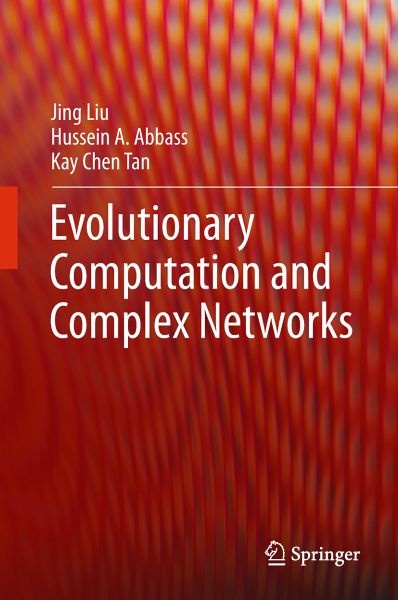
This book introduces the linkage between evolutionary computation and complex networks and the advantages of cross-fertilising ideas from both fields. Instead of introducing each field individually, the authors focus on the research that sits at the interface of both fields. The book is structured to address two questions: (1) how complex networks are used to analyze and improve the performance of evolutionary computation methods? (2) how evolutionary computation methods are used to solve problems in complex networks? The authors interweave complex networks and evolutionary computing, using evolutionary computation to discover community structure, while also using network analysis techniques to analyze the performance of evolutionary algorithms. The book is suitable for both beginners and senior researchers in the fields of evolutionary computation and complex networks.
Dieser Download kann aus rechtlichen Gründen nur mit Rechnungsadresse in A, B, BG, CY, CZ, D, DK, EW, E, FIN, F, GR, HR, H, IRL, I, LT, L, LR, M, NL, PL, P, R, S, SLO, SK ausgeliefert werden.