39,95 €
39,95 €
inkl. MwSt.
Sofort per Download lieferbar

20 °P sammeln
39,95 €
Als Download kaufen
39,95 €
inkl. MwSt.
Sofort per Download lieferbar
20 °P sammeln
Jetzt verschenken
Alle Infos zum eBook verschenken
39,95 €
inkl. MwSt.
Sofort per Download lieferbar
Alle Infos zum eBook verschenken
20 °P sammeln

Andere Kunden interessierten sich auch für
") Excavating Pedregal (eBook, ePUB)39,95 €
Excavating Pedregal (eBook, ePUB)39,95 €") The Excavation of Roman and Mediaeval London (eBook, PDF)51,95 €
The Excavation of Roman and Mediaeval London (eBook, PDF)51,95 €") The Ancient Andean States (eBook, PDF)39,95 €
The Ancient Andean States (eBook, PDF)39,95 €") 3,000 Years of War and Peace in the Maya Lowlands (eBook, PDF)38,95 €
3,000 Years of War and Peace in the Maya Lowlands (eBook, PDF)38,95 €") Itinerant Potters in the Andes (eBook, PDF)21,95 €
Itinerant Potters in the Andes (eBook, PDF)21,95 €") Infrastructures of Religion and Power (eBook, PDF)39,95 €
Infrastructures of Religion and Power (eBook, PDF)39,95 €") Understanding Early Large-Scale Collectives (eBook, PDF)39,95 €
Understanding Early Large-Scale Collectives (eBook, PDF)39,95 €
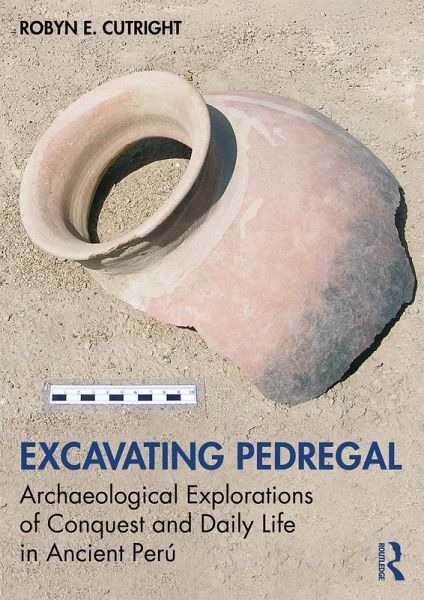
Excavating Pedregal offers a new synthesis of household-level experiences of imperial conquest on the north coast of Perú, using excavations at the Late Intermediate Period farming community of Pedregal as an engaging case study of archaeological research in action. Alongside this central case study, short essays by other archaeological stakeholders highlight diverse experiences and perspectives within archaeology.
This book draws on the author's 15 years of experience teaching undergraduates and over 20 years as an archaeologist in Perú to offer an accessible account of how archaeological research happens. Chapters introduce key concepts from anthropological archaeology and link research questions to methods, data analysis, and findings. The book balances a discussion of the scientific processes and anthropological theories that ground archaeological research with a tangible account of the lived experiences and practical considerations of doing archaeology. Excavating Pedregal's multivocal approach complements the central case study with vignettes by North American and Latin American archaeologists, students, and community members. These short essays enrich the main themes of the book and introduce readers to different perspectives and voices within the field, highlighting the way collaboration and conversation with multiple stakeholders enhance the study of the past.
Excavating Pedregal is an approachable introduction to how archaeology works for undergraduate students and general readers. It supplements a traditional introductory text by contextualizing research questions, methods, and data in a concrete, contemporary case study while also offering a sense of the diversity of questions, experiences, and methods that exist in archaeology today and satisfying the curiosity of those who wonder what it's like to dig up the past.
This book draws on the author's 15 years of experience teaching undergraduates and over 20 years as an archaeologist in Perú to offer an accessible account of how archaeological research happens. Chapters introduce key concepts from anthropological archaeology and link research questions to methods, data analysis, and findings. The book balances a discussion of the scientific processes and anthropological theories that ground archaeological research with a tangible account of the lived experiences and practical considerations of doing archaeology. Excavating Pedregal's multivocal approach complements the central case study with vignettes by North American and Latin American archaeologists, students, and community members. These short essays enrich the main themes of the book and introduce readers to different perspectives and voices within the field, highlighting the way collaboration and conversation with multiple stakeholders enhance the study of the past.
Excavating Pedregal is an approachable introduction to how archaeology works for undergraduate students and general readers. It supplements a traditional introductory text by contextualizing research questions, methods, and data in a concrete, contemporary case study while also offering a sense of the diversity of questions, experiences, and methods that exist in archaeology today and satisfying the curiosity of those who wonder what it's like to dig up the past.
Dieser Download kann aus rechtlichen Gründen nur mit Rechnungsadresse in A, B, BG, CY, CZ, D, DK, EW, E, FIN, F, GR, HR, H, IRL, I, LT, L, LR, M, NL, PL, P, R, S, SLO, SK ausgeliefert werden.