71,95 €
71,95 €
inkl. MwSt.
Sofort per Download lieferbar

36 °P sammeln
71,95 €
Als Download kaufen
71,95 €
inkl. MwSt.
Sofort per Download lieferbar
36 °P sammeln
Jetzt verschenken
Alle Infos zum eBook verschenken
71,95 €
inkl. MwSt.
Sofort per Download lieferbar
Alle Infos zum eBook verschenken
36 °P sammeln

Andere Kunden interessierten sich auch für
") Presidents in Semi-Presidential Regimes (eBook, PDF)48,95 €
Presidents in Semi-Presidential Regimes (eBook, PDF)48,95 €") Developments in Central and East European Politics 5 (eBook, PDF)33,95 €
Developments in Central and East European Politics 5 (eBook, PDF)33,95 €") Governance and Politics of the Netherlands (eBook, PDF)33,95 €
Governance and Politics of the Netherlands (eBook, PDF)33,95 €") Checking Executive Power (eBook, PDF)28,95 €
Checking Executive Power (eBook, PDF)28,95 €") The Royal Semi-Authoritarian Democracy of Bhutan (eBook, PDF)106,95 €
The Royal Semi-Authoritarian Democracy of Bhutan (eBook, PDF)106,95 €") Political Regimes in the Arab World (eBook, PDF)45,95 €
Political Regimes in the Arab World (eBook, PDF)45,95 €") Semi-Presidentialism Outside Europe (eBook, PDF)45,95 €
Semi-Presidentialism Outside Europe (eBook, PDF)45,95 €






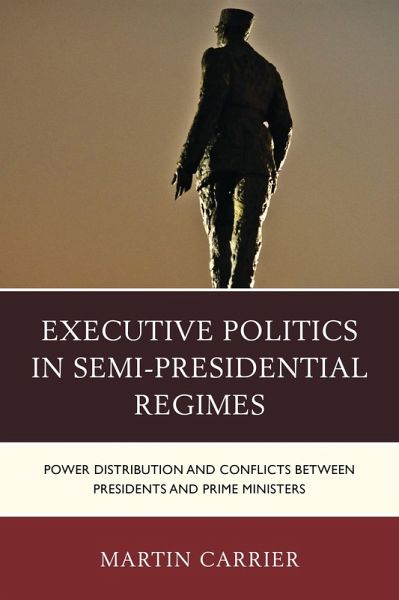
This book analyzes the power variations between political executives in semi-presidential regimes. It contrasts institutional, partisan, and extra-institutional explanations and identifies patterns of change for the power distribution between presidents and prime ministers. It provides an empirical analysis of selected case studies and demonstrates the necessity to understand power variations in a configurative perspective, exposing the limits of institutional design explanations. This study ultimately aims to contribute to both the literature on semi-presidentialism and to the literature on democratic regimes by providing a systematic assessment of these different configurations, in both mature and emerging democracies. To explore this phenomenon, this research tests the key factors of power variation proposed in the semi-presidential literature on the power relationship between presidents and prime ministers mainly in France's Fifth Republic and post-1993 Ukraine, but also to a lesser extent in Finland, post-1993 Russia, and post-1990 Poland.