
160,95 €
160,95 €
inkl. MwSt.
Sofort per Download lieferbar

80 °P sammeln
160,95 €
Als Download kaufen
160,95 €
inkl. MwSt.
Sofort per Download lieferbar
80 °P sammeln
Jetzt verschenken
Alle Infos zum eBook verschenken
160,95 €
inkl. MwSt.
Sofort per Download lieferbar
Alle Infos zum eBook verschenken
80 °P sammeln

Andere Kunden interessierten sich auch für
 (eBook, PDF)") Building-Integrated Photovoltaic Systems (BIPVS) (eBook, PDF)72,95 €
Building-Integrated Photovoltaic Systems (BIPVS) (eBook, PDF)72,95 €") Sustainable Building for a Cleaner Environment (eBook, PDF)72,95 €
Sustainable Building for a Cleaner Environment (eBook, PDF)72,95 €") The Energy Mix for Sustaining Our Future (eBook, PDF)72,95 €
The Energy Mix for Sustaining Our Future (eBook, PDF)72,95 €") Wind Energy Exploitation in Urban Environment (eBook, PDF)112,95 €
Wind Energy Exploitation in Urban Environment (eBook, PDF)112,95 €") Challenges and Solutions in the Russian Energy Sector (eBook, PDF)72,95 €
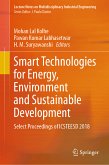
Challenges and Solutions in the Russian Energy Sector (eBook, PDF)72,95 €") Smart Technologies for Energy, Environment and Sustainable Development (eBook, PDF)160,95 €
Smart Technologies for Energy, Environment and Sustainable Development (eBook, PDF)160,95 €") Bioclimatic Architecture in Warm Climates (eBook, PDF)72,95 €
Bioclimatic Architecture in Warm Climates (eBook, PDF)72,95 €






This book explores the application of the second law of thermodynamics to a variety of systems beyond the typical evaluation of thermal machines. It utilizes quality indicators as tools for diagnosing different energy conversion systems, addressing issues ranging from system failures to the rational use of energy in society.
The analysis is divided into two types: the first from the skin to the core of a biological system, and the other from the skin to the environment, known as society exergy analysis. The latter is a new field currently being developed.
The analysis is divided into two types: the first from the skin to the core of a biological system, and the other from the skin to the environment, known as society exergy analysis. The latter is a new field currently being developed.
Dieser Download kann aus rechtlichen Gründen nur mit Rechnungsadresse in A, B, BG, CY, CZ, D, DK, EW, E, FIN, F, GR, HR, H, IRL, I, LT, L, LR, M, NL, PL, P, R, S, SLO, SK ausgeliefert werden.