Sie sind bereits eingeloggt. Klicken Sie auf 2. tolino select Abo, um fortzufahren.
Bitte loggen Sie sich zunächst in Ihr Kundenkonto ein oder registrieren Sie sich bei bücher.de, um das eBook-Abo tolino select nutzen zu können.
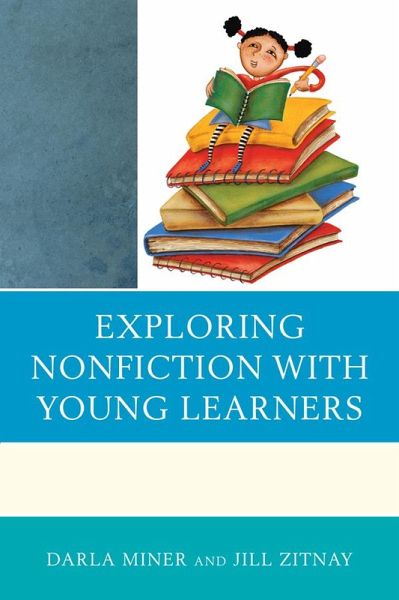
Exploring Nonfiction with Young Learners explores the four basic nonfiction structures that the youngest learners are most likely to encounter: descriptive, recount/collection, procedural, and explanatory texts. This book also includes information to help teach four, more complex structures that younger readers sometimes encounter during read-alouds: comparison, response, causation/cause and effect, and persuasive genres. This book is organized to help plan lessons using each type of nonfiction structure. Strategies and suggestions for activities to use before, during and after reading are…mehr
Exploring Nonfiction with Young Learners explores the four basic nonfiction structures that the youngest learners are most likely to encounter: descriptive, recount/collection, procedural, and explanatory texts. This book also includes information to help teach four, more complex structures that younger readers sometimes encounter during read-alouds: comparison, response, causation/cause and effect, and persuasive genres. This book is organized to help plan lessons using each type of nonfiction structure. Strategies and suggestions for activities to use before, during and after reading are included. Templates and graphic organizers are also provided in order to facilitate planning, and offer additional resources. Detailed information about each text structure as well as mentor texts to illustrate each type is included. Text structures, as well as text access features, are defined and located in easy reference charts. Whole class and small group planning ideas are included throughout the book in order to allow for differentiation. Additionally, assessment ideas, sample think-alouds, lesson planning templates, and sample lessons with completed graphic organizers are included for each text structure.
Die Herstellerinformationen sind derzeit nicht verfügbar.
Autorenporträt
Darla Taylor Miner has been an educator since 1989. During her tenure, she has made curriculum and instruction a focus in order to increase student success, and has presented information on curriculum development at the State and National levels.
Jill Zitnay's special interest in using research and data to make curriculum decisions, and inform teachers and improve student performance came out of teaching elementary and high school students for more than 20 years. This experience plus her undergraduate degree in special education and graduate degree in reading enable her to instruct students and other educators in CT and nationally.Jill's special interest in using research and data to make curriculum decisions, and inform teachers and improve student performance came out of teaching elementary and high school students for more than 20 years. This experience plus her undergraduate degree in special education and graduate degree in reading enable her to instruct students and other educators in CT and nationally.
Inhaltsangabe
Introduction Why Teach Nonfiction?How Can I Use This Book?What This Book Covers Chapter 1: What Makes Nonfiction Unique? Nonfiction Text StructuresNonfiction Text Access Features Chapter 2: Why is Nonfiction so Difficult to Comprehend? Understanding Cohesive TiesUsing Structure-Specific Signal WordsActivities to Teach the Use of Cohesive Ties and Signal Words Chapter 3: Getting Ready to Teach Nonfiction When to Teach NonfictionMaterialsBefore You PlanPlanning a LessonLesson ComponentsMaking Room for Independent Reading Chapter 4: Before Reading Determining the Structure of the TextBuilding/Assessing Background KnowledgeIntroducing Key VocabularyLearning Text Access FeaturesModeling Comprehension StrategiesBefore Reading Planner Chapter 5: During Reading Overall strategiesA lesson sample for each text structureModel TextDuring Reader Planner Chapter 6: After Reading Overall strategiesA lesson sample for each text structureIntegrating writing after reading-how it fits in; lesson examplesBlacklines; templates; organizers Chapter 7: Teaching with Text Structures DescriptiveRecountProceduralExplanatoryMore complex text structures Chapter 8: Pulling It All Together/Additional Information Assessment of learningPlanning Templates Appendix of Blacklines: Graphic Organizers, Templates About the Authors Bibliography of Books for the Classroom
Es gelten unsere Allgemeinen Geschäftsbedingungen: www.buecher.de/agb
Impressum
www.buecher.de ist ein Internetauftritt der buecher.de internetstores GmbH
Geschäftsführung: Monica Sawhney | Roland Kölbl | Günter Hilger
Sitz der Gesellschaft: Batheyer Straße 115 - 117, 58099 Hagen
Postanschrift: Bürgermeister-Wegele-Str. 12, 86167 Augsburg
Amtsgericht Hagen HRB 13257
Steuernummer: 321/5800/1497
USt-IdNr: DE450055826