87,95 €
inkl. MwSt.
Sofort per Download lieferbar
44 °P sammeln

Andere Kunden interessierten sich auch für
") Imaginationen (eBook, ePUB)0,00 €
Imaginationen (eBook, ePUB)0,00 €") The British Imagination (eBook, ePUB)20,64 €
The British Imagination (eBook, ePUB)20,64 €") Seeing History: Public History in China (eBook, ePUB)80,95 €
Seeing History: Public History in China (eBook, ePUB)80,95 €") Historical Imagination (eBook, ePUB)39,95 €
Historical Imagination (eBook, ePUB)39,95 €") Yugoslavia in the British Imagination (eBook, ePUB)24,95 €
Yugoslavia in the British Imagination (eBook, ePUB)24,95 €") Histoire croisée im Vergleich mit dem historischen Vergleich und dem Kulturtransfer (eBook, ePUB)13,99 €
Histoire croisée im Vergleich mit dem historischen Vergleich und dem Kulturtransfer (eBook, ePUB)13,99 €") L'entreprise généalogique / The Genealogical Enterprise (eBook, ePUB)45,95 €
L'entreprise généalogique / The Genealogical Enterprise (eBook, ePUB)45,95 €


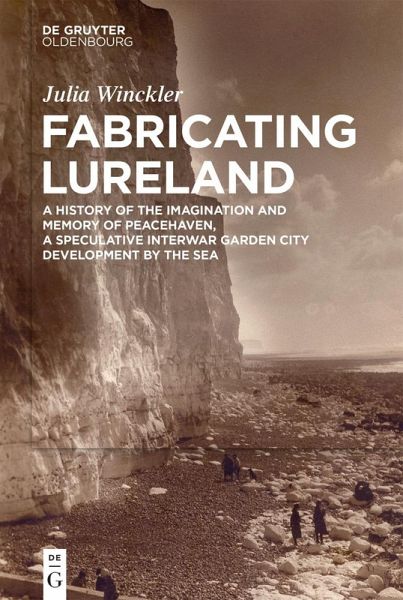
Through the analysis of surviving archival traces, this book constructs a history of the imagination and memory of the town of Peacehaven. Built as a speculative development atop iconic chalk cliffs on the Sussex Coast and marketed as a garden city by the sea, the estate quickly attracted adverse publicity. Influential voices such as the Bloomsbury group's Virginia and Leonard Woolf, architect and writer Clough Williams-Ellis and the Campaign for the Protection of Rural England soon began to criticise it as a blot on the rolling, pastoral downland. Instead of reading and appraising Peacehaven's story in a polarized way, this book breaks new ground by critically interpreting visual representations and commissioned photographs of the Estate and re-evaluating propositions from its inception, which aspired to secure improved public health and home ownership in direct response to the negative impact of industrialization and WWI.
Focusing on the interwar period and tracing mutating agendas, the book investigates contested marketing and construction narratives through Histoire Croisée methodology and its intercrossings with memory and the imagination. By combining visual and creative research methods with oral history, multi-layered narratives of place come into focus. The study tracks the visual programme of the developer's in-house magazine, Peacehaven Post, alongside previously underexplored blueprints, photographs, postcards and promotional guidebooks, and considers the garden city narrative as a form of social Utopia. Garden city ideals are once again evoked in debates as a potential solution to the ongoing national housing shortage, giving this research additional urgency as new large-scale redevelopment erases many of the few and fast disappearing original landmarks.
Focusing on the interwar period and tracing mutating agendas, the book investigates contested marketing and construction narratives through Histoire Croisée methodology and its intercrossings with memory and the imagination. By combining visual and creative research methods with oral history, multi-layered narratives of place come into focus. The study tracks the visual programme of the developer's in-house magazine, Peacehaven Post, alongside previously underexplored blueprints, photographs, postcards and promotional guidebooks, and considers the garden city narrative as a form of social Utopia. Garden city ideals are once again evoked in debates as a potential solution to the ongoing national housing shortage, giving this research additional urgency as new large-scale redevelopment erases many of the few and fast disappearing original landmarks.
Dieser Download kann aus rechtlichen Gründen nur mit Rechnungsadresse in A, B, BG, CY, CZ, D, DK, EW, E, FIN, F, GR, HR, H, IRL, I, LT, L, LR, M, NL, PL, P, R, S, SLO, SK ausgeliefert werden.
"Winckler is a skilled storyteller. Lureland is interesting and, at times, gripping. As a reader it's difficult not to care about the town and its cast of characters, its slick marketeers, its pioneers looking for a better life and its present residents watching the town adapt to the demands and fads of the twenty-first century. Indeed, the book has a certain compulsive page-turning quality that can only come from a writer who feels passionately about her subject matter." - Louise Peskett, lecturer and museum teacher, in Oral History Society, April 2023, https://www.ohs.org.uk/reviews/fabricating-lureland/
***
"Imagery is an essential part of the story of Peacehaven - hence the popular name tag of Lureland - and in revisiting it, Julia Winckler skilfully weaves memory and imagination, words and photographs, into a fascinating reconstruction of a place that has so often been dismissed as an aberration, a proverbial blot on the landscape. Her own professional background in cultural anthropology and photography, coupled with firsthand experience of living in Peacehaven, puts her in a unique position to offer this multi-dimensional portrayal." - Dennis Hardy in Planning Perspectives, 17.10.2022, https://www.tandfonline.com/doi/full/10.1080/02665433.2022.2133437
***
Interview with the author Julia Winckler for Latest TV.
***
"Fabricating Lureland is a fascinating journey through the history of Sussex's pioneering Garden City. It draws on a wealth of archive material and personal recollections to uncover the development of the town from its post-WW1 origins through to the present day. It is generously illustrated, and conveys both the hopes and fears which this bold experiment prompted among residents, campaigners - and even celebrities." John Leaman, Author and Data Analyst, Brighton
***
"Die Autorin hat eine persönlich-biographische Beziehung zu Peacehaven. Davon ausgehend gelingt es ihr - mit eindrucksvollem und überaus vielfältigem Archivmaterial, in Kombination mit Oral History - das verändernde Image der Stadt nachzuzeichnen und greifbar zu machen. Es ist eine grandiose Microstudie, die wissenschaftliche Maßstäbe setzt. Dabei kommt vor allem zum Ausdruck, wie fruchtbar Bilder als Primärquellen in der ethnografisch-historischen Forschung sein können - wenn man sie methodologisch sinnvoll im wissenschaftlichen Kontext verwendet. Die Arbeit ist deshalb ein Paradebeispiel für die Visuelle Kulturwissenschaft: Ohne Berührungsängste und Animositäten folgt sie transdisziplinären Maßstäben und hält insofern ein großes Spektrum an wissenschaftlichen Perspektiven bereit. Sie ist eine Bereicherung für alle, die sich in fachübergreifender Hinsicht mit dem Phänomen der Visualisierung im Kontext der kollektiven Erinnerung und des kollektiven Vergessens beschäftigen. Damit ist die Arbeit wissenschaftlich-methodologisch ebenso im Kontext der ethnografischen Forschung über die modernen sozialen Netzwerke und medialen Echokammern zu sehen. Sie liefert hierzu wertvolle forschungspraktische Grundlagen." - Dr. Ulrich Hägele, Center of Media Competence - ZFM, Universität Tübingen
***
"Winckler's remarkable archival research for her monograph delves beneath the often snobbish opprobrium heaped on Peacehaven to produce a nuanced and layered history of its origins and evolution through its visual representation in promotional and documentary images. She interprets these through her careful analysis of the themes and ideologies they embody across time in the imagining of place and in informing residents' testimonies and her own creative practice." - Lizzie Thynne, University of Sussex
***
"In her recent study entitled Fabricating Lureland, Julia Winckler mobilises urban and human geography alongside urban and rural history to explain how a speculative twentieth century interwar estate on the Sussex Downs came into existence and evolved over subsequent decades. It is fascinating to see how the town of Peacehaven developed from its original inception as New Anzac-on-Sea (as the estate was originally named), a place for defeated soldiers to settle after Gallipoli, then somewhere for damaged but victorious soldiers to make a home after the First World War, and eventually for anyone wanting to get away from the dirty air of London. These attractions were all expressed in the commercial advertising of Charles Neville and other entrepreneurs who saw an opportunity to get rich; but were soon followed by the biting criticism of Downs lovers including Clough Williams-Ellis, not to mention the fury of the rich hedonists who formed the Bloomsbury group. Julia Winckler has juxtaposed and intertwined all these different threads into a narrative which gives the reader much food for thought." - Vernon Reynolds in BALJ - British Association For Local History 55 (2025) 1, URL https://www.balh.org.uk/publication-review-february-2025-reviews [25.04.2025]
***
"Imagery is an essential part of the story of Peacehaven - hence the popular name tag of Lureland - and in revisiting it, Julia Winckler skilfully weaves memory and imagination, words and photographs, into a fascinating reconstruction of a place that has so often been dismissed as an aberration, a proverbial blot on the landscape. Her own professional background in cultural anthropology and photography, coupled with firsthand experience of living in Peacehaven, puts her in a unique position to offer this multi-dimensional portrayal." - Dennis Hardy in Planning Perspectives, 17.10.2022, https://www.tandfonline.com/doi/full/10.1080/02665433.2022.2133437
***
Interview with the author Julia Winckler for Latest TV.
***
"Fabricating Lureland is a fascinating journey through the history of Sussex's pioneering Garden City. It draws on a wealth of archive material and personal recollections to uncover the development of the town from its post-WW1 origins through to the present day. It is generously illustrated, and conveys both the hopes and fears which this bold experiment prompted among residents, campaigners - and even celebrities." John Leaman, Author and Data Analyst, Brighton
***
"Die Autorin hat eine persönlich-biographische Beziehung zu Peacehaven. Davon ausgehend gelingt es ihr - mit eindrucksvollem und überaus vielfältigem Archivmaterial, in Kombination mit Oral History - das verändernde Image der Stadt nachzuzeichnen und greifbar zu machen. Es ist eine grandiose Microstudie, die wissenschaftliche Maßstäbe setzt. Dabei kommt vor allem zum Ausdruck, wie fruchtbar Bilder als Primärquellen in der ethnografisch-historischen Forschung sein können - wenn man sie methodologisch sinnvoll im wissenschaftlichen Kontext verwendet. Die Arbeit ist deshalb ein Paradebeispiel für die Visuelle Kulturwissenschaft: Ohne Berührungsängste und Animositäten folgt sie transdisziplinären Maßstäben und hält insofern ein großes Spektrum an wissenschaftlichen Perspektiven bereit. Sie ist eine Bereicherung für alle, die sich in fachübergreifender Hinsicht mit dem Phänomen der Visualisierung im Kontext der kollektiven Erinnerung und des kollektiven Vergessens beschäftigen. Damit ist die Arbeit wissenschaftlich-methodologisch ebenso im Kontext der ethnografischen Forschung über die modernen sozialen Netzwerke und medialen Echokammern zu sehen. Sie liefert hierzu wertvolle forschungspraktische Grundlagen." - Dr. Ulrich Hägele, Center of Media Competence - ZFM, Universität Tübingen
***
"Winckler's remarkable archival research for her monograph delves beneath the often snobbish opprobrium heaped on Peacehaven to produce a nuanced and layered history of its origins and evolution through its visual representation in promotional and documentary images. She interprets these through her careful analysis of the themes and ideologies they embody across time in the imagining of place and in informing residents' testimonies and her own creative practice." - Lizzie Thynne, University of Sussex
***
"In her recent study entitled Fabricating Lureland, Julia Winckler mobilises urban and human geography alongside urban and rural history to explain how a speculative twentieth century interwar estate on the Sussex Downs came into existence and evolved over subsequent decades. It is fascinating to see how the town of Peacehaven developed from its original inception as New Anzac-on-Sea (as the estate was originally named), a place for defeated soldiers to settle after Gallipoli, then somewhere for damaged but victorious soldiers to make a home after the First World War, and eventually for anyone wanting to get away from the dirty air of London. These attractions were all expressed in the commercial advertising of Charles Neville and other entrepreneurs who saw an opportunity to get rich; but were soon followed by the biting criticism of Downs lovers including Clough Williams-Ellis, not to mention the fury of the rich hedonists who formed the Bloomsbury group. Julia Winckler has juxtaposed and intertwined all these different threads into a narrative which gives the reader much food for thought." - Vernon Reynolds in BALJ - British Association For Local History 55 (2025) 1, URL https://www.balh.org.uk/publication-review-february-2025-reviews [25.04.2025]