25,95 €
25,95 €
inkl. MwSt.
Sofort per Download lieferbar

13 °P sammeln
25,95 €
Als Download kaufen
25,95 €
inkl. MwSt.
Sofort per Download lieferbar
13 °P sammeln
Jetzt verschenken
Alle Infos zum eBook verschenken
25,95 €
inkl. MwSt.
Sofort per Download lieferbar
Alle Infos zum eBook verschenken
13 °P sammeln

Andere Kunden interessierten sich auch für
") Words and Silences (eBook, ePUB)29,95 €
Words and Silences (eBook, ePUB)29,95 €") Dancing Motherhood (eBook, ePUB)39,95 €
Dancing Motherhood (eBook, ePUB)39,95 €") Seeing South Asia (eBook, ePUB)38,95 €
Seeing South Asia (eBook, ePUB)38,95 €") The Anti-Social Contract (eBook, ePUB)18,95 €
The Anti-Social Contract (eBook, ePUB)18,95 €") Caring Like a State (eBook, ePUB)25,95 €
Caring Like a State (eBook, ePUB)25,95 €") Dancing in the Forest (eBook, ePUB)28,95 €
Dancing in the Forest (eBook, ePUB)28,95 €") Gendered Bodies and Leisure (eBook, ePUB)41,95 €
Gendered Bodies and Leisure (eBook, ePUB)41,95 €



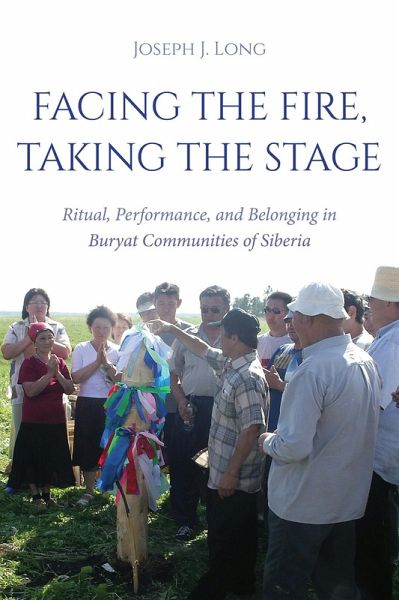
In the mid-2000s, the Russian government began to merge Siberia's smallest Indigenous territories into larger administrative regions. Among Buryat Mongols living to the west of Lake Baikal the state promoted a policy of "National Cultural Autonomy," which sought to separate culture from territory amid this consolidation of land and people. Although public performances of Buryat culture were mobilized to show support for the policy, Joseph Long's compelling ethnography provides alternative ways to understand the meanings attached to these displays. At the same time, the book documents how resurgent local rituals demonstrated enduring ties to the land.
Drawing on classic theories of ritual and performance, Facing the Fire, Taking the Stage explores how Buryat shamanism and state-sanctioned performing arts have allowed Buryats to negotiate and express different kinds of belonging to people and land. Based on several years of anthropological fieldwork in Western Buryat communities, this book provides new insights into the ways that these forms have influenced one another over time.
While Buryat experience has been fundamentally shaped by Soviet communism and its aftermath, Facing the Fire, Taking the Stage shows how this history parallels the experience of Indigenous peoples worldwide.
Drawing on classic theories of ritual and performance, Facing the Fire, Taking the Stage explores how Buryat shamanism and state-sanctioned performing arts have allowed Buryats to negotiate and express different kinds of belonging to people and land. Based on several years of anthropological fieldwork in Western Buryat communities, this book provides new insights into the ways that these forms have influenced one another over time.
While Buryat experience has been fundamentally shaped by Soviet communism and its aftermath, Facing the Fire, Taking the Stage shows how this history parallels the experience of Indigenous peoples worldwide.
Dieser Download kann aus rechtlichen Gründen nur mit Rechnungsadresse in A, D ausgeliefert werden.