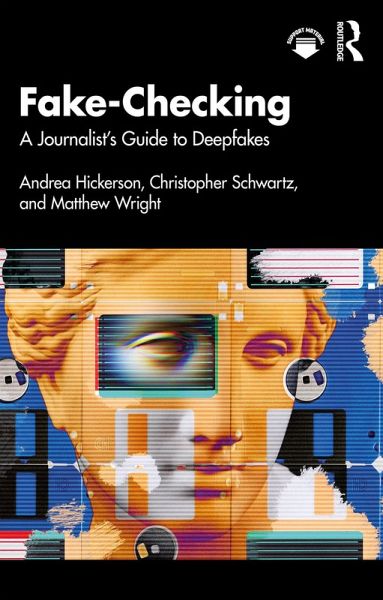
39,95 €
39,95 €
inkl. MwSt.
Erscheint vor. 16.12.25

20 °P sammeln
39,95 €
Als Download kaufen
39,95 €
inkl. MwSt.
Erscheint vor. 16.12.25
20 °P sammeln
Jetzt verschenken
Alle Infos zum eBook verschenken
39,95 €
inkl. MwSt.
Erscheint vor. 16.12.25
Alle Infos zum eBook verschenken
20 °P sammeln

Andere Kunden interessierten sich auch für
") Fake-Checking (eBook, PDF)39,95 €
Fake-Checking (eBook, PDF)39,95 €") The Future of the Presidency, Journalism, and Democracy (eBook, ePUB)39,95 €
The Future of the Presidency, Journalism, and Democracy (eBook, ePUB)39,95 €") Tech Giants, Artificial Intelligence, and the Future of Journalism (eBook, ePUB)0,00 €
Tech Giants, Artificial Intelligence, and the Future of Journalism (eBook, ePUB)0,00 €") Peripheral Actors in Journalism (eBook, ePUB)19,95 €
Peripheral Actors in Journalism (eBook, ePUB)19,95 €") Milestones in Digital Journalism (eBook, ePUB)35,95 €
Milestones in Digital Journalism (eBook, ePUB)35,95 €") Journalism Research in Practice (eBook, ePUB)41,95 €
Journalism Research in Practice (eBook, ePUB)41,95 €") Transforming Newsrooms (eBook, ePUB)34,95 €
Transforming Newsrooms (eBook, ePUB)34,95 €





Designed to help journalists keep pace with the rapid evolution of deepfakes as well as integrate 'fake-checking' methods into their routine reporting practices, this book offers a concise and accessible guide for reporters navigating this evolving challenge.
This guide aims to assist journalists in understanding the complexities of deepfakes from a number of angles including philosophical, historical, technical, and methodological. Rather than approaching deepfakes as a 'journalistic apocalypse,' this book contextualises them in the larger historical practice of fact-checking and on a continuum of technological advances in image and video manipulation. Encouraging readers to view fact-checking as a multimodal process, it stresses the importance of combining philosophical and technical tools, especially ones based in epistemology and artifical intelligence (AI), in addition to the 'pavement pounding' essentials of good journalism. The book concludes with a chapter addressing how to explain deepfakes to a public progressively more concerned about the realities and consequences of AI and misinformation.
Fake-Checking serves as a practical reference for journalists and advanced media students who are increasingly required to identify and verify potential deepfakes and their future iterations.
This book is supported by online resources which can be accessed at www.routledge.com/9781032741321.
This guide aims to assist journalists in understanding the complexities of deepfakes from a number of angles including philosophical, historical, technical, and methodological. Rather than approaching deepfakes as a 'journalistic apocalypse,' this book contextualises them in the larger historical practice of fact-checking and on a continuum of technological advances in image and video manipulation. Encouraging readers to view fact-checking as a multimodal process, it stresses the importance of combining philosophical and technical tools, especially ones based in epistemology and artifical intelligence (AI), in addition to the 'pavement pounding' essentials of good journalism. The book concludes with a chapter addressing how to explain deepfakes to a public progressively more concerned about the realities and consequences of AI and misinformation.
Fake-Checking serves as a practical reference for journalists and advanced media students who are increasingly required to identify and verify potential deepfakes and their future iterations.
This book is supported by online resources which can be accessed at www.routledge.com/9781032741321.
Dieser Download kann aus rechtlichen Gründen nur mit Rechnungsadresse in A, B, BG, CY, CZ, D, DK, EW, E, FIN, F, GR, HR, H, IRL, I, LT, L, LR, M, NL, PL, P, R, S, SLO, SK ausgeliefert werden.