9,95 €
9,95 €
inkl. MwSt.
Sofort per Download lieferbar

5 °P sammeln
9,95 €
Als Download kaufen
9,95 €
inkl. MwSt.
Sofort per Download lieferbar
5 °P sammeln
Jetzt verschenken
Alle Infos zum eBook verschenken
9,95 €
inkl. MwSt.
Sofort per Download lieferbar
Alle Infos zum eBook verschenken
5 °P sammeln

Andere Kunden interessierten sich auch für
") Team America (eBook, ePUB)12,99 €
Team America (eBook, ePUB)12,99 €") American Sniper (eBook, ePUB)5,69 €
American Sniper (eBook, ePUB)5,69 €") Sherman Tanks of the British Army and Royal Marines (eBook, ePUB)10,95 €
Sherman Tanks of the British Army and Royal Marines (eBook, ePUB)10,95 €") Tanks of the Second World War (eBook, ePUB)16,95 €
Tanks of the Second World War (eBook, ePUB)16,95 €") German Flak Defences vs Allied Heavy Bombers (eBook, ePUB)10,95 €
German Flak Defences vs Allied Heavy Bombers (eBook, ePUB)10,95 €") Tiger I and Tiger II Tanks (eBook, ePUB)4,99 €
Tiger I and Tiger II Tanks (eBook, ePUB)4,99 €") American Sniper (eBook, ePUB)17,99 €
American Sniper (eBook, ePUB)17,99 €




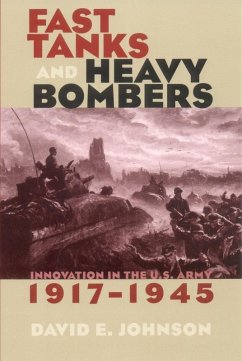
The U.S. Army entered World War II unprepared. In addition, lacking Germany's blitzkrieg approach of coordinated armor and air power, the army was organized to fight two wars: one on the ground and one in the air. Previous commentators have blamed Congressional funding and public apathy for the army's unprepared state. David E. Johnson believes instead that the principal causes were internal: army culture and bureaucracy, and their combined impact on the development of weapons and doctrine.Johnson examines the U.S. Army's innovations for both armor and aviation between the world wars, arguing that the tank became a captive of the conservative infantry and cavalry branches, while the airplane's development was channeled by air power insurgents bent on creating an independent air force. He maintains that as a consequence, the tank's potential was hindered by the traditional arms, while air power advocates focused mainly on proving the decisiveness of strategic bombing, neglecting the mission of tactical support for ground troops. Minimal interaction between ground and air officers resulted in insufficient cooperation between armored forces and air forces.Fast Tanks and Heavy Bombers makes a major contribution to a new understanding of both the creation of the modern U.S. Army and the Army's performance in World War II. The book also provides important insights for future military innovation.
Dieser Download kann aus rechtlichen Gründen nur mit Rechnungsadresse in A, D ausgeliefert werden.