0,91 €
0,91 €
inkl. MwSt.
Sofort per Download lieferbar

payback
0 °P sammeln
0,91 €
0,91 €
inkl. MwSt.
Sofort per Download lieferbar

Alle Infos zum eBook verschenken
payback
0 °P sammeln
Als Download kaufen
0,91 €
inkl. MwSt.
Sofort per Download lieferbar
payback
0 °P sammeln
Jetzt verschenken
0,91 €
inkl. MwSt.
Sofort per Download lieferbar

Alle Infos zum eBook verschenken
payback
0 °P sammeln
  • Format: ePub

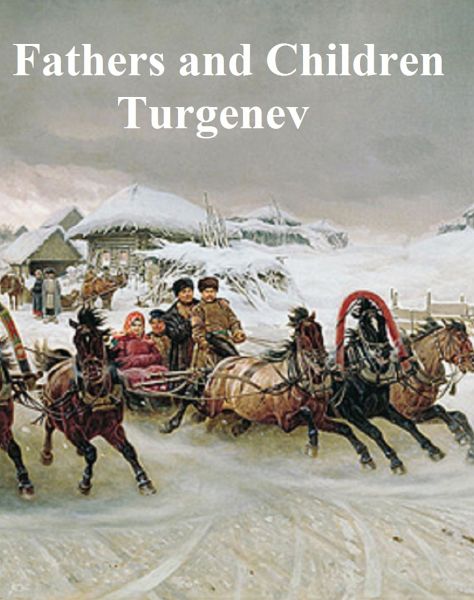
According to Wikipedia: "Fathers and Sons is an 1862 novel by Ivan Turgenev, his best known work. The title of this work in Russian ... literally means "Fathers and Children"; the work is often translated to Fathers and Sons in English for reasons of euphony. The fathers and children of the novel refers to the growing divide between the two generations of Russians, and the character Yevgeny Bazarov has been referred to as the "first Bolshevik", for his nihilism and rejection of the old order. Turgenev wrote Fathers and Sons as a response to the growing cultural schism that he saw between…mehr

  • Geräte: eReader
  • ohne Kopierschutz
  • eBook Hilfe
  • FamilySharing(5)
Produktbeschreibung
According to Wikipedia: "Fathers and Sons is an 1862 novel by Ivan Turgenev, his best known work. The title of this work in Russian ... literally means "Fathers and Children"; the work is often translated to Fathers and Sons in English for reasons of euphony. The fathers and children of the novel refers to the growing divide between the two generations of Russians, and the character Yevgeny Bazarov has been referred to as the "first Bolshevik", for his nihilism and rejection of the old order. Turgenev wrote Fathers and Sons as a response to the growing cultural schism that he saw between liberals of the 1830s/1840s and the growing nihilist movement. Both the nihilists (the "sons") and the 1830s liberals sought Western-based social change in Russia. Additionally, these two modes of thought were contrasted with the conservative Slavophiles, who believed that Russia's path lay in its traditional spirituality.

Dieser Download kann aus rechtlichen Gründen nur mit Rechnungsadresse in A, B, BG, CY, CZ, D, DK, EW, E, FIN, F, GR, H, IRL, I, LT, L, LR, M, NL, PL, P, R, S, SLO, SK ausgeliefert werden.

Autorenporträt
Ivan Sergeyevich Turgenev was born in 1818 in the Province of Orel, in Russia. After his family had moved to Moscow in 1827 he entered Petersburg University where he studied philosophy. When he was nineteen he published his first poems and, convinced that Europe contained the source of real knowledge, went to the University of Berlin. After two years he returned to Russia and took his degree at the University of Moscow. In 1843 he fell in love with Pauline Garcia-Viardot, a young Spanish singer, who influenced the rest of his life; he followed her on her singing tours in Europe and spent long periods in the French house of herself and her husband, both of whom accepted him as a family friend. After 1856 he lived mostly abroad, and he became the first Russian writer to gain a wide reputation in Europe; he was a well-known figure in Parisian literary circles, where his friends included Flaubert and the Goncourt brothers, and an honorary degree was conferred on him at Oxford. His series of six novels reflect a period of Russian life from 1830s to the 1870s: they are Rudin (1855), A House of Gentlefolk (1858), On the Eve (1859), Fathers and Children (1861, sometimes translated as Fathers and Sons), Smoke (1867), and Virgin Soil (1876). He also wrote plays, which include the comedy A Month in the Country; short stories and Sketches from a Hunter’s Album; and literary essays and memoirs. He died in Paris in 1883 after being ill for a year, and was buried in Russia.