24,95 €
inkl. MwSt.
Sofort per Download lieferbar
12 °P sammeln

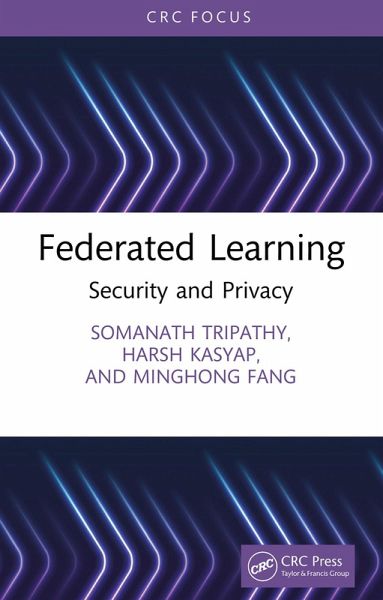
As data becomes more abundant and widespread across personal devices, the need for secure, privacy-aware machine learning is growing. Federated Learning (FL) offers a promising solution, enabling smart devices to collaboratively train models without sharing raw data. Yet, despite its benefits, FL faces serious risks from poisoning and inference attacks.
This book begins by introducing the fundamentals of machine learning, along with core deep learning architectures. Based on this foundation, it introduces the concept of Federated Learning (FL), which is a decentralised approach that enables collaborative model training without sharing raw data. The book provides an in-depth exploration of FL's various forms, system architectures, and practical applications. A significant emphasis is placed on the growing security and privacy concerns in FL, particularly poisoning (both data poisoning and model poisoning) and inference attacks. It discusses state-of-the-art mitigation strategies, such as Byzantine-robust aggregation and inference-resistant techniques, supported with practical implementation insights.
This book uniquely bridges foundational concepts with advanced topics in Federated Learning, offering a comprehensive view of its vulnerabilities and their mitigation. By combining theory with practical implementation of attacks and mitigation techniques, it serves as a valuable resource for researchers, practitioners, and students aiming to build secure, privacy-preserving collaborative machine learning systems.
This book is unique due to its end-to-end coverage of Federated Learning (FL), from foundational machine and deep learning concepts to real-time deployment of FL along with security and privacy challenges associated. It both explains theory and offers hands-on implementation of attacks and defenses. This practical approach, combined with a clear structure and real-world relevance, makes it ideal for both academic and industry audiences. Promotional emphasis should highlight the book's focus on actionable insights, its relevance to privacy-preserving and secure AI, and its utility as a learning and reference tool for building secure collaborative learning systems.
This book begins by introducing the fundamentals of machine learning, along with core deep learning architectures. Based on this foundation, it introduces the concept of Federated Learning (FL), which is a decentralised approach that enables collaborative model training without sharing raw data. The book provides an in-depth exploration of FL's various forms, system architectures, and practical applications. A significant emphasis is placed on the growing security and privacy concerns in FL, particularly poisoning (both data poisoning and model poisoning) and inference attacks. It discusses state-of-the-art mitigation strategies, such as Byzantine-robust aggregation and inference-resistant techniques, supported with practical implementation insights.
This book uniquely bridges foundational concepts with advanced topics in Federated Learning, offering a comprehensive view of its vulnerabilities and their mitigation. By combining theory with practical implementation of attacks and mitigation techniques, it serves as a valuable resource for researchers, practitioners, and students aiming to build secure, privacy-preserving collaborative machine learning systems.
This book is unique due to its end-to-end coverage of Federated Learning (FL), from foundational machine and deep learning concepts to real-time deployment of FL along with security and privacy challenges associated. It both explains theory and offers hands-on implementation of attacks and defenses. This practical approach, combined with a clear structure and real-world relevance, makes it ideal for both academic and industry audiences. Promotional emphasis should highlight the book's focus on actionable insights, its relevance to privacy-preserving and secure AI, and its utility as a learning and reference tool for building secure collaborative learning systems.
Dieser Download kann aus rechtlichen Gründen nur mit Rechnungsadresse in A, B, BG, CY, CZ, D, DK, EW, E, FIN, F, GR, HR, H, IRL, I, LT, L, LR, M, NL, PL, P, R, S, SLO, SK ausgeliefert werden.