74,95 €
74,95 €
inkl. MwSt.
Sofort per Download lieferbar

37 °P sammeln
74,95 €
Als Download kaufen
74,95 €
inkl. MwSt.
Sofort per Download lieferbar
37 °P sammeln
Jetzt verschenken
Alle Infos zum eBook verschenken
74,95 €
inkl. MwSt.
Sofort per Download lieferbar
Alle Infos zum eBook verschenken
37 °P sammeln

Andere Kunden interessierten sich auch für
") Female Detectives on Post-Network Television (eBook, ePUB)74,95 €
Female Detectives on Post-Network Television (eBook, ePUB)74,95 €") The Avatar Television Franchise (eBook, PDF)24,95 €
The Avatar Television Franchise (eBook, PDF)24,95 €") The Fourth Network (eBook, PDF)17,95 €
The Fourth Network (eBook, PDF)17,95 €") Nobody Expects the Spanish Inquisition (eBook, PDF)46,95 €
Nobody Expects the Spanish Inquisition (eBook, PDF)46,95 €") Feminist Posthumanism in Contemporary Science Fiction Film and Media (eBook, PDF)24,95 €
Feminist Posthumanism in Contemporary Science Fiction Film and Media (eBook, PDF)24,95 €") Horrifying Children (eBook, PDF)24,95 €
Horrifying Children (eBook, PDF)24,95 €") The Female Teacher on Television (eBook, PDF)80,95 €
The Female Teacher on Television (eBook, PDF)80,95 €


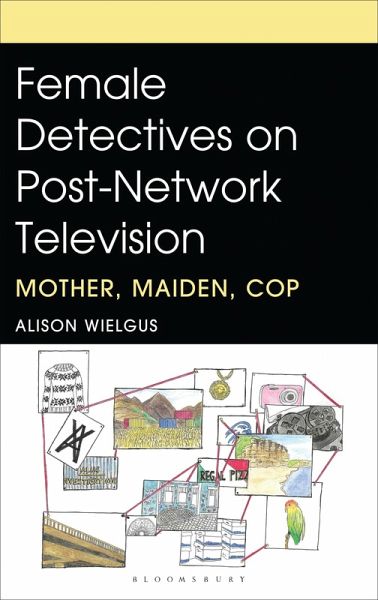
In this book, Alison Wielgus analyzes post-network female detective television through the lenses of genre, industry, and discourses of police abolition to argue for a radicalization of crime television that incorporates discourses of restorative justice and a feminist ethics of care.
Wielgus positions the genre as a primary site to examine the intersections of cultural discourses like #MeToo and Black Lives Matter, considering the roles of several components of the genre, including serialization, circulation, family trauma, transnational victimhood, and discourses of police abolition, among others. Drawing on narrative and genre theory, the book argues that a melodrama/crime television dialectic undergirds post-network detective television, allowing the female detective to emerge as a contested figure representative of larger cultural tensions between gender and policing.
While changing industrial measures have allowed for niche programming to evolve and more rigorously interrogate gender norms, Wielgus finds that this disruption rarely extends to the institution of policing itself. Ultimately, this book identifies a central problem of crime television in the limitations the genre places on the construction and representation of the structural and societal functions of policing, even amid other strides in progressive representation.
Wielgus positions the genre as a primary site to examine the intersections of cultural discourses like #MeToo and Black Lives Matter, considering the roles of several components of the genre, including serialization, circulation, family trauma, transnational victimhood, and discourses of police abolition, among others. Drawing on narrative and genre theory, the book argues that a melodrama/crime television dialectic undergirds post-network detective television, allowing the female detective to emerge as a contested figure representative of larger cultural tensions between gender and policing.
While changing industrial measures have allowed for niche programming to evolve and more rigorously interrogate gender norms, Wielgus finds that this disruption rarely extends to the institution of policing itself. Ultimately, this book identifies a central problem of crime television in the limitations the genre places on the construction and representation of the structural and societal functions of policing, even amid other strides in progressive representation.