0,00 €
0,00 €
inkl. MwSt.
Sofort per Download lieferbar

0 °P sammeln
0,00 €
Als Download kaufen
0,00 €
inkl. MwSt.
Sofort per Download lieferbar
0 °P sammeln
Jetzt verschenken
Alle Infos zum eBook verschenken
0,00 €
inkl. MwSt.
Sofort per Download lieferbar
Alle Infos zum eBook verschenken
0 °P sammeln

Andere Kunden interessierten sich auch für
") Beziehung und Bruch in der Poetik Gertrud Kolmars (eBook, PDF)129,95 €
Beziehung und Bruch in der Poetik Gertrud Kolmars (eBook, PDF)129,95 €") Judentum für Christen (eBook, PDF)154,95 €
Judentum für Christen (eBook, PDF)154,95 €") Zwischen Enthüllen und Verstecken (eBook, PDF)129,95 €
Zwischen Enthüllen und Verstecken (eBook, PDF)129,95 €![]() "Geschenke an Aufmerksame" (eBook, PDF)114,95 €
"Geschenke an Aufmerksame" (eBook, PDF)114,95 €") Entgöttertes Leid (eBook, PDF)230,00 €
Entgöttertes Leid (eBook, PDF)230,00 €") Jüdische Geschichtsbilder aus Böhmen (eBook, PDF)109,95 €
Jüdische Geschichtsbilder aus Böhmen (eBook, PDF)109,95 €") Thomas Mann, Deutschland und die Juden (eBook, PDF)109,95 €
Thomas Mann, Deutschland und die Juden (eBook, PDF)109,95 €






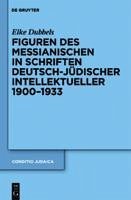
This study investigates the function of the recourse to the messianic tradition of Judaism among German-Jewish intellectuals in the first third of the 20th century. Messianic figures of thought play an important role in the Jewish discourse of identity. Moreover, they are used productively in the creation of general theories in the realm of cultural studies, especially regarding the philosophy of language and history and the theological-political complex. Here, all the considered authors (Benjamin, Bloch, Broch, Buber, Landauer, Rosenzweig, Scholem) secularize Jewish Messianism in one way or another, thus transforming the Messiah into the "messianic". This also means, however, that the messianic figures of speech include not only figures of thought but also rhetorical figures of speech or tropes that reflect various constellations of sacrality and secularity in the modern era. Tension between the secular and the sacred, and also between cultural particularity and universality, forms part of the modern adaptation of Jewish Messianism, as does the possibility of a sudden dialectical critical shift to an affirmation of violence.
Dieser Download kann aus rechtlichen Gründen nur mit Rechnungsadresse in A, B, BG, CY, CZ, D, DK, EW, E, FIN, F, GR, HR, H, IRL, I, LT, L, LR, M, NL, PL, P, R, S, SLO, SK ausgeliefert werden.
Perlentaucher-Notiz zur F.A.Z.-Rezension
Warum das Messianische mächtig wurde, kann die Autorin dem Rezensenten nicht erklären. Allerdings nimmt Elke Dubbels in ihrer Dissertation auch weder eine historische noch eine lebensgeschichtliche Kontextualisierung vor, räumt Jörg Später ein. Ihr Anliegen ist, wie er erkennt, eine literaturwissenschaftliche Funktionsgeschichte des Messianischen. Die jedoch findet der Rezensent rundum lesenswert, sehr gelehrt und umsichtig. Wie Intellektuelle wie Benjamin, Bloch, Buber, Landauer, Scholem u. a. sich im Einzelnen mit dem jüdischen Messianismus auseinandersetzten, mal symbolisch (Bloch), mal dialektisch (Benjamin), stets säkular, funktional, theoretisch, "Reflexionsfiguren des Messianischen" im Identitätsdiskurs der Moderne verwendend, vermag Dubbels dem Rezensenten zu vermitteln.
© Perlentaucher Medien GmbH
© Perlentaucher Medien GmbH
"Diese akkurate und lesenswerte diskursgeschichtliche Studie von Elke Dubbels bedient sich einer akustischen Metaphorik, wenn es um den messianischen Ton im deutsch-jüdischen Denken der Weimarer Zeit geht: Von Ton, Resonanz und Echo des Messianischen ist hier die Rede, einer Nachwirkung, die vom Anfang des 20. Jahrhunderts bis heute reicht."
Gabriele Guerra in: www.literaturkritik.de
Gabriele Guerra in: www.literaturkritik.de