Dieser Download kann aus rechtlichen Gründen nur mit Rechnungsadresse in A, B, BG, CY, CZ, D, DK, EW, E, FIN, F, GR, HR, H, IRL, I, LT, L, LR, M, NL, PL, P, R, S, SLO, SK ausgeliefert werden.
Herstellerkennzeichnung
Die Herstellerinformationen sind derzeit nicht verfügbar.
Autorenporträt
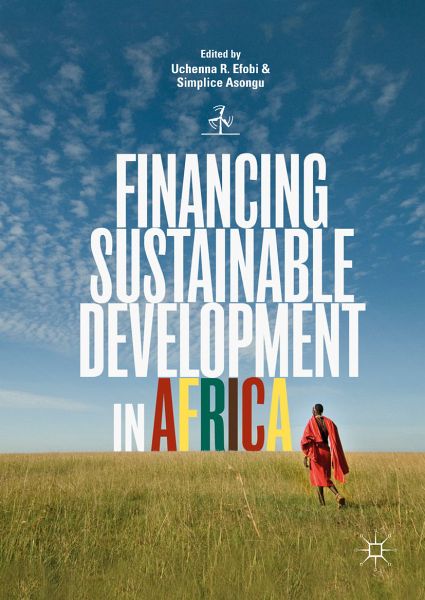
Efobi Uchenna is Faculty at the College of Business and Social Sciences, Covenant University, Nigeria. He is also a Hewlett Scholar and an Alumnus of the Brown International Advanced Research Institutes. His research interests include household decision making dynamics and development outcomes; rural institution and agricultural productivity; and governance, with a special focus on the African region. Asongu Simplice is the Lead Economist and Director of the African Governance and Development Institute, and a Visiting Professor at the University of Cape Town, South Africa. He is also a Research Associate at Oxford Brookes University, UK; Covenant University, Nigeria; and the University of Buea, Cameroon.
Inhaltsangabe
1. Introduction.- 2. Financing Mechanisms African Governments Should Pursue in Financing Sustainable Development in the Next 20 Years.- 3. Financial Inclusion and Foreign Market Participation of Firms: A Quasi-experiment from Nigeria.- 4. Business Regulations and Foreign Direct Investment in Sub-Saharan Africa: Implications for Regulatory Reform.- 5. Broadening Financial Intermediation in Sub-Saharan Africa.- 6. Institutions, Fiscal Performance, and Development Trajectories in ECOWAS: Implications for Sustainability.- 7. Capital Flows and Economic Growth: Does the Role of State Fragility Really Matter for Sustainability?.- 8. Changing Patterns of the Official Development Assistance to Sub-Saharan Africa.- 9. Financing Sustainable Energy Access with Oil Revenues in Sub-Saharan Africa: Trends and Strategies.- 10. Maximizing the Gains from Natural Resources.- 11. Does the Implementation of Social Safety Net Intervention Affect Indigenous Social Capital Systems for Coping with Livelihood Shocks? Ethnographic Evidence of Agro-Pastoral Communities in Eastern Ethiopia.- 12. Issues in Sustainable Development: The Environment-Income Relationship.- 13. Micro-credit, Child Education, and Health Outcomes: A Case Study from Ghana.- 14. Financial Inclusion and Growth of Non-Farm Enterprises in Ghana.- 15. The Role of Co-operative Organizations in Tanzania's Industrialization.- 16. The Textiles and Clothing Sector and the Industrialization of Sub-Saharan Africa.
1. Introduction.- 2. Financing Mechanisms African Governments Should Pursue in Financing Sustainable Development in the Next 20 Years.- 3. Financial Inclusion and Foreign Market Participation of Firms: A Quasi-experiment from Nigeria.- 4. Business Regulations and Foreign Direct Investment in Sub-Saharan Africa: Implications for Regulatory Reform.- 5. Broadening Financial Intermediation in Sub-Saharan Africa.- 6. Institutions, Fiscal Performance, and Development Trajectories in ECOWAS: Implications for Sustainability.- 7. Capital Flows and Economic Growth: Does the Role of State Fragility Really Matter for Sustainability?.- 8. Changing Patterns of the Official Development Assistance to Sub-Saharan Africa.- 9. Financing Sustainable Energy Access with Oil Revenues in Sub-Saharan Africa: Trends and Strategies.- 10. Maximizing the Gains from Natural Resources.- 11. Does the Implementation of Social Safety Net Intervention Affect Indigenous Social Capital Systems for Coping with Livelihood Shocks? Ethnographic Evidence of Agro-Pastoral Communities in Eastern Ethiopia.- 12. Issues in Sustainable Development: The Environment-Income Relationship.- 13. Micro-credit, Child Education, and Health Outcomes: A Case Study from Ghana.- 14. Financial Inclusion and Growth of Non-Farm Enterprises in Ghana.- 15. The Role of Co-operative Organizations in Tanzania's Industrialization.- 16. The Textiles and Clothing Sector and the Industrialization of Sub-Saharan Africa.
Es gelten unsere Allgemeinen Geschäftsbedingungen: www.buecher.de/agb
Impressum
www.buecher.de ist ein Internetauftritt der buecher.de internetstores GmbH
Geschäftsführung: Monica Sawhney | Roland Kölbl | Günter Hilger
Sitz der Gesellschaft: Batheyer Straße 115 - 117, 58099 Hagen
Postanschrift: Bürgermeister-Wegele-Str. 12, 86167 Augsburg
Amtsgericht Hagen HRB 13257
Steuernummer: 321/5800/1497
USt-IdNr: DE450055826