16,95 €
16,95 €
inkl. MwSt.
Sofort per Download lieferbar

8 °P sammeln
16,95 €
Als Download kaufen
16,95 €
inkl. MwSt.
Sofort per Download lieferbar
8 °P sammeln
Jetzt verschenken
Alle Infos zum eBook verschenken
16,95 €
inkl. MwSt.
Sofort per Download lieferbar
Alle Infos zum eBook verschenken
8 °P sammeln

Andere Kunden interessierten sich auch für
") The Nine Lives of Florida's Famous Key Marco Cat (eBook, ePUB)19,95 €
The Nine Lives of Florida's Famous Key Marco Cat (eBook, ePUB)19,95 €") A Guide to Florida's Historic Architecture (eBook, ePUB)12,95 €
A Guide to Florida's Historic Architecture (eBook, ePUB)12,95 €") Thunder on the River (eBook, ePUB)12,95 €
Thunder on the River (eBook, ePUB)12,95 €") Florida's Past, Vol 3 (eBook, ePUB)12,85 €
Florida's Past, Vol 3 (eBook, ePUB)12,85 €") Battle of Stones River (eBook, ePUB)14,95 €
Battle of Stones River (eBook, ePUB)14,95 €") Florida's Past, Vol 1 (eBook, ePUB)12,85 €
Florida's Past, Vol 1 (eBook, ePUB)12,85 €") Florida's Past, Vol 2 (eBook, ePUB)12,85 €
Florida's Past, Vol 2 (eBook, ePUB)12,85 €





The economic, social,
political, and racial history of southwest Florida in the nineteenth century
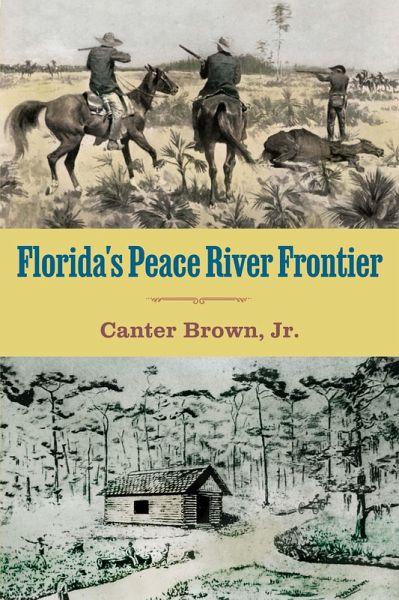
For most of the nineteenth century, southwest Florida and the Peace River Valley remained a frontier as unknown to outsiders as the frontiers of the American West. In this book, Canter Brown, Jr. records the area's economic, social, political, and racial history in an account of violence, passion, struggle, sacrifice, and determination.
The Peace River originates in Polk County's Lake Hamilton, one of the many lakes that dot the heart of interior Florida. It flows past the towns of Bartow, Fort Meade, Bowling Green, Arcadia, Fort Ogden, and Punta Gorda, finally meeting the sea at Charlotte Harbor on Florida's southwest Gulf Coast. No great cities line its banks; no commerce passes along its waters. Still, the river has bent and molded events of lasting significance to Florida and to the nation.
Using such primary materials as government records, manuscript collections, and newspapers published throughout the country, Brown documents the presence of Native Americans and African Americans in the area in the aftermath of the First Seminole War. He examines the Civil War and Reconstruction periods, paying particular attention to the Union/Confederate, Republican/Democratic split among the area's residents. In the final sections of the book he describes the arrival of the railroad and the growth of towns, the phosphate boom, and consequences of the Great Freeze of 1895.
Throughout this account, the author identifies by name hundreds of persons who participated in these events, believing, he says, that the stories of individuals and families are a vital part of the area's history. Florida's Peace River Frontier will appeal to readers interested in Florida history, the Civil War and Reconstruction eras, African American history, and the history of the American frontier.
For most of the nineteenth century, southwest Florida and the Peace River Valley remained a frontier as unknown to outsiders as the frontiers of the American West. In this book, Canter Brown, Jr. records the area's economic, social, political, and racial history in an account of violence, passion, struggle, sacrifice, and determination.
The Peace River originates in Polk County's Lake Hamilton, one of the many lakes that dot the heart of interior Florida. It flows past the towns of Bartow, Fort Meade, Bowling Green, Arcadia, Fort Ogden, and Punta Gorda, finally meeting the sea at Charlotte Harbor on Florida's southwest Gulf Coast. No great cities line its banks; no commerce passes along its waters. Still, the river has bent and molded events of lasting significance to Florida and to the nation.
Using such primary materials as government records, manuscript collections, and newspapers published throughout the country, Brown documents the presence of Native Americans and African Americans in the area in the aftermath of the First Seminole War. He examines the Civil War and Reconstruction periods, paying particular attention to the Union/Confederate, Republican/Democratic split among the area's residents. In the final sections of the book he describes the arrival of the railroad and the growth of towns, the phosphate boom, and consequences of the Great Freeze of 1895.
Throughout this account, the author identifies by name hundreds of persons who participated in these events, believing, he says, that the stories of individuals and families are a vital part of the area's history. Florida's Peace River Frontier will appeal to readers interested in Florida history, the Civil War and Reconstruction eras, African American history, and the history of the American frontier.
Dieser Download kann aus rechtlichen Gründen nur mit Rechnungsadresse in A, D ausgeliefert werden.