Sie sind bereits eingeloggt. Klicken Sie auf 2. tolino select Abo, um fortzufahren.
Bitte loggen Sie sich zunächst in Ihr Kundenkonto ein oder registrieren Sie sich bei bücher.de, um das eBook-Abo tolino select nutzen zu können.
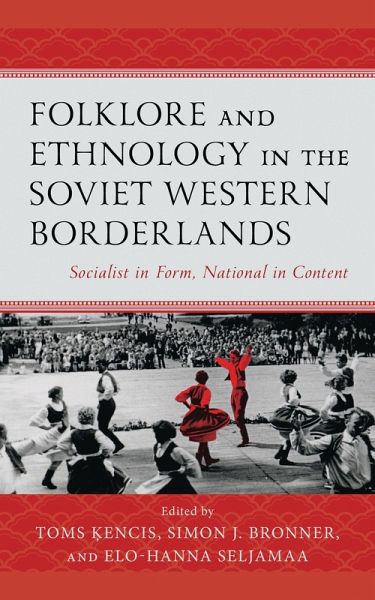
Thirteen international scholars assess the profound impact of Soviet-era movements to study, apply, and perform folklore as a priority in socialist policy-formation and culture-building. Representing generations who lived through and after Soviet occupation, they reflect on the consequences of state-supported promotion of folk arts in a region called the Western Borderlands that include Baltic countries, Ukraine, Poland, Slovakia, Belarus, Romania, and Hungary. In their incisive analyses, authors present original archival materials as well as ethnographic data to understand colonialist support…mehr
Thirteen international scholars assess the profound impact of Soviet-era movements to study, apply, and perform folklore as a priority in socialist policy-formation and culture-building. Representing generations who lived through and after Soviet occupation, they reflect on the consequences of state-supported promotion of folk arts in a region called the Western Borderlands that include Baltic countries, Ukraine, Poland, Slovakia, Belarus, Romania, and Hungary. In their incisive analyses, authors present original archival materials as well as ethnographic data to understand colonialist support for bottom-up folklore movements and resistance to them. Capping the volume is a timely consideration of Soviet orchestration of folkloristic work on present developments in conflicts of Russia with its neighbors and alignments with Western folkloristics and ethnology.
Die Herstellerinformationen sind derzeit nicht verfügbar.
Autorenporträt
Toms Kencis is lead researcher and Head of the Scientific Council at the University of Latvia Institute of Literature, Folklore and Art. Simon J. Bronner is dean of the College of General Studies and distinguished professor of social sciences at the University of Wisconsin-Milwaukee. Elo-Hanna Seljamaa is associate professor of Estonian and Comparative Folklore at the University of Tartu, Estonia.
Inhaltsangabe
Introduction: The Analytics of 'Socialist in Form, National in Content' in the Soviet Western Borderlands Toms Kencis Part I. An Inherent Paradox: National Form and Socialist Content Chapter 1. Folklore and Nationalism in the Soviet Western Borderlands Toms Kencis Chapter 2. Bringing the Folk Community into the Future: On the Socialist Content of Communist Folkloristics Joseph Grim Feinberg Chapter 3. The Lithuanian Folklore Movement and Academe: Transforming Rural Tradition Auste Nakiene Part II. Multivocal Socialism: Agents and Agendas Chapter 4. Being in Between: Laine Mesikäpp and Staged Practices of Estonian Traditional Songs Janika Oras Chapter 5. Ideological Tuning of Latvian Folk Ornament Digne Udre Chapter 6. The Dievturi Movement under the Soviet Regime Gatis Ozolins Part III. Folk and the People: Education and Control Chapter 7. On Self-Folklorization: Folk Art in Late Socialist Era Poland Ewa Klekot Chapter 8. Folkloristics in Moldova: Relations between Discipline and Performance Jennifer R. Cash Chapter 9. The Influence of Soviet Authority on the Formation of Latvian Staged Folk Dance Elina Gailite Part IV. Post-war Academia: Sovietization of the Discipline Chapter 10 New Songs for a New Life: Soviet Folklore and Folkloristics in Western Ukraine Pavlo Artymyshyn and Roman Holyk Chapter 11. Confronting Soviet Colonialism: Folkloristics in Early Soviet Estonia and East Germany Kaisa Langer Chapter 12. The Search for Workers' Folklore in Hungary Gabriella Vámos Afterword: Ghosts of Socialist Folkloristics in the Post-Soviet World Simon J. Bronner About the Contributors
Es gelten unsere Allgemeinen Geschäftsbedingungen: www.buecher.de/agb
Impressum
www.buecher.de ist ein Internetauftritt der buecher.de internetstores GmbH
Geschäftsführung: Monica Sawhney | Roland Kölbl | Günter Hilger
Sitz der Gesellschaft: Batheyer Straße 115 - 117, 58099 Hagen
Postanschrift: Bürgermeister-Wegele-Str. 12, 86167 Augsburg
Amtsgericht Hagen HRB 13257
Steuernummer: 321/5800/1497
USt-IdNr: DE450055826