
42,95 €
42,95 €
inkl. MwSt.
Sofort per Download lieferbar

21 °P sammeln
42,95 €
Als Download kaufen
42,95 €
inkl. MwSt.
Sofort per Download lieferbar
21 °P sammeln
Jetzt verschenken
Alle Infos zum eBook verschenken
42,95 €
inkl. MwSt.
Sofort per Download lieferbar
Alle Infos zum eBook verschenken
21 °P sammeln

Andere Kunden interessierten sich auch für
") Food Education and Rural Resilience in Japan (eBook, PDF)42,95 €
Food Education and Rural Resilience in Japan (eBook, PDF)42,95 €") Reinventing Rural (eBook, ePUB)34,95 €
Reinventing Rural (eBook, ePUB)34,95 €") China's Peasant Agriculture and Rural Society (eBook, ePUB)45,95 €
China's Peasant Agriculture and Rural Society (eBook, ePUB)45,95 €") Food Policy and Practice in Early Childhood Education and Care (eBook, ePUB)42,95 €
Food Policy and Practice in Early Childhood Education and Care (eBook, ePUB)42,95 €") The Rural Primitive in American Popular Culture (eBook, ePUB)26,95 €
The Rural Primitive in American Popular Culture (eBook, ePUB)26,95 €") Gender and Employment in Rural China (eBook, ePUB)45,95 €
Gender and Employment in Rural China (eBook, ePUB)45,95 €") Sustainability in Contemporary Rural Japan (eBook, ePUB)47,95 €
Sustainability in Contemporary Rural Japan (eBook, ePUB)47,95 €
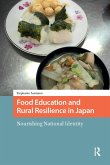


Food education initiatives exist worldwide, but Japan remains unique with its food education law known as shokuiku. The country's impressive health metrics - high life expectancies, low obesity, and affordable health care - often lead observers to praise this approach. This book presents a more nuanced analysis. First, it challenges the assumption that food education is wholly a "good thing" by exposing underlying power mechanisms. Through food diagrams, food fairs, and school lunch programs, government ministries promote both nationalism and traditional gender roles. Second, it explores how food education operates in Japan's rural regions, where educators champion resilience and food self-sufficiency to alleviate depopulation and economic decline. This emphasis on local food persisted even in the aftermath of the 2011 Fukushima nuclear disaster. Using Foucault's concept of governmentality, historical contextualization, and extensive fieldwork in rural Japan, this study reveals the complex political agenda driving food education in a non-Western society.
Dieser Download kann aus rechtlichen Gründen nur mit Rechnungsadresse in A, B, BG, CY, CZ, D, DK, EW, E, FIN, F, GR, HR, H, IRL, I, LT, L, LR, M, NL, PL, P, R, S, SLO, SK ausgeliefert werden.