77,95 €
77,95 €
inkl. MwSt.
Sofort per Download lieferbar

39 °P sammeln
77,95 €
Als Download kaufen
77,95 €
inkl. MwSt.
Sofort per Download lieferbar
39 °P sammeln
Jetzt verschenken
Alle Infos zum eBook verschenken
77,95 €
inkl. MwSt.
Sofort per Download lieferbar
Alle Infos zum eBook verschenken
39 °P sammeln

Andere Kunden interessierten sich auch für
") Handbook of Forensic Pathology (eBook, ePUB)73,95 €
Handbook of Forensic Pathology (eBook, ePUB)73,95 €") Human Scent Evidence (eBook, ePUB)67,95 €
Human Scent Evidence (eBook, ePUB)67,95 €") Practical Investigation of Sex Crimes (eBook, ePUB)47,95 €
Practical Investigation of Sex Crimes (eBook, ePUB)47,95 €") Practical Fire and Arson Investigation (eBook, ePUB)133,95 €
Practical Fire and Arson Investigation (eBook, ePUB)133,95 €") Forensic Analysis of Biological Evidence (eBook, ePUB)63,95 €
Forensic Analysis of Biological Evidence (eBook, ePUB)63,95 €") Forensic Investigation of Explosions (eBook, ePUB)82,95 €
Forensic Investigation of Explosions (eBook, ePUB)82,95 €") Criminal Investigation for the Professional Investigator (eBook, ePUB)142,95 €
Criminal Investigation for the Professional Investigator (eBook, ePUB)142,95 €

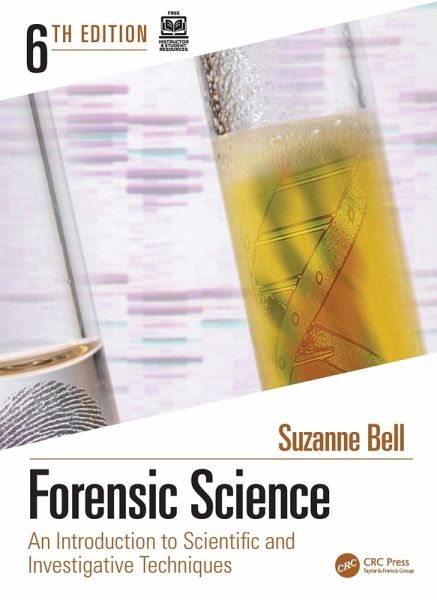
Forensic Science: An Introduction to Scientific and Investigative Techniques, Sixth Edition covers a full range of fundamental topics essential to modern forensic casework and investigation. The new edition is fully updated to outline best practices - including recent technology and techniques - providing an engaging account of current advances in the field.
Going beyond theory to application, Forensic Science begins by discussing the intersection of law and forensic science, how things become evidence, and how courts decide if an item or testimony is admissible. It presents the broadest array of forensic disciplines among available textbooks on the market, addressing: forensic anthropology, death investigation (including entomology), bloodstain pattern analysis, firearms, tool marks, and forensic analysis of questioned documents, among others. Students follow evidence all the way from the crime scene into laboratory analysis and even onto the autopsy table.
Updates to this edition include a new chapter on DNA analysis covering lineage markers and investigative genetic genealogy (Chapter 11 Advanced Topics in DNA Analysis). Chapter 2 addresses statistics, probability, and frequency databases in interpreting forensic evidence. A section called "Return to the Scene of the Crime" describes scenarios that allows students to compare the physical evidence with the analyzed testing results. "Advanced Topics" sections present quantitative or advanced aspects of each chapter's subject matter. This material is geared toward students with a strong math and science background, forensic science majors, and honors students.
Designed for a single-term course at the undergraduate level, the book's writing is straightforward and accessible - explaining in-depth concepts clearly and accurately. Forensic Science: An Introduction to Scientific and Investigative Techniques, Sixth Edition continues to serve as the essential, go-to textbook for introduction to forensic science courses.
Free Digital Learning Resources for instructors and students are available at routledgelearning.com/forensicscience, including:
Going beyond theory to application, Forensic Science begins by discussing the intersection of law and forensic science, how things become evidence, and how courts decide if an item or testimony is admissible. It presents the broadest array of forensic disciplines among available textbooks on the market, addressing: forensic anthropology, death investigation (including entomology), bloodstain pattern analysis, firearms, tool marks, and forensic analysis of questioned documents, among others. Students follow evidence all the way from the crime scene into laboratory analysis and even onto the autopsy table.
Updates to this edition include a new chapter on DNA analysis covering lineage markers and investigative genetic genealogy (Chapter 11 Advanced Topics in DNA Analysis). Chapter 2 addresses statistics, probability, and frequency databases in interpreting forensic evidence. A section called "Return to the Scene of the Crime" describes scenarios that allows students to compare the physical evidence with the analyzed testing results. "Advanced Topics" sections present quantitative or advanced aspects of each chapter's subject matter. This material is geared toward students with a strong math and science background, forensic science majors, and honors students.
Designed for a single-term course at the undergraduate level, the book's writing is straightforward and accessible - explaining in-depth concepts clearly and accurately. Forensic Science: An Introduction to Scientific and Investigative Techniques, Sixth Edition continues to serve as the essential, go-to textbook for introduction to forensic science courses.
Free Digital Learning Resources for instructors and students are available at routledgelearning.com/forensicscience, including:
- Flash cards for glossary terms
- Interactive matching, drag-and-drop, and "Hot Spot" mapping exercises
- Numerous self-test questions, and
- Recorded videos of practicing forensic scientists speaking to chapter topics in their given area of expertise
Dieser Download kann aus rechtlichen Gründen nur mit Rechnungsadresse in A, B, BG, CY, CZ, D, DK, EW, E, FIN, F, GR, HR, H, IRL, I, LT, L, LR, M, NL, PL, P, R, S, SLO, SK ausgeliefert werden.