Sie sind bereits eingeloggt. Klicken Sie auf 2. tolino select Abo, um fortzufahren.
Bitte loggen Sie sich zunächst in Ihr Kundenkonto ein oder registrieren Sie sich bei bücher.de, um das eBook-Abo tolino select nutzen zu können.
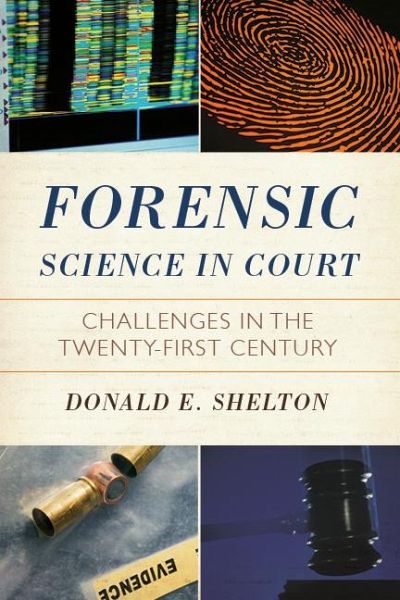
Forensic Science in Court explores the legal implications of forensic science-an increasingly important and complex part of the justice system. Judge Donald Shelton provides an accessible overview of the legal aissues, from the history of evidence in court, to "gatekeeper" judges determining what evidence can be allowed, to the "CSI effect" in juries. The book describes and evaluates various kinds of evidence, including DNA, fingerprints, handwriting, hair, bite marks, tool marks, firearms and bullets, fire and arson investigation, and bloodstain evidence. Assessing the strengths and…mehr
Forensic Science in Court explores the legal implications of forensic science-an increasingly important and complex part of the justice system. Judge Donald Shelton provides an accessible overview of the legal aissues, from the history of evidence in court, to "gatekeeper" judges determining what evidence can be allowed, to the "CSI effect" in juries. The book describes and evaluates various kinds of evidence, including DNA, fingerprints, handwriting, hair, bite marks, tool marks, firearms and bullets, fire and arson investigation, and bloodstain evidence. Assessing the strengths and limitations of each kind of evidence, the author also discusses how they can contribute to identifying the "who," "how," and "whether" questions that arise in criminal prosecutions. Author Donald Shelton draws on the depth of his experiences as courtroom prosecutor, professor, and judge, to provide a well-rounded look at these increasingly critical issues. Case studies throughout help bring the issues to life and show how forensic science has been used, both successfully and not, in real-world situations.
Die Herstellerinformationen sind derzeit nicht verfügbar.
Autorenporträt
Donald Shelton is Chief Judge of the Michigan 22nd Judicial Circuit and an adjunct professor in the criminal justice and political science departments at Eastern Michigan University. He also serves as a supervising judge for the Washtenaw Juvenile Court. He has previously worked as an attorney and taught at Washtenaw Community College and the University of Maryland.
Inhaltsangabe
List of Figures Introduction Chapter 1: The History and Development of Forensic Scientific Evidence Chapter 2: The Problem of Junk Science Chapter 3: DNA-the New Gold Standard Admissibility of DNA at Trial Postconviction DNA Testing Chapter 4: The "Who" Question Fingerprint Evidence Handwriting Comparison Chapter 5: More "Who" Questions Hair Analysis Bite Mark Analysis Chapter 6: The "How" Question Toolmarks and Firearms Bullet Lead Comparison Fire, Explosion and Arson Evidence Bloodstain Pattern Evidence Chapter 7: The "Whether" Question: Social Science Evidence in Criminal Cases Eyewitness Identification Experts Forensic Abuse Syndromes Conclusions about Social Science Evidence Chapter 8: Jurors and Forensic Science Evidence The "CSI" Myth The "Tech" Effect "Negative" Evidence Voir Dire, Argument and Jury Instructions Chapter 9: Conclusions: Where Do We Go From Here? The Last Twenty Years-An Era of Doubt Daubert's Change in the Legal Standard for Admissibility The Emergence of DNA as a New Model for Forensic Scientific Evidence The Impact of DNA Exonerations The Impact of the National Academy of Sciences Report The Impact of New Technology Awareness by Jurors The Current State of Forensic Science Evidence in Criminal Cases Thoughts about the Future of Criminal Forensic Science Appendix: Recommendations of the National Research Council Strengthening Forensic Science in the United States: A Path Forward Notes Index About the Authors
Es gelten unsere Allgemeinen Geschäftsbedingungen: www.buecher.de/agb
Impressum
www.buecher.de ist ein Internetauftritt der buecher.de internetstores GmbH
Geschäftsführung: Monica Sawhney | Roland Kölbl | Günter Hilger
Sitz der Gesellschaft: Batheyer Straße 115 - 117, 58099 Hagen
Postanschrift: Bürgermeister-Wegele-Str. 12, 86167 Augsburg
Amtsgericht Hagen HRB 13257
Steuernummer: 321/5800/1497
USt-IdNr: DE450055826