Aaron R. Weiskittel, David W. Hann, John A. Kershaw, Jerome K. Vanclay
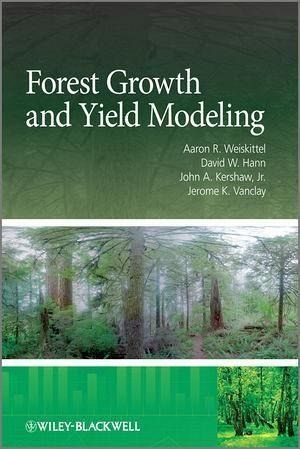
Forest Growth and Yield Modeling (eBook, ePUB)
122,99 €
inkl. MwSt.
Sofort per Download lieferbar
0 °P sammeln
Aaron R. Weiskittel, David W. Hann, John A. Kershaw, Jerome K. Vanclay
Forest Growth and Yield Modeling (eBook, ePUB)
- Format: ePub
- Merkliste
- Auf die Merkliste
- Bewerten Bewerten
- Teilen
- Produkt teilen
- Produkterinnerung
- Produkterinnerung

Bitte loggen Sie sich zunächst in Ihr Kundenkonto ein oder registrieren Sie sich bei
bücher.de, um das eBook-Abo tolino select nutzen zu können.
Hier können Sie sich einloggen
Sie sind bereits eingeloggt. Klicken Sie auf 2. tolino select Abo, um fortzufahren.

Bitte loggen Sie sich zunächst in Ihr Kundenkonto ein oder registrieren Sie sich bei bücher.de, um das eBook-Abo tolino select nutzen zu können.
Forest Growth and Yield Modeling synthesizes current scientific literature and provides insights in how models are constructed. Giving suggestions for future developments, and outlining keys for successful implementation of models the book provides a thorough and up-to-date, single source reference for students, researchers and practitioners requiring a current digest of research and methods in the field. The book describes current modelling approaches for predicting forest growth and yield and explores the components that comprise the various modelling approaches. It provides the reader with…mehr
- Geräte: eReader
- mit Kopierschutz
- eBook Hilfe
- Größe: 3.38MB
Andere Kunden interessierten sich auch für
Biostimulants for Improving Reproductive Growth and Crop Yield (eBook, ePUB)95,95 €
Frontiers in Plant-Soil Interaction (eBook, ePUB)127,95 €
Microbiomes and Plant Health (eBook, ePUB)127,95 €
Photosynthesis, Productivity, and Environmental Stress (eBook, ePUB)170,99 €
Horticultural Reviews, Volume 43 (eBook, ePUB)197,99 €
Annual Plant Reviews, Volume 42, Nitrogen Metabolism in Plants in the Post-genomic Era (eBook, ePUB)172,99 €
Horticultural Reviews, Volume 41 (eBook, ePUB)210,99 €-
-
-
Forest Growth and Yield Modeling synthesizes current scientific literature and provides insights in how models are constructed. Giving suggestions for future developments, and outlining keys for successful implementation of models the book provides a thorough and up-to-date, single source reference for students, researchers and practitioners requiring a current digest of research and methods in the field. The book describes current modelling approaches for predicting forest growth and yield and explores the components that comprise the various modelling approaches. It provides the reader with the tools for evaluating and calibrating growth and yield models and outlines the steps necessary for developing a forest growth and yield model. * Single source reference providing an evaluation and synthesis of current scientific literature * Detailed descriptions of example models * Covers statistical techniques used in forest model construction * Accessible, reader-friendly style
Dieser Download kann aus rechtlichen Gründen nur mit Rechnungsadresse in D ausgeliefert werden.
Produktdetails
- Produktdetails
- Verlag: Polity
- Erscheinungstermin: 15. Juli 2011
- Englisch
- ISBN-13: 9781119971504
- Artikelnr.: 37347827
- Verlag: Polity
- Erscheinungstermin: 15. Juli 2011
- Englisch
- ISBN-13: 9781119971504
- Artikelnr.: 37347827
- Herstellerkennzeichnung Die Herstellerinformationen sind derzeit nicht verfügbar.
Jerry Vanclay, Professor for Sustainable Forestry and Head, School of Environmental Science and Management, Southern Cross University, Australia
Aaron Weiskittel, Assistant Professor of Forest Biometrics and Modelling, School of Forest Resources, University of Maine, Orono, USA
John A. Kershaw, Jr., Professor of Forest Mensuration/Biometrics, Faculty of Forestry and Environmental Management, University of New Brunswick, Fredericton, Canada
Aaron Weiskittel, Assistant Professor of Forest Biometrics and Modelling, School of Forest Resources, University of Maine, Orono, USA
John A. Kershaw, Jr., Professor of Forest Mensuration/Biometrics, Faculty of Forestry and Environmental Management, University of New Brunswick, Fredericton, Canada
Preface.
Acknowledgements.
1 Introduction.
1.1 Model development and validation.
1.2 Important uses.
1.3 Overview of the book.
2 Indices of competition.
2.1 Introduction.
2.2 Two-sided competition.
2.2.1 Distance-independent.
2.2.2 Distance-dependent.
2.3 One-sided competition.
2.3.1 Distance-independent.
2.3.2 Distance-dependent.
2.4 Limitations.
2.4.1 Low predictive power.
2.4.2 Distance-independent vs. distance-dependent.
2.4.3 Influence of sampling design.
2.5 Summary.
3 Forest site evaluation.
3.1 Introduction.
3.2 Phytocentric measures of site quality.
3.2.1 Site index.
3.2.2 Plant indicators.
3.2.3 Other phytocentric measures.
3.3 Geocentric measures of site productivity.
3.3.1 Physiographic measures.
3.3.2 Climatic measures.
3.3.3 Soil measures.
3.4 Summary.
4 Whole-stand and size-class models.
4.1 Introduction.
4.2 Whole-stand models.
4.2.1 Yield tables and equations.
4.2.2 Compatible growth and yield equations.
4.2.3 Systems of equations.
4.2.4 State-space models.
4.2.5 Transition matrix models.
4.3 Size-class models.
4.3.1 Stand table projection.
4.3.2 Matrix models.
4.3.3 Diameter-class models.
4.3.4 Cohort models.
4.4 Summary.
5 Tree-level models.
5.1 Introduction.
5.2 Single-tree distance-dependent models.
5.2.1 Example models.
5.3 Tree-list distance-independent models.
5.3.1 Example models.
5.4 Summary.
6 Components of tree-list models.
6.1 Introduction.
6.2 Diameter increment.
6.2.1 Potential diameter increment equations with multiplicative modifiers.
6.2.2 Realized diameter increment equations.
6.3 Height increment.
6.3.1 Potential height increment equations with multiplicative modifiers.
6.3.2 Realized height increment equations.
6.4 Crown recession.
6.4.1 Individual-tree crown recession models.
6.4.2 Branch-level crown recession models.
6.5 Summary.
7 Individual-tree static equations.
7.1 Introduction.
7.2 Total height.
7.3 Crown length.
7.4 Crown width and profile.
7.5 Stem volume and taper.
7.6 Biomass.
7.7 Use of static equations to predict missing values.
7.8 Summary.
8 Mortality.
8.1 Introduction.
8.2 Stand-level mortality.
8.3 Individual-tree-level mortality.
8.4 Mechanistic models of mortality.
8.5 Development and application of mortality equations.
8.6 Summary.
9 Seeding, regeneration, and recruitment.
9.1 Introduction.
9.2 Seeding.
9.2.1 Flowering and pollination.
9.2.2 Seed production.
9.2.3 Seed dispersal.
9.2.4 Seed germination.
9.3 Regeneration.
9.4 Recruitment.
9.4.1 Static.
9.4.2 Dynamic.
9.5 Summary.
10 Linking growth models of different resolutions.
10.1 Introduction.
10.2 Linked stand- and size-class models.
10.2.1 Parameter recovery.
10.2.2 Modified stand table projection.
10.3 Linked stand- and tree-models.
10.3.1 Disaggregation.
10.3.2 Constrained.
10.3.3 Combined.
10.4 Summary.
11 Modeling silvicultural treatments.
11.1 Introduction.
11.2 Genetic improvements.
11.2.1 Stand-level.
11.2.2 Tree-level.
11.3 Early stand treatments.
11.3.1 Stand-level.
11.3.2 Tree-level.
11.4 Thinning.
11.4.1 Stand-level.
11.4.2 Tree-level.
11.5 Fertilization.
11.5.1 Stand-level.
11.5.2 Tree-level.
11.6 Combined thinning and fertilization.
11.6.1 Stand-level.
11.6.2 Tree-level.
11.7 Harvesting.
11.7.1 Stand-level.
11.7.2 Tree-level.
11.8 Summary.
12 Process-based models.
12.1 Introduction.
12.2 Key physiological processes.
12.2.1 Light interception.
12.2.2 Photosynthesis.
12.2.3 Stomatal conductance.
12.2.4 Respiration.
12.2.5 Carbon allocation.
12.2.6 Soil water and nutrients.
12.3 Example models.
12.3.1 Forest-BGC.
12.3.2 CenW.
12.3.3 BALANCE.
12.4 Limitations.
12.4.1 Initialization.
12.4.2 Parameterization.
12.4.3 Scale.
12.4.4 Sensitivity.
12.5 Summary.
13 Hybrid models of forest growth and yield.
13.1 Introduction.
13.2 Types of hybrid models.
13.2.1 Statistical growth equations with physiologically derived covariate.
13.2.2 Statistical growth equations with physiologically derived external
modifier.
13.2.3 Allometric models.
13.3 Comparison to statistical models.
13.4 Summary.
14 Model construction.
14.1 Introduction.
14.2 Data requirements.
14.2.1 Stem analysis.
14.2.2 Temporary plots.
14.2.3 Permanent plots.
14.3 Model form.
14.4 Parameter estimation.
14.4.1 Regression.
14.4.2 Quantile regression.
14.4.3 Generalized linear regression models.
14.4.4 Mixed models.
14.4.5 Generalized algebraic difference approach.
14.4.6 System of equations.
14.4.7 Bayesian.
14.4.8 Nonparametric.
14.4.9 Annualization.
14.5 Summary.
15 Model evaluation and calibration.
15.1 Introduction.
15.2 Model criticism.
15.2.1 Model form and parameterization.
15.2.2 Variable selection and model simplicity.
15.2.3 Biological realism.
15.2.4 Compatibility.
15.2.5 Reliability.
15.2.6 Adaptability.
15.3 Model benchmarking.
15.3.1 Statistical tests.
15.3.2 Model error characterization.
15.4 Model calibration.
15.5 Summary.
16 Implementation and use.
16.1 Introduction.
16.2 Collection of appropriate data.
16.3 Generation of appropriate data.
16.4 Temporal scale.
16.5 Spatial scale.
16.6 Computer interface.
16.7 Visualization.
16.8 Output.
16.9 Summary.
17 Future directions.
17.1 Improving predictions.
17.2 Improving input data.
17.3 Improving software.
17.4 Summary.
Bibliography.
Appendix 1: List of species used in the text.
Appendix 2: Expanded outline for ORGANON growth and yield model.
Index.
Acknowledgements.
1 Introduction.
1.1 Model development and validation.
1.2 Important uses.
1.3 Overview of the book.
2 Indices of competition.
2.1 Introduction.
2.2 Two-sided competition.
2.2.1 Distance-independent.
2.2.2 Distance-dependent.
2.3 One-sided competition.
2.3.1 Distance-independent.
2.3.2 Distance-dependent.
2.4 Limitations.
2.4.1 Low predictive power.
2.4.2 Distance-independent vs. distance-dependent.
2.4.3 Influence of sampling design.
2.5 Summary.
3 Forest site evaluation.
3.1 Introduction.
3.2 Phytocentric measures of site quality.
3.2.1 Site index.
3.2.2 Plant indicators.
3.2.3 Other phytocentric measures.
3.3 Geocentric measures of site productivity.
3.3.1 Physiographic measures.
3.3.2 Climatic measures.
3.3.3 Soil measures.
3.4 Summary.
4 Whole-stand and size-class models.
4.1 Introduction.
4.2 Whole-stand models.
4.2.1 Yield tables and equations.
4.2.2 Compatible growth and yield equations.
4.2.3 Systems of equations.
4.2.4 State-space models.
4.2.5 Transition matrix models.
4.3 Size-class models.
4.3.1 Stand table projection.
4.3.2 Matrix models.
4.3.3 Diameter-class models.
4.3.4 Cohort models.
4.4 Summary.
5 Tree-level models.
5.1 Introduction.
5.2 Single-tree distance-dependent models.
5.2.1 Example models.
5.3 Tree-list distance-independent models.
5.3.1 Example models.
5.4 Summary.
6 Components of tree-list models.
6.1 Introduction.
6.2 Diameter increment.
6.2.1 Potential diameter increment equations with multiplicative modifiers.
6.2.2 Realized diameter increment equations.
6.3 Height increment.
6.3.1 Potential height increment equations with multiplicative modifiers.
6.3.2 Realized height increment equations.
6.4 Crown recession.
6.4.1 Individual-tree crown recession models.
6.4.2 Branch-level crown recession models.
6.5 Summary.
7 Individual-tree static equations.
7.1 Introduction.
7.2 Total height.
7.3 Crown length.
7.4 Crown width and profile.
7.5 Stem volume and taper.
7.6 Biomass.
7.7 Use of static equations to predict missing values.
7.8 Summary.
8 Mortality.
8.1 Introduction.
8.2 Stand-level mortality.
8.3 Individual-tree-level mortality.
8.4 Mechanistic models of mortality.
8.5 Development and application of mortality equations.
8.6 Summary.
9 Seeding, regeneration, and recruitment.
9.1 Introduction.
9.2 Seeding.
9.2.1 Flowering and pollination.
9.2.2 Seed production.
9.2.3 Seed dispersal.
9.2.4 Seed germination.
9.3 Regeneration.
9.4 Recruitment.
9.4.1 Static.
9.4.2 Dynamic.
9.5 Summary.
10 Linking growth models of different resolutions.
10.1 Introduction.
10.2 Linked stand- and size-class models.
10.2.1 Parameter recovery.
10.2.2 Modified stand table projection.
10.3 Linked stand- and tree-models.
10.3.1 Disaggregation.
10.3.2 Constrained.
10.3.3 Combined.
10.4 Summary.
11 Modeling silvicultural treatments.
11.1 Introduction.
11.2 Genetic improvements.
11.2.1 Stand-level.
11.2.2 Tree-level.
11.3 Early stand treatments.
11.3.1 Stand-level.
11.3.2 Tree-level.
11.4 Thinning.
11.4.1 Stand-level.
11.4.2 Tree-level.
11.5 Fertilization.
11.5.1 Stand-level.
11.5.2 Tree-level.
11.6 Combined thinning and fertilization.
11.6.1 Stand-level.
11.6.2 Tree-level.
11.7 Harvesting.
11.7.1 Stand-level.
11.7.2 Tree-level.
11.8 Summary.
12 Process-based models.
12.1 Introduction.
12.2 Key physiological processes.
12.2.1 Light interception.
12.2.2 Photosynthesis.
12.2.3 Stomatal conductance.
12.2.4 Respiration.
12.2.5 Carbon allocation.
12.2.6 Soil water and nutrients.
12.3 Example models.
12.3.1 Forest-BGC.
12.3.2 CenW.
12.3.3 BALANCE.
12.4 Limitations.
12.4.1 Initialization.
12.4.2 Parameterization.
12.4.3 Scale.
12.4.4 Sensitivity.
12.5 Summary.
13 Hybrid models of forest growth and yield.
13.1 Introduction.
13.2 Types of hybrid models.
13.2.1 Statistical growth equations with physiologically derived covariate.
13.2.2 Statistical growth equations with physiologically derived external
modifier.
13.2.3 Allometric models.
13.3 Comparison to statistical models.
13.4 Summary.
14 Model construction.
14.1 Introduction.
14.2 Data requirements.
14.2.1 Stem analysis.
14.2.2 Temporary plots.
14.2.3 Permanent plots.
14.3 Model form.
14.4 Parameter estimation.
14.4.1 Regression.
14.4.2 Quantile regression.
14.4.3 Generalized linear regression models.
14.4.4 Mixed models.
14.4.5 Generalized algebraic difference approach.
14.4.6 System of equations.
14.4.7 Bayesian.
14.4.8 Nonparametric.
14.4.9 Annualization.
14.5 Summary.
15 Model evaluation and calibration.
15.1 Introduction.
15.2 Model criticism.
15.2.1 Model form and parameterization.
15.2.2 Variable selection and model simplicity.
15.2.3 Biological realism.
15.2.4 Compatibility.
15.2.5 Reliability.
15.2.6 Adaptability.
15.3 Model benchmarking.
15.3.1 Statistical tests.
15.3.2 Model error characterization.
15.4 Model calibration.
15.5 Summary.
16 Implementation and use.
16.1 Introduction.
16.2 Collection of appropriate data.
16.3 Generation of appropriate data.
16.4 Temporal scale.
16.5 Spatial scale.
16.6 Computer interface.
16.7 Visualization.
16.8 Output.
16.9 Summary.
17 Future directions.
17.1 Improving predictions.
17.2 Improving input data.
17.3 Improving software.
17.4 Summary.
Bibliography.
Appendix 1: List of species used in the text.
Appendix 2: Expanded outline for ORGANON growth and yield model.
Index.

Preface.
Acknowledgements.
1 Introduction.
1.1 Model development and validation.
1.2 Important uses.
1.3 Overview of the book.
2 Indices of competition.
2.1 Introduction.
2.2 Two-sided competition.
2.2.1 Distance-independent.
2.2.2 Distance-dependent.
2.3 One-sided competition.
2.3.1 Distance-independent.
2.3.2 Distance-dependent.
2.4 Limitations.
2.4.1 Low predictive power.
2.4.2 Distance-independent vs. distance-dependent.
2.4.3 Influence of sampling design.
2.5 Summary.
3 Forest site evaluation.
3.1 Introduction.
3.2 Phytocentric measures of site quality.
3.2.1 Site index.
3.2.2 Plant indicators.
3.2.3 Other phytocentric measures.
3.3 Geocentric measures of site productivity.
3.3.1 Physiographic measures.
3.3.2 Climatic measures.
3.3.3 Soil measures.
3.4 Summary.
4 Whole-stand and size-class models.
4.1 Introduction.
4.2 Whole-stand models.
4.2.1 Yield tables and equations.
4.2.2 Compatible growth and yield equations.
4.2.3 Systems of equations.
4.2.4 State-space models.
4.2.5 Transition matrix models.
4.3 Size-class models.
4.3.1 Stand table projection.
4.3.2 Matrix models.
4.3.3 Diameter-class models.
4.3.4 Cohort models.
4.4 Summary.
5 Tree-level models.
5.1 Introduction.
5.2 Single-tree distance-dependent models.
5.2.1 Example models.
5.3 Tree-list distance-independent models.
5.3.1 Example models.
5.4 Summary.
6 Components of tree-list models.
6.1 Introduction.
6.2 Diameter increment.
6.2.1 Potential diameter increment equations with multiplicative modifiers.
6.2.2 Realized diameter increment equations.
6.3 Height increment.
6.3.1 Potential height increment equations with multiplicative modifiers.
6.3.2 Realized height increment equations.
6.4 Crown recession.
6.4.1 Individual-tree crown recession models.
6.4.2 Branch-level crown recession models.
6.5 Summary.
7 Individual-tree static equations.
7.1 Introduction.
7.2 Total height.
7.3 Crown length.
7.4 Crown width and profile.
7.5 Stem volume and taper.
7.6 Biomass.
7.7 Use of static equations to predict missing values.
7.8 Summary.
8 Mortality.
8.1 Introduction.
8.2 Stand-level mortality.
8.3 Individual-tree-level mortality.
8.4 Mechanistic models of mortality.
8.5 Development and application of mortality equations.
8.6 Summary.
9 Seeding, regeneration, and recruitment.
9.1 Introduction.
9.2 Seeding.
9.2.1 Flowering and pollination.
9.2.2 Seed production.
9.2.3 Seed dispersal.
9.2.4 Seed germination.
9.3 Regeneration.
9.4 Recruitment.
9.4.1 Static.
9.4.2 Dynamic.
9.5 Summary.
10 Linking growth models of different resolutions.
10.1 Introduction.
10.2 Linked stand- and size-class models.
10.2.1 Parameter recovery.
10.2.2 Modified stand table projection.
10.3 Linked stand- and tree-models.
10.3.1 Disaggregation.
10.3.2 Constrained.
10.3.3 Combined.
10.4 Summary.
11 Modeling silvicultural treatments.
11.1 Introduction.
11.2 Genetic improvements.
11.2.1 Stand-level.
11.2.2 Tree-level.
11.3 Early stand treatments.
11.3.1 Stand-level.
11.3.2 Tree-level.
11.4 Thinning.
11.4.1 Stand-level.
11.4.2 Tree-level.
11.5 Fertilization.
11.5.1 Stand-level.
11.5.2 Tree-level.
11.6 Combined thinning and fertilization.
11.6.1 Stand-level.
11.6.2 Tree-level.
11.7 Harvesting.
11.7.1 Stand-level.
11.7.2 Tree-level.
11.8 Summary.
12 Process-based models.
12.1 Introduction.
12.2 Key physiological processes.
12.2.1 Light interception.
12.2.2 Photosynthesis.
12.2.3 Stomatal conductance.
12.2.4 Respiration.
12.2.5 Carbon allocation.
12.2.6 Soil water and nutrients.
12.3 Example models.
12.3.1 Forest-BGC.
12.3.2 CenW.
12.3.3 BALANCE.
12.4 Limitations.
12.4.1 Initialization.
12.4.2 Parameterization.
12.4.3 Scale.
12.4.4 Sensitivity.
12.5 Summary.
13 Hybrid models of forest growth and yield.
13.1 Introduction.
13.2 Types of hybrid models.
13.2.1 Statistical growth equations with physiologically derived covariate.
13.2.2 Statistical growth equations with physiologically derived external
modifier.
13.2.3 Allometric models.
13.3 Comparison to statistical models.
13.4 Summary.
14 Model construction.
14.1 Introduction.
14.2 Data requirements.
14.2.1 Stem analysis.
14.2.2 Temporary plots.
14.2.3 Permanent plots.
14.3 Model form.
14.4 Parameter estimation.
14.4.1 Regression.
14.4.2 Quantile regression.
14.4.3 Generalized linear regression models.
14.4.4 Mixed models.
14.4.5 Generalized algebraic difference approach.
14.4.6 System of equations.
14.4.7 Bayesian.
14.4.8 Nonparametric.
14.4.9 Annualization.
14.5 Summary.
15 Model evaluation and calibration.
15.1 Introduction.
15.2 Model criticism.
15.2.1 Model form and parameterization.
15.2.2 Variable selection and model simplicity.
15.2.3 Biological realism.
15.2.4 Compatibility.
15.2.5 Reliability.
15.2.6 Adaptability.
15.3 Model benchmarking.
15.3.1 Statistical tests.
15.3.2 Model error characterization.
15.4 Model calibration.
15.5 Summary.
16 Implementation and use.
16.1 Introduction.
16.2 Collection of appropriate data.
16.3 Generation of appropriate data.
16.4 Temporal scale.
16.5 Spatial scale.
16.6 Computer interface.
16.7 Visualization.
16.8 Output.
16.9 Summary.
17 Future directions.
17.1 Improving predictions.
17.2 Improving input data.
17.3 Improving software.
17.4 Summary.
Bibliography.
Appendix 1: List of species used in the text.
Appendix 2: Expanded outline for ORGANON growth and yield model.
Index.

Acknowledgements.
1 Introduction.
1.1 Model development and validation.
1.2 Important uses.
1.3 Overview of the book.
2 Indices of competition.
2.1 Introduction.
2.2 Two-sided competition.
2.2.1 Distance-independent.
2.2.2 Distance-dependent.
2.3 One-sided competition.
2.3.1 Distance-independent.
2.3.2 Distance-dependent.
2.4 Limitations.
2.4.1 Low predictive power.
2.4.2 Distance-independent vs. distance-dependent.
2.4.3 Influence of sampling design.
2.5 Summary.
3 Forest site evaluation.
3.1 Introduction.
3.2 Phytocentric measures of site quality.
3.2.1 Site index.
3.2.2 Plant indicators.
3.2.3 Other phytocentric measures.
3.3 Geocentric measures of site productivity.
3.3.1 Physiographic measures.
3.3.2 Climatic measures.
3.3.3 Soil measures.
3.4 Summary.
4 Whole-stand and size-class models.
4.1 Introduction.
4.2 Whole-stand models.
4.2.1 Yield tables and equations.
4.2.2 Compatible growth and yield equations.
4.2.3 Systems of equations.
4.2.4 State-space models.
4.2.5 Transition matrix models.
4.3 Size-class models.
4.3.1 Stand table projection.
4.3.2 Matrix models.
4.3.3 Diameter-class models.
4.3.4 Cohort models.
4.4 Summary.
5 Tree-level models.
5.1 Introduction.
5.2 Single-tree distance-dependent models.
5.2.1 Example models.
5.3 Tree-list distance-independent models.
5.3.1 Example models.
5.4 Summary.
6 Components of tree-list models.
6.1 Introduction.
6.2 Diameter increment.
6.2.1 Potential diameter increment equations with multiplicative modifiers.
6.2.2 Realized diameter increment equations.
6.3 Height increment.
6.3.1 Potential height increment equations with multiplicative modifiers.
6.3.2 Realized height increment equations.
6.4 Crown recession.
6.4.1 Individual-tree crown recession models.
6.4.2 Branch-level crown recession models.
6.5 Summary.
7 Individual-tree static equations.
7.1 Introduction.
7.2 Total height.
7.3 Crown length.
7.4 Crown width and profile.
7.5 Stem volume and taper.
7.6 Biomass.
7.7 Use of static equations to predict missing values.
7.8 Summary.
8 Mortality.
8.1 Introduction.
8.2 Stand-level mortality.
8.3 Individual-tree-level mortality.
8.4 Mechanistic models of mortality.
8.5 Development and application of mortality equations.
8.6 Summary.
9 Seeding, regeneration, and recruitment.
9.1 Introduction.
9.2 Seeding.
9.2.1 Flowering and pollination.
9.2.2 Seed production.
9.2.3 Seed dispersal.
9.2.4 Seed germination.
9.3 Regeneration.
9.4 Recruitment.
9.4.1 Static.
9.4.2 Dynamic.
9.5 Summary.
10 Linking growth models of different resolutions.
10.1 Introduction.
10.2 Linked stand- and size-class models.
10.2.1 Parameter recovery.
10.2.2 Modified stand table projection.
10.3 Linked stand- and tree-models.
10.3.1 Disaggregation.
10.3.2 Constrained.
10.3.3 Combined.
10.4 Summary.
11 Modeling silvicultural treatments.
11.1 Introduction.
11.2 Genetic improvements.
11.2.1 Stand-level.
11.2.2 Tree-level.
11.3 Early stand treatments.
11.3.1 Stand-level.
11.3.2 Tree-level.
11.4 Thinning.
11.4.1 Stand-level.
11.4.2 Tree-level.
11.5 Fertilization.
11.5.1 Stand-level.
11.5.2 Tree-level.
11.6 Combined thinning and fertilization.
11.6.1 Stand-level.
11.6.2 Tree-level.
11.7 Harvesting.
11.7.1 Stand-level.
11.7.2 Tree-level.
11.8 Summary.
12 Process-based models.
12.1 Introduction.
12.2 Key physiological processes.
12.2.1 Light interception.
12.2.2 Photosynthesis.
12.2.3 Stomatal conductance.
12.2.4 Respiration.
12.2.5 Carbon allocation.
12.2.6 Soil water and nutrients.
12.3 Example models.
12.3.1 Forest-BGC.
12.3.2 CenW.
12.3.3 BALANCE.
12.4 Limitations.
12.4.1 Initialization.
12.4.2 Parameterization.
12.4.3 Scale.
12.4.4 Sensitivity.
12.5 Summary.
13 Hybrid models of forest growth and yield.
13.1 Introduction.
13.2 Types of hybrid models.
13.2.1 Statistical growth equations with physiologically derived covariate.
13.2.2 Statistical growth equations with physiologically derived external
modifier.
13.2.3 Allometric models.
13.3 Comparison to statistical models.
13.4 Summary.
14 Model construction.
14.1 Introduction.
14.2 Data requirements.
14.2.1 Stem analysis.
14.2.2 Temporary plots.
14.2.3 Permanent plots.
14.3 Model form.
14.4 Parameter estimation.
14.4.1 Regression.
14.4.2 Quantile regression.
14.4.3 Generalized linear regression models.
14.4.4 Mixed models.
14.4.5 Generalized algebraic difference approach.
14.4.6 System of equations.
14.4.7 Bayesian.
14.4.8 Nonparametric.
14.4.9 Annualization.
14.5 Summary.
15 Model evaluation and calibration.
15.1 Introduction.
15.2 Model criticism.
15.2.1 Model form and parameterization.
15.2.2 Variable selection and model simplicity.
15.2.3 Biological realism.
15.2.4 Compatibility.
15.2.5 Reliability.
15.2.6 Adaptability.
15.3 Model benchmarking.
15.3.1 Statistical tests.
15.3.2 Model error characterization.
15.4 Model calibration.
15.5 Summary.
16 Implementation and use.
16.1 Introduction.
16.2 Collection of appropriate data.
16.3 Generation of appropriate data.
16.4 Temporal scale.
16.5 Spatial scale.
16.6 Computer interface.
16.7 Visualization.
16.8 Output.
16.9 Summary.
17 Future directions.
17.1 Improving predictions.
17.2 Improving input data.
17.3 Improving software.
17.4 Summary.
Bibliography.
Appendix 1: List of species used in the text.
Appendix 2: Expanded outline for ORGANON growth and yield model.
Index.