Sie sind bereits eingeloggt. Klicken Sie auf 2. tolino select Abo, um fortzufahren.
Bitte loggen Sie sich zunächst in Ihr Kundenkonto ein oder registrieren Sie sich bei bücher.de, um das eBook-Abo tolino select nutzen zu können.
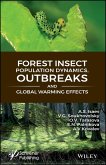
This new approach to insect modeling discusses population dynamics' regularities, control theory, theory of transitions, and describes methods of population dynamics and outbreaks modeling for forest phyllophagous insects and their effects on global climate change. Research in insect population dynamics is important for more reasons than just protecting forest communities. Insect populations are among the main ecological units included in the analysis of stability of ecological systems. Moreover, it is convenient to test new methods of analyzing population and community stability on the…mehr
This new approach to insect modeling discusses population dynamics' regularities, control theory, theory of transitions, and describes methods of population dynamics and outbreaks modeling for forest phyllophagous insects and their effects on global climate change. Research in insect population dynamics is important for more reasons than just protecting forest communities. Insect populations are among the main ecological units included in the analysis of stability of ecological systems. Moreover, it is convenient to test new methods of analyzing population and community stability on the insect-related data, as by now ecologists and entomologists have accumulated large amounts of such data. In this book, the authors analyze population dynamics of quite a narrow group of insects - forest defoliators. It is hoped that the methods proposed herein for the analysis of population dynamics of these species may be useful and effective for analyzing population dynamics of other animal species and their effects and role in global warming. What can insects tell us about our environment and our ever-changing climate? It is through studies like this one that these important answers can be obtained, along with data on the insects and their behaviors themselves. The authors present new theories on modeling and data accumulation, using cutting-edge processes never before published for such a wide audience. This volume presents the state-of-the-art in the science, and it is an essential piece of any entomologist's and forest engineer's library.
Dieser Download kann aus rechtlichen Gründen nur mit Rechnungsadresse in D ausgeliefert werden.
Die Herstellerinformationen sind derzeit nicht verfügbar.
Autorenporträt
Alexander S. Isaev, D.Sc. (Biology), Moscow; Full Member of the Russian Academy of Sciences (RAS). The author of more than 300 published studies, including over 20 monographs on forest ecology and forest entomology. Awards: Gold Medal of the International Union of Forest Research Organizations (IUFRO), V.N. Sukachev Medal of RAS, and IUFRO George Varley Award for Excellence in Forest Insect Research.
Vladislav G. Soukhovolsky, D.Sc. (Biophysics), Professor, Krasnoyarsk. An expert in mathematical modeling of complex biological, ecological, social, and political systems. The author of over 500 published studies, including 16 monographs.
Olga V. Tarasova, D.Sc. (Agriculture), Professor, Krasnoyarsk. An expert in forest entomology. The author of over 150 published studies, including six monographs. Award: V.I. Vernadsky Award for Excellence in Ecological Education.
Elena N. Palnikova, D.Sc. (Agriculture), Professor, Krasnoyarsk. An expert in forest entomology. The author of over 100 published studies, including two monographs.
Anton V. Kovalev, Ph.D. (System Analysis), Krasnoyarsk. An expert in system analysis of ecological processes. The author of over 100 published studies, including one monograph.
Inhaltsangabe
Authors ix Introduction xi 1 Population Dynamics of Forest Insects: Outbreaks in Forest Ecosystems 1 1.1 Approaches to modeling population dynamics of forest insects 1 1.2 The role of insects in the forest ecosystem 4 1.3 The phenomenological theory of forest insect population dynamics: the principle of stability of flexible ecologicalsystems 10 1.4 Classification of the factors of forest insect population dynamics 12 1.5 Delayed and direct regulation mechanisms 14 2 Ways of Presenting Data on Forest Insect Population Dynamics 17 2.1 Representation of population dynamics data 17 2.2 Presenting the data on forest insect population dynamics through changes in density over time 18 2.3 Presenting the data on populatiozn dynamics as a phase portrait 24 2.4 The probability of the population leaving the stability zone and reaching an outbreak density: a model of a one-dimensional potential well 40 2.5 Presenting the data on forest insect population dynamics as a potential function 47 3 The Effects of Weather Factors on Population Dynamics of Forest Defoliating Insects 53 3.1 The necessary and sufficient weather conditions for the development of outbreaks of defoliating insects in Siberia 53 3.2 Weather influence on the development of the pine looper Bupalus piniarius L. outbreaks 55 3.3 Siberian silk moth Dendrolimus sibiricus Tschetv. population dynamics as related to weather conditions 61 3.4 Synchronization of weather conditions on vast areas as a factor of the occurrence of pan-regional outbreaks 64 4 Spatial and Temporal Coherence of Forest Insect Population Dynamics 79 4.1 Coherence and synchronicity of population dynamics 79 4.2 Spatiotemporal coherence of the population dynamics of defoliating insects in pine forests of Middle Siberia 83 4.3 Spatiotemporal coherence of population dynamics of defoliating insects in the Alps 90 4.4 Global coherence of pine looper population dynamics in Eurasia 94 4.5 Synchronization of the time series of gypsy moth population dynamics in the South Urals 96 5 Interactions Between Phytophagous Insects and Their Natural Enemies and Population Dynamics of Phytophagous Insects During Outbreaks 101 5.1 Entomophagous organisms as a regulating factor in forest insect population dynamics 101 5.2 A "phytophagous - entomophagous insect" model 106 6 Food Consumption by Forest Insects 113 6.1 Energy balance of food consumption by insects: an optimization model 113 6.2 A population-energy model of insect outbreaks 127 7 AR- and ADL-Models of Forest Insect Population Dynamics 139 7.1 An ADL-model (autoregressive distributed lag) of insect population dynamics 139 7.2 A model of population dynamics of the gypsy moth in the South Urals 145 7.3 Modeling population dynamics of the larch bud moth in the Alps 155 7.4 Simulation models of population dynamics of defoliating insects in the Krasnoturansk pine forest 165 7.5 Modeling and predicting population dynamics of the European oak leaf-roller 172 7.6 Gain margin of the AR-models of forest insect population dynamics 176 8 Modeling of Population Dynamics and Outbreaks of Forest Insects as Phase Transitions 183 8.1 Models of phase transitions for describing critical events in complex systems 183 8.2 Population buildup and development of an outbreak of forest insects as a first-order phase transition 185 8.3 Possible mechanisms of the development of forest insect outbreaks 192 8.4 Colonization of the tree stands by forest insects as a second-order phase transition 194 8.5 Risks of elimination of the population from the community 201 9 Forecasting Population Dynamics and Assessing the Risk of Damage to Tree Stands Caused by Outbreaks of Forest Defoliating Insects 207 9.1 Methods of forecasting forest insect population dynamics 207 9.2 Long-term forecast of population dynamics of defoliating insects 217 9.3 Assessment of the maximum risk of damage to tree stands caused by insects 223 9.4 Modeling and forecasting of eastern spruce budworm population dynamics 225 10 Global Warming and Risks of Forest Insect Outbreaks 233 10.1 Climate change and forest insect outbreaks in the Siberian taiga 233 10.2 Stress testing of insect impact on forest ecosystems under different scenarios of climate changes in the Siberian taiga 236 10.3 Risks of outbreaks of forest insect species with the stable type of population dynamics 244 Conclusion 251 References 255 Index 285
Authors ix Introduction xi 1 Population Dynamics of Forest Insects: Outbreaks in Forest Ecosystems 1 1.1 Approaches to modeling population dynamics of forest insects 1 1.2 The role of insects in the forest ecosystem 4 1.3 The phenomenological theory of forest insect population dynamics: the principle of stability of flexible ecologicalsystems 10 1.4 Classification of the factors of forest insect population dynamics 12 1.5 Delayed and direct regulation mechanisms 14 2 Ways of Presenting Data on Forest Insect Population Dynamics 17 2.1 Representation of population dynamics data 17 2.2 Presenting the data on forest insect population dynamics through changes in density over time 18 2.3 Presenting the data on populatiozn dynamics as a phase portrait 24 2.4 The probability of the population leaving the stability zone and reaching an outbreak density: a model of a one-dimensional potential well 40 2.5 Presenting the data on forest insect population dynamics as a potential function 47 3 The Effects of Weather Factors on Population Dynamics of Forest Defoliating Insects 53 3.1 The necessary and sufficient weather conditions for the development of outbreaks of defoliating insects in Siberia 53 3.2 Weather influence on the development of the pine looper Bupalus piniarius L. outbreaks 55 3.3 Siberian silk moth Dendrolimus sibiricus Tschetv. population dynamics as related to weather conditions 61 3.4 Synchronization of weather conditions on vast areas as a factor of the occurrence of pan-regional outbreaks 64 4 Spatial and Temporal Coherence of Forest Insect Population Dynamics 79 4.1 Coherence and synchronicity of population dynamics 79 4.2 Spatiotemporal coherence of the population dynamics of defoliating insects in pine forests of Middle Siberia 83 4.3 Spatiotemporal coherence of population dynamics of defoliating insects in the Alps 90 4.4 Global coherence of pine looper population dynamics in Eurasia 94 4.5 Synchronization of the time series of gypsy moth population dynamics in the South Urals 96 5 Interactions Between Phytophagous Insects and Their Natural Enemies and Population Dynamics of Phytophagous Insects During Outbreaks 101 5.1 Entomophagous organisms as a regulating factor in forest insect population dynamics 101 5.2 A "phytophagous - entomophagous insect" model 106 6 Food Consumption by Forest Insects 113 6.1 Energy balance of food consumption by insects: an optimization model 113 6.2 A population-energy model of insect outbreaks 127 7 AR- and ADL-Models of Forest Insect Population Dynamics 139 7.1 An ADL-model (autoregressive distributed lag) of insect population dynamics 139 7.2 A model of population dynamics of the gypsy moth in the South Urals 145 7.3 Modeling population dynamics of the larch bud moth in the Alps 155 7.4 Simulation models of population dynamics of defoliating insects in the Krasnoturansk pine forest 165 7.5 Modeling and predicting population dynamics of the European oak leaf-roller 172 7.6 Gain margin of the AR-models of forest insect population dynamics 176 8 Modeling of Population Dynamics and Outbreaks of Forest Insects as Phase Transitions 183 8.1 Models of phase transitions for describing critical events in complex systems 183 8.2 Population buildup and development of an outbreak of forest insects as a first-order phase transition 185 8.3 Possible mechanisms of the development of forest insect outbreaks 192 8.4 Colonization of the tree stands by forest insects as a second-order phase transition 194 8.5 Risks of elimination of the population from the community 201 9 Forecasting Population Dynamics and Assessing the Risk of Damage to Tree Stands Caused by Outbreaks of Forest Defoliating Insects 207 9.1 Methods of forecasting forest insect population dynamics 207 9.2 Long-term forecast of population dynamics of defoliating insects 217 9.3 Assessment of the maximum risk of damage to tree stands caused by insects 223 9.4 Modeling and forecasting of eastern spruce budworm population dynamics 225 10 Global Warming and Risks of Forest Insect Outbreaks 233 10.1 Climate change and forest insect outbreaks in the Siberian taiga 233 10.2 Stress testing of insect impact on forest ecosystems under different scenarios of climate changes in the Siberian taiga 236 10.3 Risks of outbreaks of forest insect species with the stable type of population dynamics 244 Conclusion 251 References 255 Index 285
Es gelten unsere Allgemeinen Geschäftsbedingungen: www.buecher.de/agb
Impressum
www.buecher.de ist ein Internetauftritt der buecher.de internetstores GmbH
Geschäftsführung: Monica Sawhney | Roland Kölbl | Günter Hilger
Sitz der Gesellschaft: Batheyer Straße 115 - 117, 58099 Hagen
Postanschrift: Bürgermeister-Wegele-Str. 12, 86167 Augsburg
Amtsgericht Hagen HRB 13257
Steuernummer: 321/5800/1497
USt-IdNr: DE450055826