Sie sind bereits eingeloggt. Klicken Sie auf 2. tolino select Abo, um fortzufahren.
Bitte loggen Sie sich zunächst in Ihr Kundenkonto ein oder registrieren Sie sich bei bücher.de, um das eBook-Abo tolino select nutzen zu können.
WINNER OF THE PEOPLE'S BOOK PRIZE FOR NON-FICTION AND LONGLISTED FOR THE JAMES CROPPER WAINWRIGHT PRIZE FOR WRITING ON CONSERVATION. 'Enchanting... a joy to read.' JOANNA LUMLEY 'Vibrant and vital.' CHRIS PACKHAM 'Forget Me Not is a tonic.' TIMES LITERARY SUPPLEMENT 'Remarkable.' NELL FRIZZELL 'A fierce, passionate stand for the wild.' MEGAN MCCUBBIN 'Funny, full of interest and often poignant.' ISABELLA TREE 'Beautiful. Rare. Profound. Hopeful.' CHARLOTTE PHILBY 'Passionate, pragmatic and seriously funny.' GILLIAN BURKE 'Wonderfully refreshing.' BENEDICT MACDONALD Join Sophie Pavelle on a…mehr
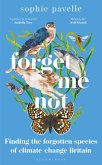
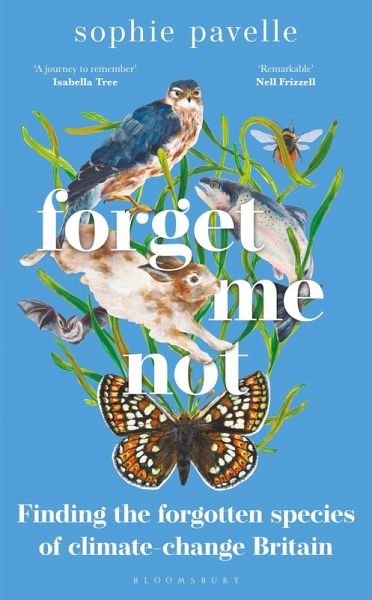
WINNER OF THE PEOPLE'S BOOK PRIZE FOR NON-FICTION AND LONGLISTED FOR THE JAMES CROPPER WAINWRIGHT PRIZE FOR WRITING ON CONSERVATION. 'Enchanting... a joy to read.' JOANNA LUMLEY 'Vibrant and vital.' CHRIS PACKHAM 'Forget Me Not is a tonic.' TIMES LITERARY SUPPLEMENT 'Remarkable.' NELL FRIZZELL 'A fierce, passionate stand for the wild.' MEGAN MCCUBBIN 'Funny, full of interest and often poignant.' ISABELLA TREE 'Beautiful. Rare. Profound. Hopeful.' CHARLOTTE PHILBY 'Passionate, pragmatic and seriously funny.' GILLIAN BURKE 'Wonderfully refreshing.' BENEDICT MACDONALD Join Sophie Pavelle on a low-carbon journey around Britain in search of ten animals and habitats threatened by climate change in the 21st century. Forget-me-not - a beautiful flower and a plea from our islands' wildlife. When climate change has driven dozens of our most charismatic species to extinction, will they be forgotten? Like many of her generation, Sophie Pavelle is determined to demand action on climate change. In her hilarious and thought-provoking first book, she describes the trips she took to see ten rare native species: species that could disappear by 2050 and be forgotten by the end of the century if their habitats continue to decline. Sophie challenged herself to find them the low-carbon way, travelling the length of Britain on foot, by bicycle, in an electric car, by kayak, on ferries and in a lot of trains. From Bodmin Moor to the Orkney Islands, Sophie encountered species on the frontline of climate change in Britain. Which are going to be seriously affected, and why? Could some bounce back from the brink? Or are we too late to save them? Forget Me Not is a clarion call: we all need to play a part in tackling this most existential of threats. Everyone can see wildlife in the British Isles without contributing to its destruction. With joyful irreverence, Sophie shows us we can dare to hope. Journey with her, and she may even inspire you to take action for nature and head out on your own low-carbon adventure.
Die Herstellerinformationen sind derzeit nicht verfügbar.
Autorenporträt
Sophie Pavelle is a US-born and UK-based science communicator. She worked for Beaver Trust and presented their award-winning documentary Beavers Without Borders. She is an Ambassador for The Wildlife Trusts and sat on the RSPB England Advisory Committee. Her writing has appeared in The Guardian, National Geographic Traveller, New Scientist, The Independent and BBC magazines. Her first book, Forget Me Not, was widely praised for encouraging action against climate change and biodiversity loss.
Inhaltsangabe
CHAPTER ONE: MARSH FRITILLARY I begin my journey in the south-west of England, where I take a short train and cycle ride to Bodmin Moor to see one of the UK's rarest species of butterfly, which is persisting deep in the heart of the Cornish mire despite unimaginable challenges. CHAPTER TWO: HARBOUR PORPOISE Wasting no time, next I head straight to the Welsh coast, where I travel to Pembrokeshire to try and spot Britain's smallest cetacean feeding amid the infamous tidal races and renewable energy developments. CHAPTER THREE: SEAGRASS Staying in Wales and heading north to Snowdonia, I snorkel the freezing waters of the Irish Sea to find out why seagrass is fast becoming the habitat that we cannot afford to lose. CHAPTER FOUR: GREY LONG-EARED BAT Back home in Devon again, I hike one of my favourite stretches of the Jurassic coast to a rural farm to see whether I can find one of the last maternity roosts of Britain's rarest and most elusive bat. CHAPTER FIVE: BLACK GUILLEMOT Eager to get up to Scotland, I venture to the Orkney Islands, specifically the northernmost isle of this unique archipelago, to spend time with one of the British Isles' most overlooked seabirds and try to understand more about the threats this quirky bird faces. CHAPTER SIX: DUNG BEETLES Testing out how ready the UK is to function on electric vehicles, I borrow an electric car and drive to Knepp Castle Estate to learn why dung and its beetles are making a resurgence in this tiny patch of England and why we cannot ignore dung. CHAPTER SEVEN: ATLANTIC SALMON Back home to Devon and into a kayak, I travel down a swollen, autumnal river to try and understand why, in the face of climate change, the epic salmon run might become a feat of the past. CHAPTER EIGHT: MOUNTAIN HARE Travelling north to Scotland again, I head to the high heather moorlands of the East Cairngorms to see our native mountain hare and investigate why they are set to become strangers in their own habitat if temperatures continue to rise. CHAPTER NINE: MERLIN Cycling across England's Peak District to the Dark Peak, I'm searching for Britain's smallest falcon, hoping to discover why we keep forgetting about these birds and how they will fare in a warming world. CHAPTER TEN: BILBERRY BUMBLEBEE Finishing on my home patch, I make a final trip to Dartmoor, searching for Britain's 'mountain bee' and one of its last surviving populations in the south-west to understand better why its upland habitat might become too hot to handle.
Rezensionen
This enchanting book could not be more timely: it brings much to inspire our future thinking, and is a joy to read.
Es gelten unsere Allgemeinen Geschäftsbedingungen: www.buecher.de/agb
Impressum
www.buecher.de ist ein Internetauftritt der buecher.de internetstores GmbH
Geschäftsführung: Monica Sawhney | Roland Kölbl | Günter Hilger
Sitz der Gesellschaft: Batheyer Straße 115 - 117, 58099 Hagen
Postanschrift: Bürgermeister-Wegele-Str. 12, 86167 Augsburg
Amtsgericht Hagen HRB 13257
Steuernummer: 321/5800/1497
USt-IdNr: DE450055826