22,95 €
inkl. MwSt.
Sofort per Download lieferbar
11 °P sammeln

Andere Kunden interessierten sich auch für
") The Painful Truth about Hunger in America (eBook, ePUB)19,95 €
The Painful Truth about Hunger in America (eBook, ePUB)19,95 €") Administering and Managing the U.S. Food System (eBook, ePUB)76,95 €
Administering and Managing the U.S. Food System (eBook, ePUB)76,95 €") The Fifth Risk (eBook, ePUB)8,95 €
The Fifth Risk (eBook, ePUB)8,95 €") Transforming School Food Politics around the World (eBook, ePUB)27,95 €
Transforming School Food Politics around the World (eBook, ePUB)27,95 €") The Future of Zimbabwe's Agrarian Sector (eBook, ePUB)41,95 €
The Future of Zimbabwe's Agrarian Sector (eBook, ePUB)41,95 €") The Immigrant-Food Nexus (eBook, ePUB)25,95 €
The Immigrant-Food Nexus (eBook, ePUB)25,95 €") The Origin of Japan's Protectionist Agricultural Policy (eBook, ePUB)41,95 €
The Origin of Japan's Protectionist Agricultural Policy (eBook, ePUB)41,95 €





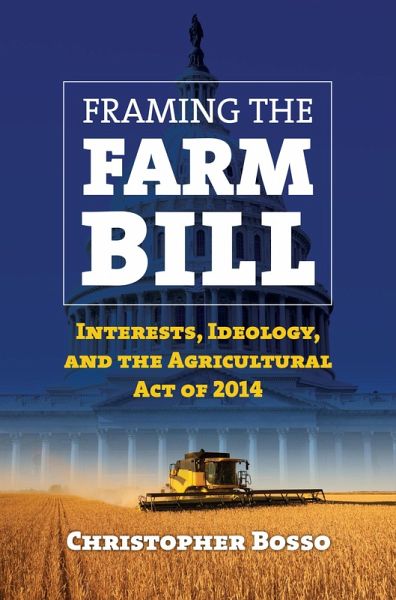
In January 2014, for the first time in the history of federal farm legislation going back to the Great Depression, all four members of the US House of Representatives from Kansas voted against the Farm Bill, despite pleas by the state's agricultural leaders to support it. Why? The story of the Agricultural Act of 2014, as it unfolds in Framing the Farm Bill, has much to tell us about the complex nature of farm legislation, food policy, and partisan politics in present-day America.
The Farm Bill is essential to the continuation of the many programs that structure agriculture in this country, from farm loans, commodity subsidies, and price supports for farmers to food support for the poor, notably food stamps. It was in the 1970s, with urbanization increasingly undermining political interest in farm programs, that rural legislators added the food stamp program to the Farm Bill to build support among urban and suburban legislators. Christopher Bosso offers a deft account of how this strategy, which over time led to the food stamp program becoming the largest expenditure in the Farm Bill, ran into the wave of conservative Republicans swept into Congress in 2010. With many of these new members objecting to the very existence of the food stamp programand in many cases to government's involvement in agriculture, periodand with Democrats vehemently opposing reductions, especially in light of the 2008 recession, the stage was set for a battle involving some of the most crucial issues in American life.
Framing the Farm Bill is an enlightening look at federal agricultural policyits workings, its history, and its present stateas well as the effect federal legislation has on farming practices, the environment, and our diet, in a thoroughly readable primer on the politics of food in America.
The Farm Bill is essential to the continuation of the many programs that structure agriculture in this country, from farm loans, commodity subsidies, and price supports for farmers to food support for the poor, notably food stamps. It was in the 1970s, with urbanization increasingly undermining political interest in farm programs, that rural legislators added the food stamp program to the Farm Bill to build support among urban and suburban legislators. Christopher Bosso offers a deft account of how this strategy, which over time led to the food stamp program becoming the largest expenditure in the Farm Bill, ran into the wave of conservative Republicans swept into Congress in 2010. With many of these new members objecting to the very existence of the food stamp programand in many cases to government's involvement in agriculture, periodand with Democrats vehemently opposing reductions, especially in light of the 2008 recession, the stage was set for a battle involving some of the most crucial issues in American life.
Framing the Farm Bill is an enlightening look at federal agricultural policyits workings, its history, and its present stateas well as the effect federal legislation has on farming practices, the environment, and our diet, in a thoroughly readable primer on the politics of food in America.
Dieser Download kann aus rechtlichen Gründen nur mit Rechnungsadresse in A, D ausgeliefert werden.