0,99 €
inkl. MwSt.
Sofort per Download lieferbar
0 °P sammeln

Andere Kunden interessierten sich auch für
") Frankenstein: The 1818 Text (eBook, ePUB)5,99 €
Frankenstein: The 1818 Text (eBook, ePUB)5,99 €") The Phantom of the Opera (eBook, ePUB)8,49 €
The Phantom of the Opera (eBook, ePUB)8,49 €") Devolution (eBook, ePUB)8,99 €
Devolution (eBook, ePUB)8,99 €") Of Ghosts and Goblins (eBook, ePUB)8,99 €
Of Ghosts and Goblins (eBook, ePUB)8,99 €") The Exorcist (eBook, ePUB)8,99 €
The Exorcist (eBook, ePUB)8,99 € (eBook, ePUB)") Dracula: The Original 1897 Unabridged And Complete Edition (A Bram Stoker Classics) (eBook, ePUB)0,99 €
Dracula: The Original 1897 Unabridged And Complete Edition (A Bram Stoker Classics) (eBook, ePUB)0,99 €") The Exorcist (eBook, ePUB)8,89 €
The Exorcist (eBook, ePUB)8,89 €
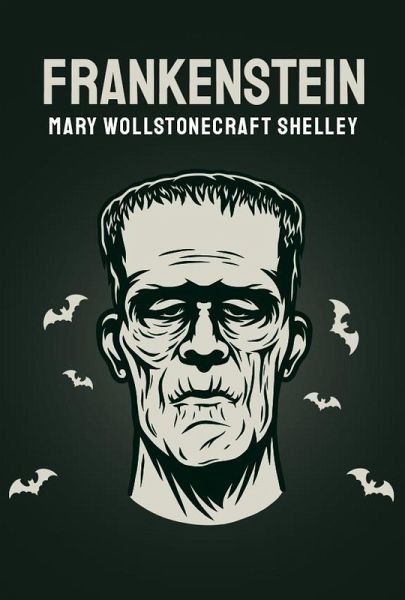
Frankenstein is written by English author Mary Shelley. Frankenstein tells the story of Victor Frankenstein, a young scientist who creates a sapient creature in an unorthodox scientific experiment. Shelley started writing the story when she was 18, and the first edition was published anonymously in London on 1 January 1818, when she was 20. Her name first appeared in the second edition, which was published in Paris in 1821. Shelley travelled through Europe in 1815, moving along the river Rhine in Germany, and stopping in Gernsheim, 17 kilometres (11 mi) away from Frankenstein Castle, where, two centuries before, an alchemist had engaged in experiments. She then journeyed to the region of Geneva, Switzerland, where much of the story takes place. Galvanism and occult ideas were topics of conversation for her companions, particularly for her lover and future husband Percy Bysshe Shelley. In 1816, Mary, Percy, and Lord Byron had a competition to see who could write the best horror story. After thinking for days, Shelley was inspired to write Frankenstein after imagining a scientist who created life and was horrified by what he had made.
Dieser Download kann aus rechtlichen Gründen nur mit Rechnungsadresse in A, B, BG, CY, CZ, D, DK, EW, E, FIN, F, GR, HR, H, IRL, I, LT, L, LR, M, NL, PL, P, R, S, SLO, SK ausgeliefert werden.
Gordon s framing is the real standout of the anniversary edition ( ) Highly recommended.
N. K. Jemisin, The New York Times Book Review
Frankenstein is as efficient and resonant a reference today as it was in 1818. . . In this bicentennial year, much will be written about Frankenstein, its adaptations, and whether there exists a definitive or superior version of the novel. . . The 1818 Text is reflective of the thrill and nervous energy that ushered in a new era of science and society. . . But part of what makes it a little unsettling is what makes it so interesting: The chance to watch a 200-year-old novel develop. In a story that's reflected so much of the last two hundred years, and centers so much on choices, storytelling, and the potential for change, it only makes sense that Frankenstein reflects changes within its own creator
Genevieve Valentine, NPR
N. K. Jemisin, The New York Times Book Review
Frankenstein is as efficient and resonant a reference today as it was in 1818. . . In this bicentennial year, much will be written about Frankenstein, its adaptations, and whether there exists a definitive or superior version of the novel. . . The 1818 Text is reflective of the thrill and nervous energy that ushered in a new era of science and society. . . But part of what makes it a little unsettling is what makes it so interesting: The chance to watch a 200-year-old novel develop. In a story that's reflected so much of the last two hundred years, and centers so much on choices, storytelling, and the potential for change, it only makes sense that Frankenstein reflects changes within its own creator
Genevieve Valentine, NPR