
5,99 €
5,99 €
inkl. MwSt.
Sofort per Download lieferbar

0 °P sammeln
5,99 €
Als Download kaufen
5,99 €
inkl. MwSt.
Sofort per Download lieferbar
0 °P sammeln
Jetzt verschenken
Alle Infos zum eBook verschenken
5,99 €
inkl. MwSt.
Sofort per Download lieferbar
Alle Infos zum eBook verschenken
0 °P sammeln

Andere Kunden interessierten sich auch für
") Feminism and Sorority (eBook, ePUB)13,99 €
Feminism and Sorority (eBook, ePUB)13,99 €") Thick (eBook, ePUB)8,95 €
Thick (eBook, ePUB)8,95 €") The Goddess Myth in Contemporary Literature and Popular Culture (eBook, ePUB)16,95 €
The Goddess Myth in Contemporary Literature and Popular Culture (eBook, ePUB)16,95 €") The Life Fantastic (eBook, ePUB)5,99 €
The Life Fantastic (eBook, ePUB)5,99 €") The Hours Have Lost Their Clock (eBook, ePUB)4,99 €
The Hours Have Lost Their Clock (eBook, ePUB)4,99 €") A Generous Heart: Changing the World Through Feminist Philanthropy (eBook, ePUB)8,49 €
A Generous Heart: Changing the World Through Feminist Philanthropy (eBook, ePUB)8,49 €") Heartbreak Is the National Anthem (eBook, ePUB)19,06 €
Heartbreak Is the National Anthem (eBook, ePUB)19,06 €


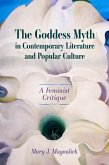




This book emerges from a sustained engagement with the complex and often provocative landscape of French feminist theory-a movement that is less a cohesive school of thought and more a constellation of philosophical inquiries into language, subjectivity, embodiment, and power. Situated at the intersections of poststructuralism, psychoanalysis, and political critique, French feminist thought has long challenged the foundations of Western philosophy, interrogating the presumed neutrality of its categories and exposing the gendered dimensions embedded in its logics.
The thinkers whose work this book explores-most notably Simone de Beauvoir, Luce Irigaray, Hélène Cixous, and Julia Kristeva-do not constitute a unified theoretical bloc. Each approaches feminism with distinct methods and vocabularies, often diverging sharply in their aims and assumptions. What binds them, however, is a common resistance to reductive accounts of womanhood and a shared suspicion of philosophical traditions that silence or exclude feminine difference. Rather than offering a singular definition of what it means to be a woman, French feminist theory foregrounds multiplicity, fluidity, and the irreducibility of lived experience.
At its core, this movement critiques the phallocentric structures of meaning that have dominated Western discourse. Irigaray, for example, famously argued that women have been constructed as the "Other" of man-defined only in negative relation to a male norm. Cixous proposed écriture féminine, a radically embodied writing that disrupts linear, patriarchal narratives and expresses what traditional language has repressed. Kristeva's psychoanalytic theories complicated notions of identity by revealing the instability of the speaking subject, while Beauvoir's existentialism laid the groundwork by asserting that woman is not born but becomes-a call to acknowledge the historical and cultural production of gender roles.
This book does not seek to simplify or resolve the tensions that exist within French feminist theory. Instead, it embraces these tensions as generative spaces for philosophical reflection. It is a journey through texts that are as poetic as they are theoretical, as elusive as they are illuminating. The thinkers presented here frequently resist systematization, and their writing often blurs the lines between philosophy, literature, and psychoanalysis. This hybridity is not a flaw but a strength: it opens feminist theory to new forms of expression and invites readers to rethink not only what they know, but how they come to know.
The influence of French feminist theory extends far beyond the borders of France or the academic disciplines of philosophy and literature. It has shaped conversations in art, cultural studies, gender theory, and critical race studies, offering tools to critique the subtle operations of power in both public and private spheres. This book aims to trace these intellectual pathways, highlighting how the insights of French feminist thinkers remain urgent and vital in a world still grappling with gendered inequality, systemic violence, and the challenge of imagining more just futures.
Whether the reader approaches this book as a student of philosophy, a scholar of feminist theory, or a curious thinker drawn to radical ideas, it is my hope that these pages will inspire both critical thought and creative exploration. French feminist theory does not offer easy answers-it demands that we read deeply, think carefully, and remain open to transformation. In that spirit, I invite you to step into the labyrinth.
The thinkers whose work this book explores-most notably Simone de Beauvoir, Luce Irigaray, Hélène Cixous, and Julia Kristeva-do not constitute a unified theoretical bloc. Each approaches feminism with distinct methods and vocabularies, often diverging sharply in their aims and assumptions. What binds them, however, is a common resistance to reductive accounts of womanhood and a shared suspicion of philosophical traditions that silence or exclude feminine difference. Rather than offering a singular definition of what it means to be a woman, French feminist theory foregrounds multiplicity, fluidity, and the irreducibility of lived experience.
At its core, this movement critiques the phallocentric structures of meaning that have dominated Western discourse. Irigaray, for example, famously argued that women have been constructed as the "Other" of man-defined only in negative relation to a male norm. Cixous proposed écriture féminine, a radically embodied writing that disrupts linear, patriarchal narratives and expresses what traditional language has repressed. Kristeva's psychoanalytic theories complicated notions of identity by revealing the instability of the speaking subject, while Beauvoir's existentialism laid the groundwork by asserting that woman is not born but becomes-a call to acknowledge the historical and cultural production of gender roles.
This book does not seek to simplify or resolve the tensions that exist within French feminist theory. Instead, it embraces these tensions as generative spaces for philosophical reflection. It is a journey through texts that are as poetic as they are theoretical, as elusive as they are illuminating. The thinkers presented here frequently resist systematization, and their writing often blurs the lines between philosophy, literature, and psychoanalysis. This hybridity is not a flaw but a strength: it opens feminist theory to new forms of expression and invites readers to rethink not only what they know, but how they come to know.
The influence of French feminist theory extends far beyond the borders of France or the academic disciplines of philosophy and literature. It has shaped conversations in art, cultural studies, gender theory, and critical race studies, offering tools to critique the subtle operations of power in both public and private spheres. This book aims to trace these intellectual pathways, highlighting how the insights of French feminist thinkers remain urgent and vital in a world still grappling with gendered inequality, systemic violence, and the challenge of imagining more just futures.
Whether the reader approaches this book as a student of philosophy, a scholar of feminist theory, or a curious thinker drawn to radical ideas, it is my hope that these pages will inspire both critical thought and creative exploration. French feminist theory does not offer easy answers-it demands that we read deeply, think carefully, and remain open to transformation. In that spirit, I invite you to step into the labyrinth.
Dieser Download kann aus rechtlichen Gründen nur mit Rechnungsadresse in A, B, BG, CY, CZ, D, DK, EW, E, FIN, F, GR, H, IRL, I, LT, L, LR, M, NL, PL, P, R, S, SLO, SK ausgeliefert werden.