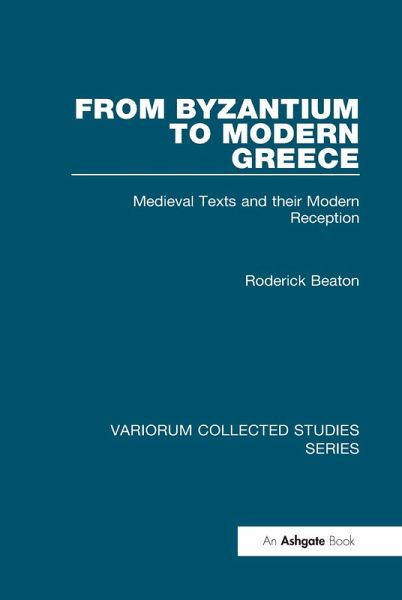
52,95 €
52,95 €
inkl. MwSt.
Sofort per Download lieferbar

26 °P sammeln
52,95 €
Als Download kaufen
52,95 €
inkl. MwSt.
Sofort per Download lieferbar
26 °P sammeln
Jetzt verschenken
Alle Infos zum eBook verschenken
52,95 €
inkl. MwSt.
Sofort per Download lieferbar
Alle Infos zum eBook verschenken
26 °P sammeln

Andere Kunden interessierten sich auch für
") Dialogues and Debates from Late Antiquity to Late Byzantium (eBook, PDF)42,95 €
Dialogues and Debates from Late Antiquity to Late Byzantium (eBook, PDF)42,95 €") History as Literature in Byzantium (eBook, PDF)52,95 €
History as Literature in Byzantium (eBook, PDF)52,95 €") Letters, Literacy and Literature in Byzantium (eBook, PDF)51,95 €
Letters, Literacy and Literature in Byzantium (eBook, PDF)51,95 €") Epistolary Poetry in Byzantium and Beyond (eBook, PDF)37,95 €
Epistolary Poetry in Byzantium and Beyond (eBook, PDF)37,95 €") Ethos, Logos, and Perspective (eBook, PDF)39,95 €
Ethos, Logos, and Perspective (eBook, PDF)39,95 €") The Letters of Psellos (eBook, PDF)78,95 €
The Letters of Psellos (eBook, PDF)78,95 €") Nightingale Fever (eBook, PDF)29,95 €
Nightingale Fever (eBook, PDF)29,95 €



The twelfth century was a time of cultural renewal and innovation in Byzantium, just as it was in the west. In literature, the long disused genres of epic, satire and the novel (or 'romance') took new forms during that century; at the same time, in language, the vernacular made its first tentative literary appearances. These developments continued uninterruptedly through the late Byzantine and early modern periods. Scholarship since the nineteenth century has been sharply divided over these texts: do they represent the first 'breakthrough' of an emergent 'Modern Greek' literature, or merely a footnote to the Byzantine learned tradition? What, in particular, do they have to tell us about the collective self-definition of the Greek-speakers who wrote them (roughly during the period 1100-1600)? And how has their subsequent reception contributed to defining and consolidating the national identity of the Modern Greeks, since the nation state was established in the 1820s? The papers collected in this book explore the relation between literary texts and collective consciousness, scrutinizing the evidence of the texts themselves in their late- or post-Byzantine context, and assessing how their reception both influenced and was influenced by the processes of nation-building in Modern Greece.
Dieser Download kann aus rechtlichen Gründen nur mit Rechnungsadresse in A, B, BG, CY, CZ, D, DK, EW, E, FIN, F, GR, HR, H, IRL, I, LT, L, LR, M, NL, PL, P, R, S, SLO, SK ausgeliefert werden.