15,59 €
inkl. MwSt.
Sofort per Download lieferbar
0 °P sammeln

Andere Kunden interessierten sich auch für
") The Gospel of John (eBook, ePUB)14,95 €
The Gospel of John (eBook, ePUB)14,95 €") Jesus and the Last Supper (eBook, ePUB)47,95 €
Jesus and the Last Supper (eBook, ePUB)47,95 €") Background to the Gospel of St Mark (eBook, ePUB)15,59 €
Background to the Gospel of St Mark (eBook, ePUB)15,59 €") Who Was Jesus? (eBook, ePUB)16,95 €
Who Was Jesus? (eBook, ePUB)16,95 €") Deeper Secrets of Human Evolution in the Light of the Gospels (eBook, ePUB)14,39 €
Deeper Secrets of Human Evolution in the Light of the Gospels (eBook, ePUB)14,39 €") Christ Is Yours (eBook, ePUB)10,95 €
Christ Is Yours (eBook, ePUB)10,95 €") Getting to Know Jesus (eBook, ePUB)5,99 €
Getting to Know Jesus (eBook, ePUB)5,99 €




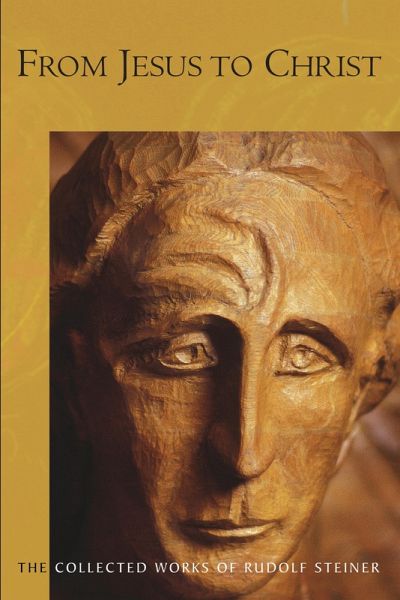
Knowledge of the cosmic significance of Christ and his mission, once experienced intuitively, has faded over the centuries. As theologians and historians of the Church critically scrutinized the Gospel records, their focus shifted from a gnostic vision of Christ to the human figure of 'the simple man', Jesus of Nazareth.In these enlightening lectures, Rudolf Steiner shows how 'the Mystery of Golgotha' (his term for the Crucifixion and Resurrection of Christ) can be understood as the pivotal event in human history, and the Gospels as 'initiation documents' that can serve to guide us on a path of spiritual development. He contrasts elements of the religious thinking of Jesuitism with Rosicrucianism - particularly in relation to the effect on human will - and discusses the characteristics of the two Jesus children in the contrasting accounts by Luke and Matthew. Steiner demonstrates how the great religious traditions of Zarathustra and Buddha helped prepare the way for the events of Palestine. In the process he clarifies controversial topics in Christian theology, such as the resurrection of the physical body of Jesus Christ.The emphasis throughout these lectures is on rediscovering the esoteric path to Christ and awakening to a new revelation manifesting in our time: Christ as the 'Lord of Karma'. This edition features a revised translation and is complemented with editorial notes and appendices by Frederick Amrine and an introduction by Robert McDermott.Eleven lectures, Karlsruhe, Oct. 1911, GA 133
Dieser Download kann aus rechtlichen Gründen nur mit Rechnungsadresse in A, B, BG, CY, CZ, D, DK, EW, E, FIN, F, GR, H, IRL, I, LT, L, LR, M, NL, PL, P, R, S, SLO, SK ausgeliefert werden.