0,49 €
0,49 €
inkl. MwSt.
Sofort per Download lieferbar

0 °P sammeln
0,49 €
Als Download kaufen
0,49 €
inkl. MwSt.
Sofort per Download lieferbar
0 °P sammeln
Jetzt verschenken
Alle Infos zum eBook verschenken
0,49 €
inkl. MwSt.
Sofort per Download lieferbar
Alle Infos zum eBook verschenken
0 °P sammeln

Andere Kunden interessierten sich auch für
") Fugitive Poetry (eBook, ePUB)0,49 €
Fugitive Poetry (eBook, ePUB)0,49 €") Fugitive Horizons (eBook, ePUB)0,00 €
Fugitive Horizons (eBook, ePUB)0,00 €") Fugitive Atlas (eBook, ePUB)6,99 €
Fugitive Atlas (eBook, ePUB)6,99 €") Ban and Arriere Ban: A Rally of Fugitive Rhymes (eBook, ePUB)0,49 €
Ban and Arriere Ban: A Rally of Fugitive Rhymes (eBook, ePUB)0,49 €") Fugitive Poems (eBook, ePUB)1,82 €
Fugitive Poems (eBook, ePUB)1,82 €") The Fugitive and Other Poems (eBook, ePUB)0,99 €
The Fugitive and Other Poems (eBook, ePUB)0,99 €") Fugitive Pieces (eBook, ePUB)1,82 €
Fugitive Pieces (eBook, ePUB)1,82 €


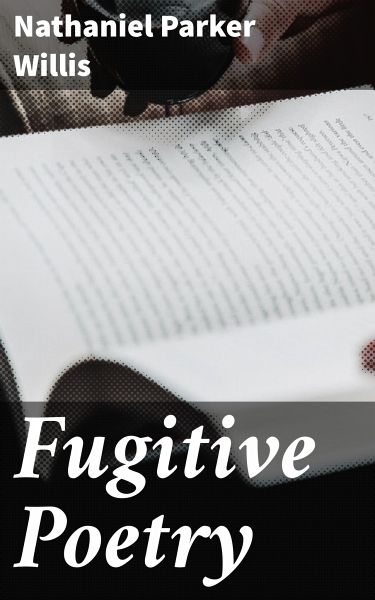
In 'Fugitive Poetry', Nathaniel Parker Willis presents a captivating collection that encapsulates the literary zeitgeist of early 19th-century America. The book features a rich tapestry of lyrical verses and vivid imagery, showcasing Willis's mastery of romanticism and his keen ability to depict the emotional landscape of his time. Each poem serves as a testament to personal reflection, societal commentary, and a delicate interplay of nature and human experience, aligning seamlessly with contemporaneous movements in American literature that sought to establish a uniquely national voice. Nathaniel Parker Willis, a prominent author, editor, and playwright, emerged as a significant figure in the American literary scene. Influenced by his travels throughout Europe and his interactions with luminaries such as Edgar Allan Poe and Henry Wadsworth Longfellow, Willis'Äôs writings reflect a robust blend of personal introspection and broader cultural critiques. His experiences in the dynamic and rapidly changing world of the early republic undoubtedly inform the themes and stylistic choices present in 'Fugitive Poetry.' Readers who appreciate poignant, introspective verse and the exploration of the human condition will find 'Fugitive Poetry' to be an enriching addition to their literary repertoire. Willis invites readers into an evocative world, urging them to consider the fugitive nature of beauty, time, and life itself.
Dieser Download kann aus rechtlichen Gründen nur mit Rechnungsadresse in A, B, BG, CY, CZ, D, DK, EW, E, FIN, F, GR, H, IRL, I, LT, L, LR, M, NL, PL, P, R, S, SLO, SK ausgeliefert werden.